
Introduction
India's cement export market has become a focal point for analysts and investors seeking to understand the country's role in the global construction materials supply chain. Recent figures for the fiscal year 2026, covering the period from April to February, reveal notable shifts in export volumes and values. This article examines the latest data, explains why these trends matter, and outlines what stakeholders can expect moving forward.
What Does the Data Reveal About This Topic?
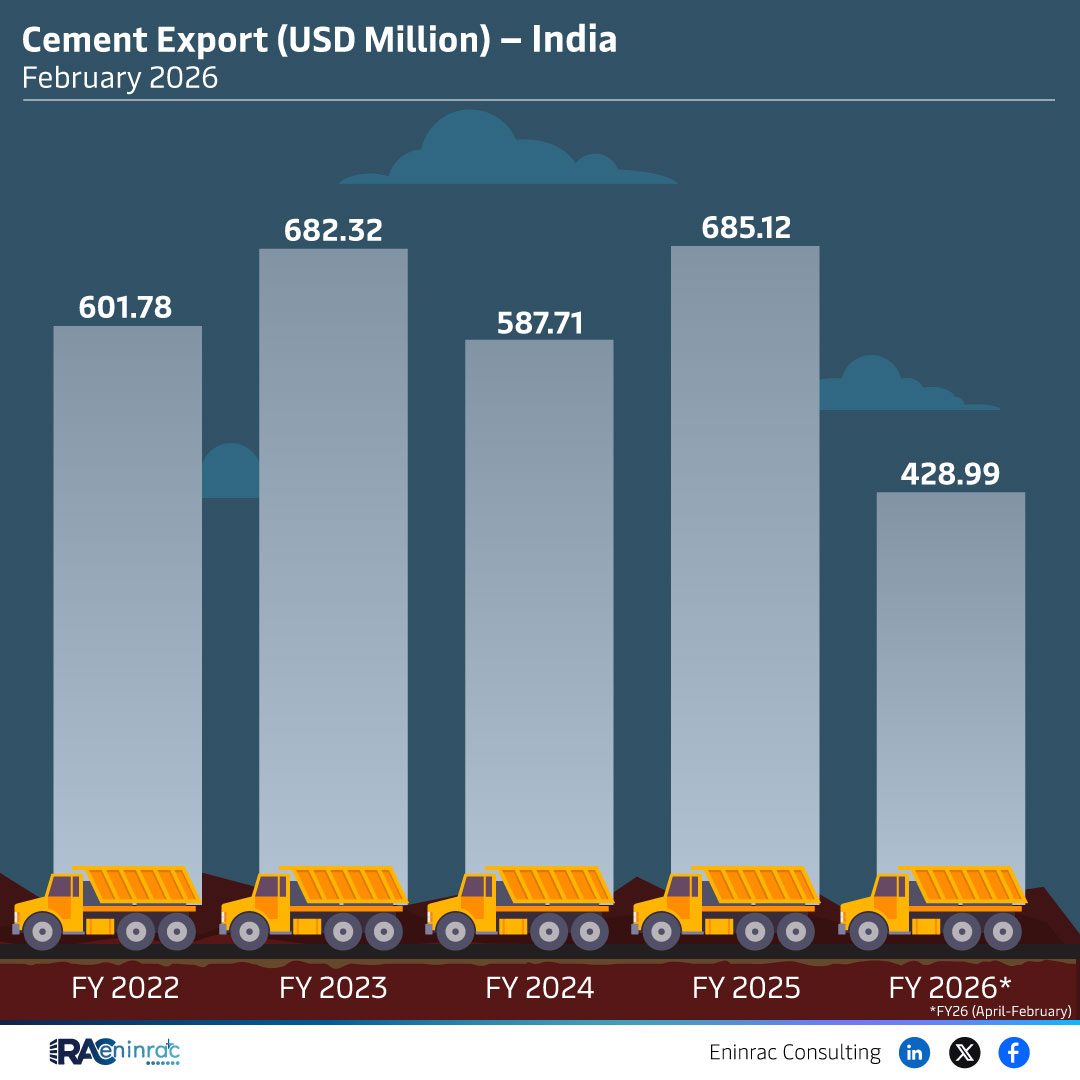
The raw data shows that cement exports in FY2026 reached USD 685.12 million, up from USD 601.78 million in the previous fiscal year. This increase suggests a strengthening demand for Indian cement abroad, likely driven by infrastructure projects in neighboring regions and competitive pricing. The question for readers is: what factors are fueling this growth and how sustainable is it?
Comparative Export Performance Over Recent Fiscal Years
When placed alongside earlier fiscal periods, the FY2026 figure marks a clear upward trajectory. While FY2022 and FY2023 numbers are not provided, the jump from USD 601.78 million to USD 685.12 million represents a growth rate of roughly 13.8 percent. This rise outpaces many traditional commodity export categories and indicates that Indian cement manufacturers are successfully expanding their market reach. Key contributors include improved logistics, strategic trade agreements, and a rebound in construction activity in the Middle East and Africa.
Impact on Sectors and Industries
The surge in cement exports influences several related sectors. For the construction industry, higher export volumes can lead to economies of scale, potentially lowering domestic prices. Manufacturing firms benefit from increased production capacity utilization, while logistics providers see heightened demand for freight services. Investors monitor these trends as indicators of broader economic health, and policymakers may adjust export incentives or quality standards to sustain growth.
Key Takeaways
- Cement exports reached USD 685.12 million in FY2026, a 13.8% increase from the previous year.
- Growth is driven by strong overseas demand, especially in emerging infrastructure markets.
- Improved supply chain efficiency and trade policies have enhanced competitiveness.
- Higher export volumes can create cost benefits for domestic construction projects.
- Logistics and freight sectors experience increased activity linked to cement shipments.
- Stakeholders should watch policy changes and global construction trends for future export outlooks.
FAQs
Why did India’s cement export value rise in FY2026?
The rise is attributed to stronger demand abroad, better logistics, and competitive pricing that attracted buyers in regions undertaking large infrastructure projects.
Which regions are the main buyers of Indian cement?
Key importers include countries in the Middle East, Africa, and South Asia, where rapid urbanization drives construction material needs.
How does increased cement export affect domestic prices?
Higher export volumes can lead to economies of scale, potentially lowering production costs and domestic cement prices.
What role do government policies play in cement export growth?
Export incentives, trade agreements, and quality certification standards help Indian manufacturers access new markets and maintain competitiveness.
Will the export growth trend continue beyond FY2026?
Continuation depends on sustained overseas demand, stable logistics, and supportive policy frameworks; analysts remain cautiously optimistic.