
Introduction
India’s bio power sector has entered a pivotal phase in 2026 as state‑level capacity figures and quarterly growth rates become publicly available. Understanding how much renewable bio energy is being generated, which states are leading the expansion, and what the month‑to‑month changes look like is essential for investors, policymakers, and industry analysts. This article unpacks the latest capacity numbers, highlights the states that dominate bio power production, and explains the broader implications for India’s renewable energy mix.
What Does the Data Reveal About This Topic?
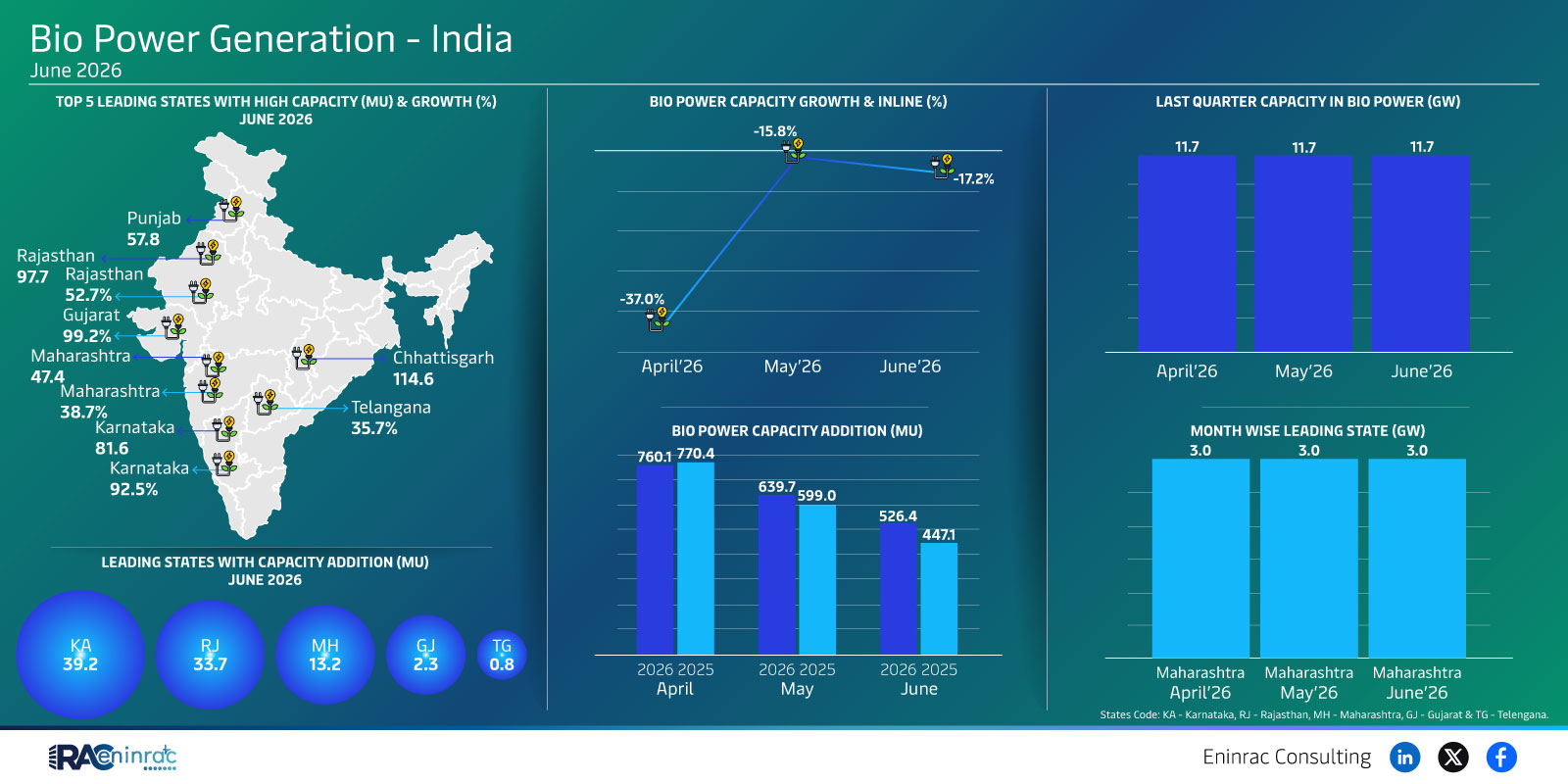
The raw data shows that Rajasthan, Maharashtra, Karnataka and Punjab are the top contributors to bio power capacity measured in megawatts (MU) and gigawatts (GW). Rajasthan reports the highest single‑state capacity at 97.7 MU, while Maharashtra consistently appears as a month‑wise leader with 3.0 GW added in April, May and June. The figures also indicate a notable decline in Rajasthan’s growth of –37.0 MU, suggesting that while the state holds large installed capacity, its recent expansion has slowed. Overall, the dataset confirms a fragmented yet growing landscape where a few states drive the majority of new capacity.
State‑wise Bio Power Capacity and Growth Trends in 2026
Across the six‑month window, Maharashtra leads in monthly capacity addition, recording a stable 3.0 GW each month from April through June. Karnataka contributes 35.7 MU, while Punjab adds 57.8 MU, placing these states in the second tier of capacity holders. Rajasthan’s 97.7 MU remains the highest absolute figure, but the –37.0 MU growth number reveals a contraction in new projects. Telangana and Gujarat appear in the code list but lack explicit capacity numbers in the extract, implying either negligible addition or data omission. The trend suggests that while northern states retain large base capacity, western and southern states are accelerating new installations.
Impact on Sectors and Industries
Rising bio power capacity influences several sectors. For the renewable energy market, higher bio power output diversifies the generation mix and reduces reliance on fossil fuels. Investors see increased project pipelines in Maharashtra and Karnataka, driving financing opportunities for equipment suppliers and EPC firms. Policymakers can leverage the state‑wise performance to tailor subsidy regimes, encouraging slower‑growing regions like Rajasthan to revitalize development. Meanwhile, agricultural waste processors benefit from expanded feedstock demand, creating a symbiotic link between farming communities and energy producers.
Key Takeaways
- Rajasthan holds the largest installed bio power capacity at 97.7 MU.
- Maharashtra adds the most new capacity each month, with 3.0 GW in April, May and June.
- Karnataka and Punjab rank second and third in total capacity, contributing 35.7 MU and 57.8 MU respectively.
- Rajasthan’s growth has turned negative (‑37.0 MU), indicating a slowdown in recent projects.
- Southern states are emerging as growth engines, closing the gap with traditional northern leaders.
- The expanding bio power sector creates financing, feedstock, and policy opportunities across agriculture and renewable energy industries.
FAQs
Which Indian state has the highest bio power capacity in 2026?
Rajasthan leads with an installed capacity of approximately 97.7 megawatts.
How much new bio power capacity did Maharashtra add in the first half of 2026?
Maharashtra reported a steady addition of 3.0 gigawatts each month from April to June, totaling around 9.0 GW.
Why did Rajasthan’s bio power growth turn negative?
The negative growth of –37.0 MU reflects a slowdown in new project approvals, possibly due to policy revisions or supply‑chain constraints.
What opportunities does the bio power expansion create for investors?
Investors can target EPC contracts, waste‑to‑energy projects, and financing solutions in high‑growth states such as Maharashtra and Karnataka.
How does bio power growth affect India’s overall renewable energy goals?
Increasing bio power capacity diversifies the renewable mix, helps meet national emissions targets, and supports rural development through waste utilization.