
Introduction
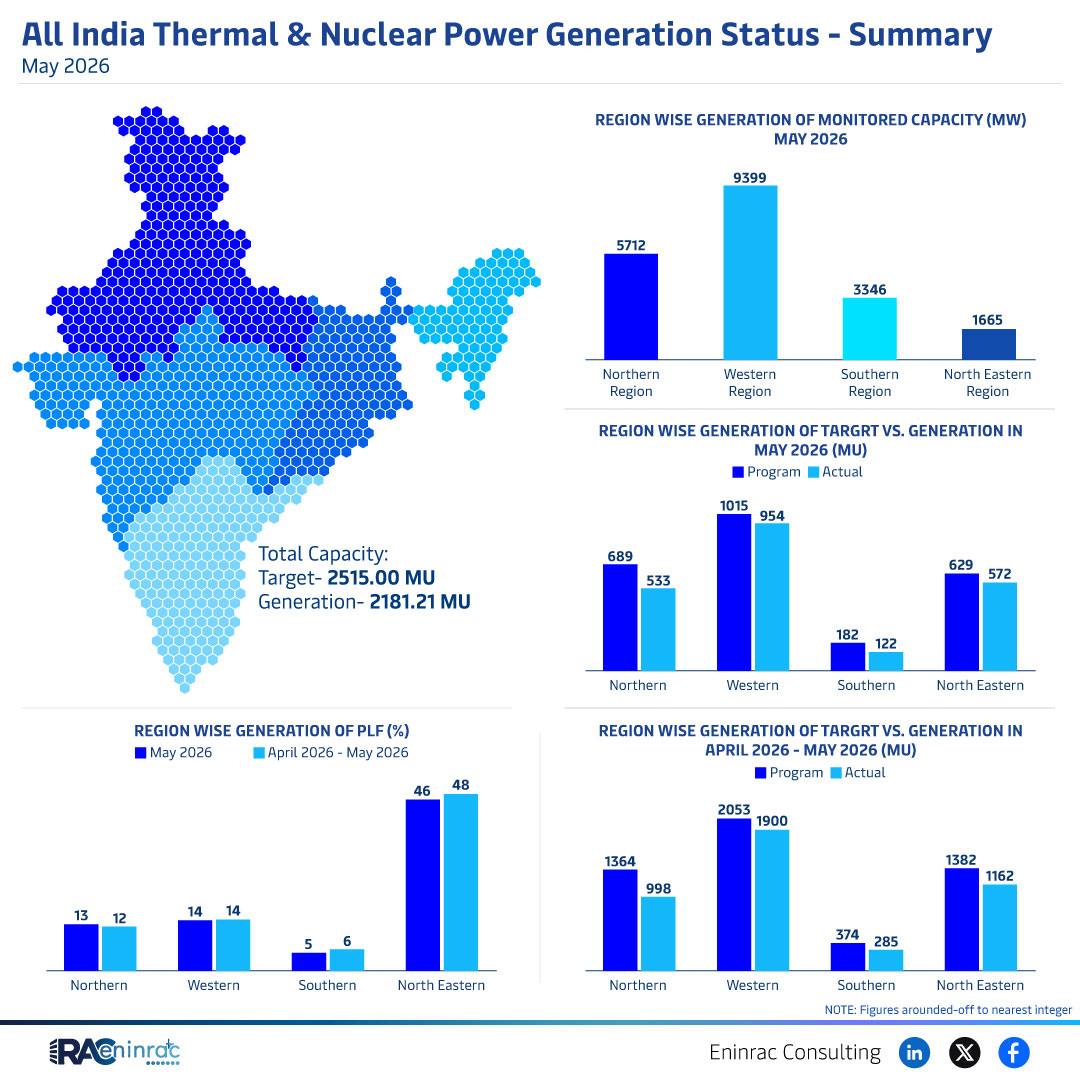
India’s electricity matrix continues to rely heavily on conventional sources, and the latest monthly snapshot from May 2026 provides a clear picture of how thermal and nuclear power plants performed. The data summarises total installed capacity, actual generation, and regional contributions, allowing analysts, investors, and policymakers to gauge progress toward the nation’s energy objectives. Readers will learn the overall generation versus target, understand which regions delivered the most output, see how load factors compare across zones, and assess the implications for future capacity planning.
What Does the Data Reveal About This Topic?
The key question is whether India’s thermal and nuclear plants are meeting the May 2026 generation target of 2,515 million units (MU). The answer is partially affirmative: actual generation reached 2,181 MU, representing about 87 % of the target. This shortfall indicates that, despite a substantial installed capacity of 2,515 MU, operational constraints, fuel availability, or maintenance schedules limited output. The data also shows a stark regional divide, with the northern zone contributing the largest share of generation while the eastern region lagged behind.
Regional Performance Overview in May 2026
Breaking the national figures down by region highlights where India’s conventional power base is strongest. In May 2026 the northern region produced roughly 821 MU, accounting for close to 38 % of total generation and outpacing its share of installed capacity. The western zone contributed about 569 MU (26 % of output), while the southern region added 428 MU (20 %). The north‑eastern area generated 363 MU, representing the smallest proportion at 17 %. When these outputs are compared with the regional capacity allocations, the north shows the highest plant load factor, indicating efficient utilisation of assets. Conversely, the north‑eastern and southern zones exhibit lower load factors, suggesting either seasonal demand variations, fuel supply bottlenecks, or planned outages that restrained generation.
Impact on Sectors and Industries
The performance of thermal and nuclear plants influences a wide range of economic sectors. Reliable electricity supply is essential for manufacturing, mining, and heavy‑industry operations that dominate the northern belt, where higher generation supports continuous production lines and attracts new investments. In the west, better output feeds agricultural processing and petrochemical complexes, while the south’s comparatively lower generation can constrain IT hubs that rely on stable grid conditions. Energy traders monitor regional deficits to adjust short‑term contracts, and policymakers use these data to prioritize infrastructure upgrades, fuel logistics, and renewable integration. Investors looking at conventional project pipelines also assess plant load factors as a risk indicator for future profitability.
Key Takeaways
- Total generation in May 2026 fell short of the 2,515 MU target.
- Northern region delivered the highest output and load factor.
- Western zone maintained solid generation, supporting industrial demand.
- Southern and north‑eastern regions lagged, indicating possible fuel or maintenance issues.
- Overall plant load factor suggests 87 % utilisation of installed capacity.
- Data underscores need for capacity upgrades and balanced regional supply.
FAQs
Why did India miss the May 2026 power generation target?
Operational constraints, fuel supply issues, and scheduled maintenance reduced actual output.
Which region contributes the most to thermal and nuclear output?
The northern region provides the largest share of generation and load factor.
How does plant load factor affect profitability?
Higher load factors indicate better asset utilisation, leading to increased revenue and lower per‑unit costs.
What implications does the May 2026 data have for investors?
Investors see regional performance gaps that signal risk and opportunity for capacity expansion.
How might renewable integration influence future conventional generation figures?
Growing renewables could lower conventional dispatch, but they also drive flexibility and grid stability needs.