
Introduction
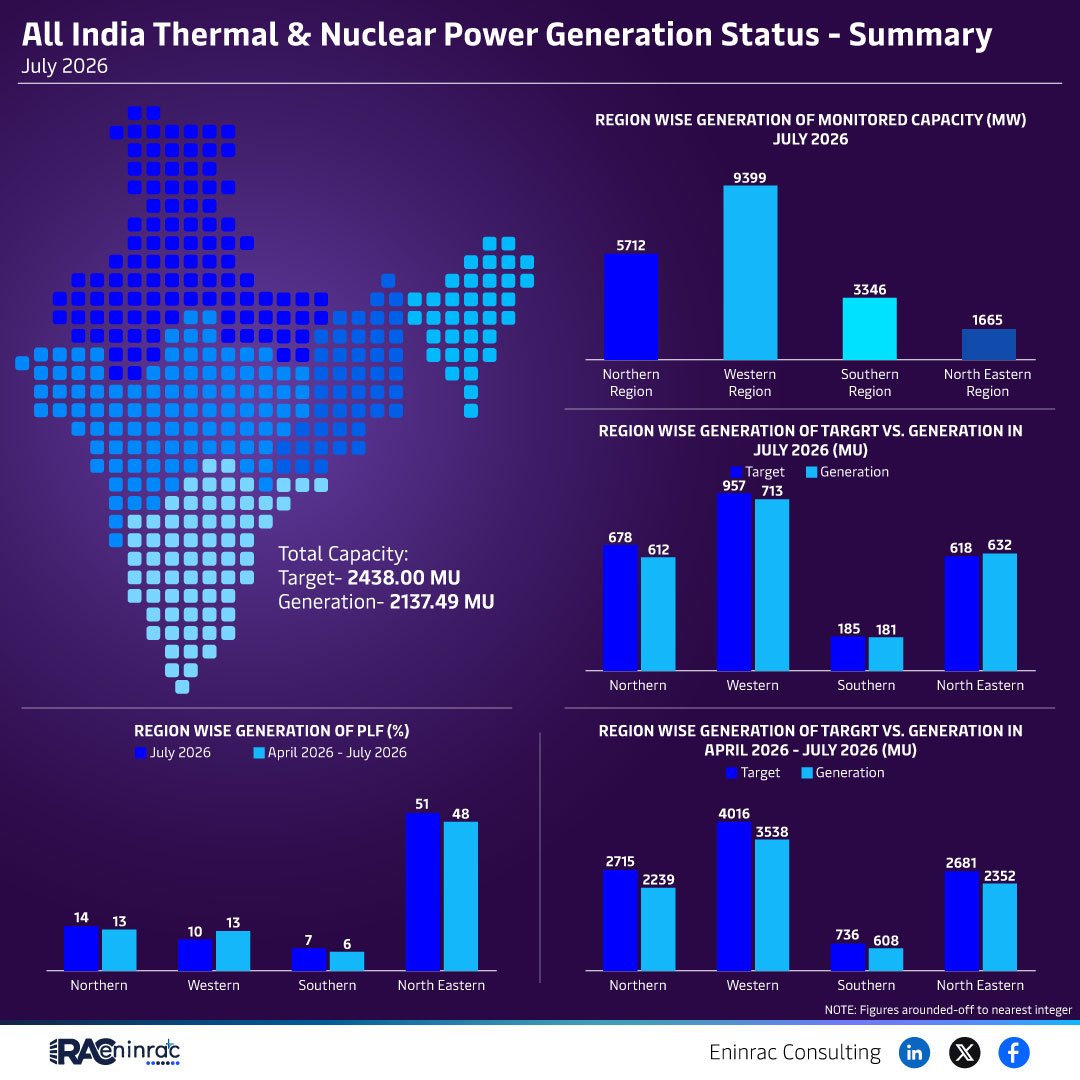
The July 2026 report on India’s thermal and nuclear power generation provides a concise snapshot of how the country’s monitored capacity performed across its four key regions – Northern, Western, Southern and North Eastern. With a national target of 2,438 MU for the month and an actual generation of 2,137.49 MU, the data highlights both achievements and shortfalls, offering valuable insight for policymakers, investors and industry analysts. Readers will learn about regional disparities, plant load factor trends, and the broader implications for India’s conventional energy landscape.
What Does the Data Reveal About This Topic?
Why did India fall short of its July 2026 generation target? The figures show that while the Northern region contributed the highest monitored capacity, the combined output from all regions was still 300 MU below the set goal. This shortfall reflects variations in plant availability, fuel supply constraints, and differing load factor efficiencies across the regions, underscoring the need for targeted operational improvements.
Regional Performance vs National Targets
When comparing each region against the national target, distinct patterns emerge. The Northern region generated the largest share of capacity, yet its plant load factor (PLF) lagged behind the Western region, which exhibited a higher PLF despite lower absolute generation. Southern and North Eastern zones displayed modest capacity contributions but showed relatively better alignment with their respective targets. These differences suggest that while total capacity is important, optimizing PLF—especially in high‑capacity zones—can bridge the gap between target and actual generation.
Impact on Sectors and Industries
The July 2026 generation snapshot influences multiple stakeholders. For conventional energy producers, the data signals where efficiency upgrades are most needed to meet future demand and climate commitments. Investors can identify regions with higher PLF performance as potential sites for capital infusion. Policymakers gain evidence to tailor fuel procurement, maintenance schedules, and grid integration strategies, while downstream industries such as manufacturing and agriculture can anticipate power availability trends that affect production planning.
Key Takeaways
- India’s total generation in July 2026 was 2,137.49 MU, 300 MU below the 2,438 MU target.
- The Northern region contributed the highest monitored capacity but recorded a lower plant load factor than the Western region.
- Western region’s higher PLF indicates better operational efficiency despite lower absolute generation.
- Southern and North Eastern regions, though smaller in capacity, aligned more closely with their regional targets.
- Optimizing plant load factor across high‑capacity regions is critical for closing the target‑generation gap.
- Stakeholders should focus on fuel supply stability, maintenance practices, and targeted investments to improve overall performance.
FAQs
What was the national generation target for July 2026?
The target was 2,438 MU of electricity generation across all monitored thermal and nuclear plants.
Which region produced the most electricity in July 2026?
The Northern region recorded the highest absolute generation among all regions.
Why did the Western region show a higher plant load factor?
Better fuel availability and efficient plant operations contributed to the Western region’s superior PLF.
How does the shortfall affect India’s energy security?
A gap between target and actual generation can strain grid reliability, emphasizing the need for efficiency improvements and supplemental power sources.
What steps can improve generation performance in future months?
Focus on enhancing plant load factors, ensuring consistent fuel supply, and investing in maintenance and modernization of thermal and nuclear assets.