
Introduction
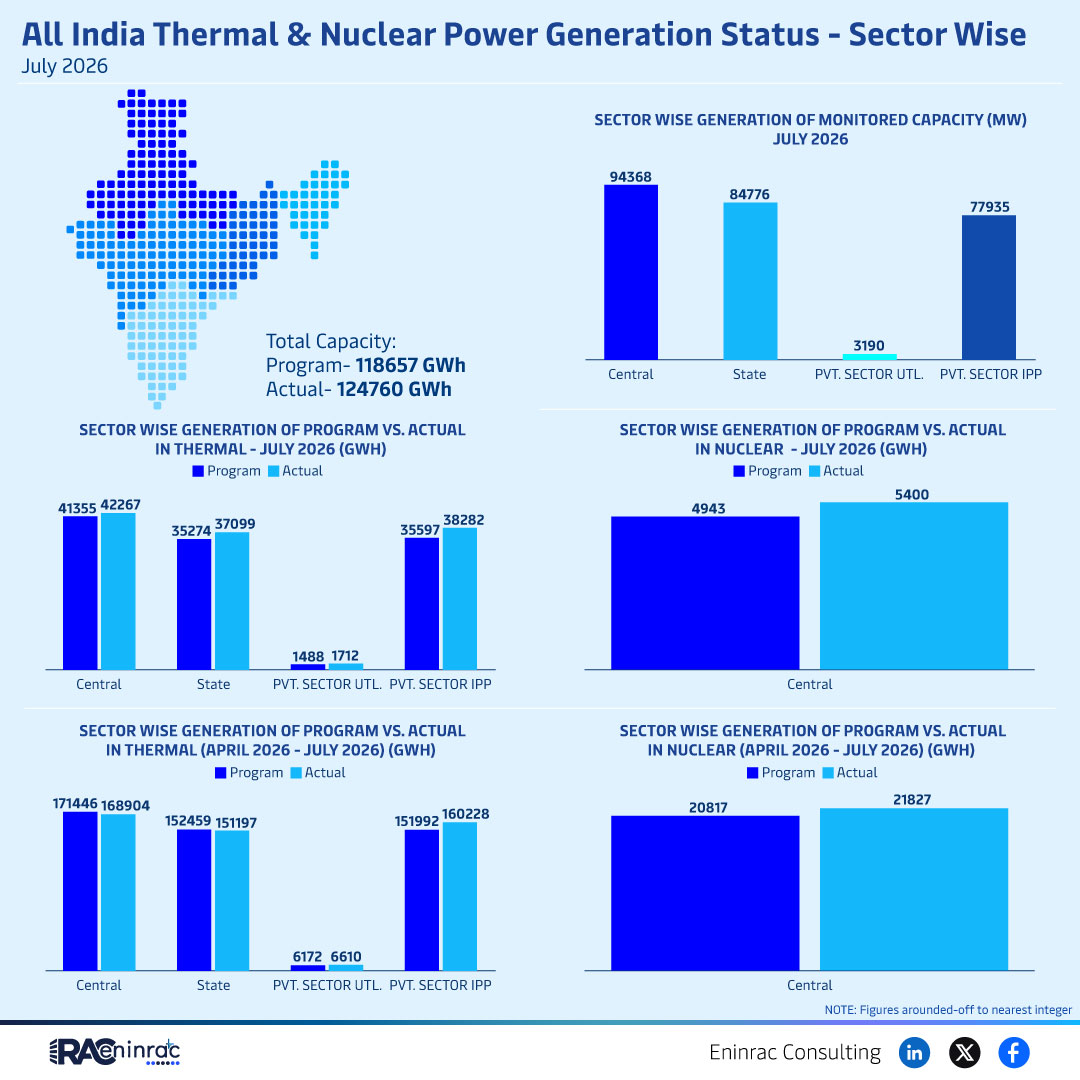
India’s power sector continues to be a cornerstone of economic growth, and the July 2026 generation data offers a timely snapshot of performance across thermal and nuclear sources. The phrase India thermal power generation 2026 captures the focus of this analysis, showing that the total programmed capacity of 118,657 GWh was eclipsed by an actual generation of 124,760 GWh, indicating a robust overshoot of forecasted output. This report breaks down the contributions from central, state, private utility, private sector, and independent power producers (IPP), highlighting where each segment succeeded or lagged. Readers will learn how thermal plants outperformed expectations, how nuclear generation held steady, and what these trends mean for investors, policymakers, and energy planners.
What Does the Data Reveal About This Topic?
Does the July 2026 snapshot suggest a shift in India’s energy mix? The answer lies in the numbers: thermal generation posted 124,760 GWh versus a program target of 118,657 GWh, while nuclear delivered 4,943 GWh against a modest 5,400 GWh plan. The data shows thermal power not only meeting demand but exceeding it, whereas nuclear slightly underperformed its target. This contrast underscores the continued reliance on coal‑fired and gas‑fired plants, even as the nuclear segment contributes a stable, albeit smaller, share of total generation.
Thermal vs Nuclear Generation Trends in July 2026
When comparing the two sectors, thermal power generated roughly 25 times more energy than nuclear in July 2026. Central and state utilities together accounted for the bulk of thermal output, with private utilities and IPPs adding modest shares. In the nuclear arena, central facilities dominated, while private participation remained minimal. The April‑July cumulative figures reinforce these patterns: thermal output reached 168,904 GWh (actual) versus 171,446 GWh programmed, while nuclear accumulated 21,827 GWh actual against a 20,817 GWh plan, reflecting a narrow over‑achievement in the latter period.
Impact on Sectors and Industries
The overshoot in thermal generation alleviates short‑term supply gaps, supporting industrial activity, residential consumption, and export potential. Energy‑intensive sectors such as steel, cement, and chemicals benefit from reliable steam and electricity availability. Conversely, the modest shortfall in nuclear output prompts discussions on capacity upgrades, regulatory reforms, and private investment incentives to diversify the clean‑energy portfolio. Investors monitor these metrics closely, as higher thermal performance can boost earnings for traditional generators, while nuclear stability influences long‑term sustainability goals and carbon‑reduction commitments.
Key Takeaways
- Thermal generation exceeded its program by over 6,000 GWh in July 2026.
- Nuclear output fell slightly short of its target, delivering 4,943 GWh.
- Central and state utilities remain the dominant players in both sectors.
- Private utilities and IPPs contributed noticeably to thermal but had minimal nuclear presence.
- Cumulative April‑July totals show consistent thermal dominance and a modest nuclear gain.
- The data signals ongoing reliance on conventional energy while highlighting opportunities for nuclear expansion.
FAQs
What was the total actual power generation in India for July 2026?
The country generated 124,760 GWh, surpassing the programmed target of 118,657 GWh.
How did nuclear generation perform relative to its target?
Nuclear produced 4,943 GWh, which is slightly below the program of 5,400 GWh.
Which sector contributed the most to thermal power output?
Central and state utilities together accounted for the majority of thermal generation.
Did private power producers have a role in nuclear generation?
Private participation in nuclear was negligible during the reported period.
What implications does the thermal overshoot have for investors?
Higher-than‑expected thermal output can improve revenue forecasts for traditional generators and signal stable demand for coal and gas assets.