
Introduction
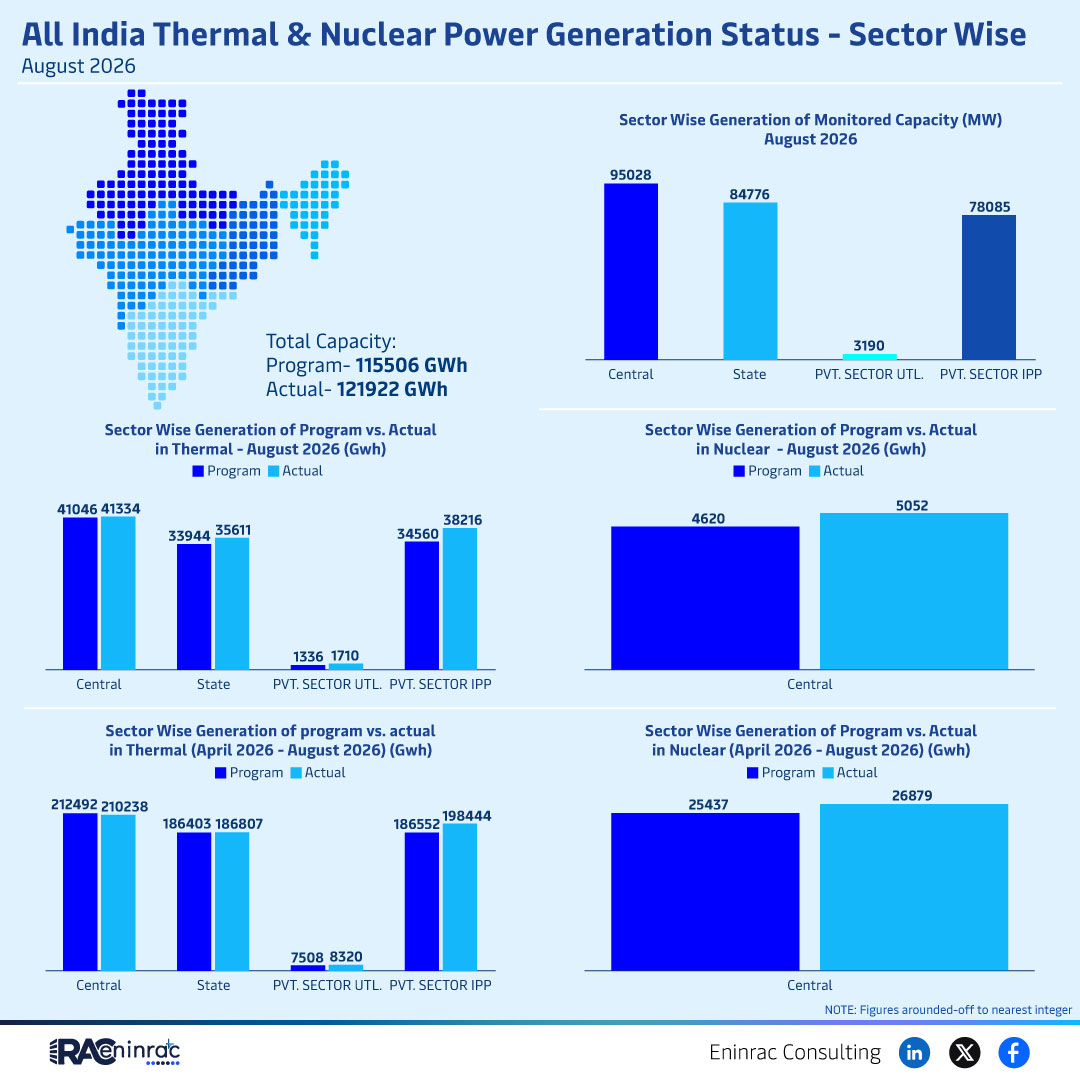
The August 2026 report presents a detailed snapshot of India thermal power generation and nuclear power generation across central, state, private and IPP sectors. By comparing programmed targets with actual output, the data highlights performance gaps, capacity utilization and regional contributions, helping investors, policymakers and industry analysts understand the current state of the country’s conventional energy mix.
What Does the Data Reveal About This Topic?
The data shows that total electricity generation in August 2026 exceeded expectations, with program‑planned 115,506 GWh rising to an actual 121,922 GWh. Thermal power contributed the bulk of this increase, while nuclear generation, though smaller, also posted figures above its programmed target, indicating improved plant availability and efficient dispatch.
Thermal vs Nuclear Performance Overview (August 2026)
Thermal generation reached 95,028 MW of monitored capacity, with central utilities delivering the largest share, followed by state and private entities. Private sector and IPP contributions, while modest, showed steady growth. Nuclear generation recorded a total capacity of 5,052 MW, with central and state operators accounting for most of the output. Across the April‑August 2026 period, thermal capacity consistently outperformed programmed levels, whereas nuclear output moved closer to its forecast, reflecting ongoing commissioning of new reactors and maintenance improvements.
Impact on Sectors and Industries
These results influence a wide range of stakeholders. For the conventional energy sector, higher than expected thermal generation reassures grid stability and supports industrial demand. Nuclear performance gains reinforce government commitments to low‑carbon baseload power, attracting long‑term capital. Financial markets view the surplus in actual generation as a signal of operational efficiency, while policymakers can use the gap analysis to refine capacity planning, fuel procurement and emission reduction strategies.
Key Takeaways
- Actual electricity generation in August 2026 surpassed program targets by 6,416 GWh.
- Thermal power remains the dominant source, contributing over 95 GW of monitored capacity.
- Nuclear generation edged closer to its forecast, indicating improved reactor availability.
- Central utilities lead both thermal and nuclear sectors, but private and IPP players are gaining market share.
- The April‑August 2026 period shows consistent over‑performance of thermal capacity.
- Investors and policymakers can leverage these trends to guide future investments and regulatory adjustments.
FAQs
What was the total electricity generation in India for August 2026?
India generated 121,922 GWh of electricity in August 2026, exceeding the program target of 115,506 GWh.
How did thermal power performance compare to its programmed target?
Thermal power delivered 95,028 MW of capacity, surpassing the programmed expectations and reinforcing its role as the primary electricity source.
Did nuclear power meet its generation goals?
Nuclear output reached 5,052 MW, moving closer to the target and showing progress in reactor uptime and new unit commissioning.
Which sectors contributed most to the generation surplus?
Central utilities led the surplus in both thermal and nuclear categories, while private and IPP sectors also posted incremental gains.
What implications does this data have for energy investors?
The over‑performance signals operational efficiency and stable returns, encouraging further investment in both conventional thermal assets and expanding nuclear capacity.