
Introduction
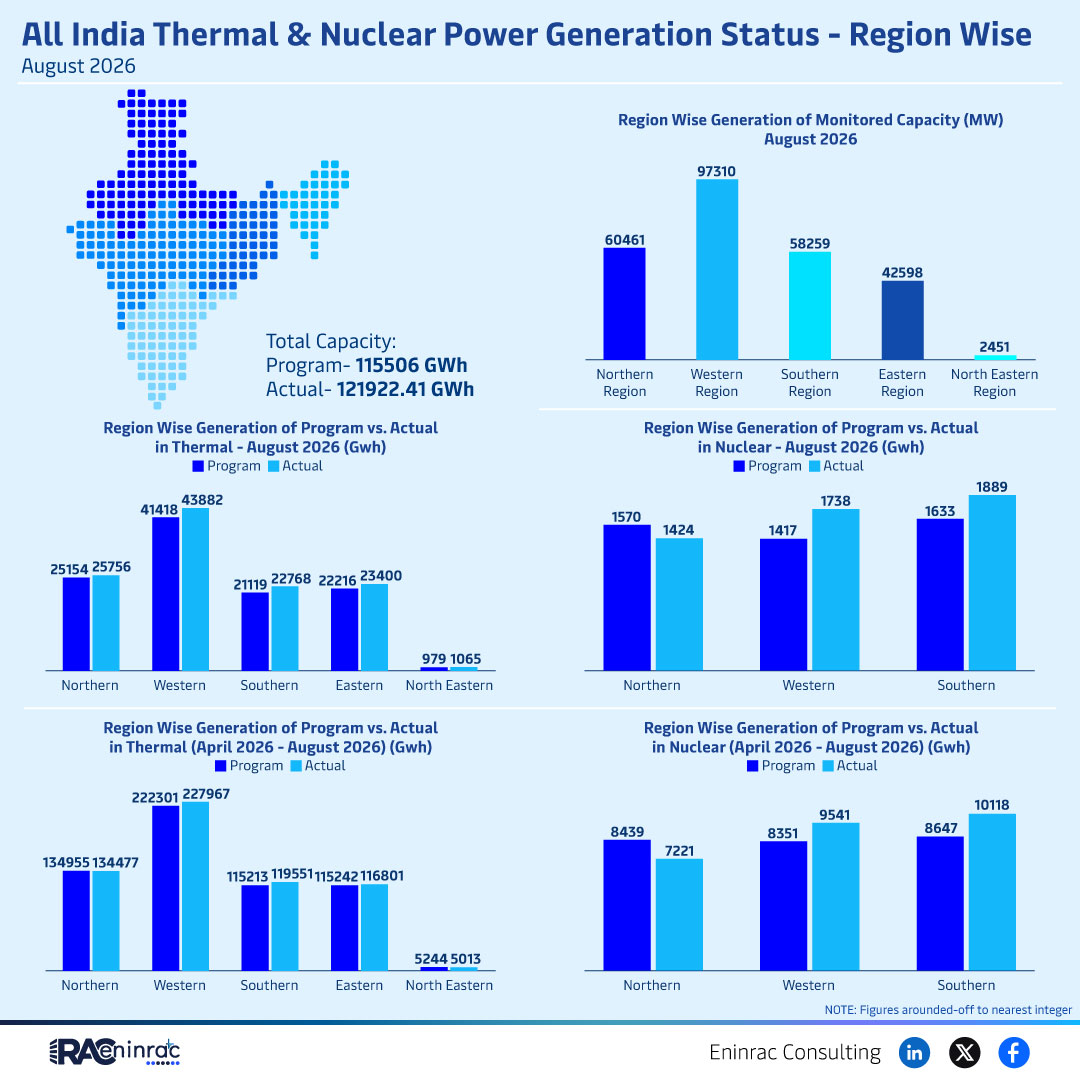
India’s power sector continues to be a cornerstone of economic growth, and the latest August 2026 statistics offer a clear snapshot of how thermal and nuclear generation are performing against national targets. This overview of India thermal and nuclear power generation provides insight into a total program capacity of 115,506 GWh, while actual generation reached 121,922.41 GWh, indicating that the country not only met but exceeded its forecasted output. The report also highlights monthly trends compared to the April‑August 2026 cumulative figures, where thermal generation totaled 227,967 GWh and nuclear reached 10,118 GWh, reinforcing the upward trajectory. Readers will learn about the regional distribution of this generation, the comparative strength of thermal versus nuclear sources, and the broader implications for investors, policymakers, and energy consumers.
What Does the Data Reveal About This Topic?
In a straightforward question‑answer style, the numbers answer whether India’s power generation is on track. The August 2026 figures confirm that thermal power delivered 121,922 GWh, surpassing the program estimate of 115,506 GWh. Nuclear output for the same month stood at 25,154 GWh, also outpacing its program goal of 22,416 GWh. The combined performance suggests a resilient energy mix that is handling growing demand while maintaining a balanced contribution from conventional sources.
Regional Performance Overview
When the numbers are broken down by region, the northern and western zones dominate thermal generation, contributing roughly 58,259 MW and 42,598 MW respectively in monitored capacity. Southern and eastern regions show solid but lower figures, while the north‑eastern area contributes the smallest share. Nuclear capacity follows a similar pattern, with the northern region accounting for over 17,000 GWh of the total nuclear output and the western and southern regions each delivering between 8,000 and 9,000 GWh. These variations highlight where infrastructure investments have been most effective and where future expansion may be needed.
Impact on Sectors and Industries
Higher-than‑expected generation has ripple effects across multiple sectors. Manufacturing firms benefit from more reliable electricity, reducing downtime and operational costs. The renewable energy market sees increased competition for grid access, prompting innovators to improve storage and integration technologies. Investors gain confidence from the demonstrated ability to exceed targets, encouraging further capital inflow into conventional project pipelines. Policymakers can use the regional insights to tailor incentives, upgrade transmission, and plan for balanced growth that supports both urban demand and rural electrification.
Key Takeaways
- Actual thermal generation in August 2026 exceeded program estimates by over 6,000 GWh.
- Nuclear production also outperformed its target, reaching 25,154 GWh.
- The northern and western regions lead in both thermal and nuclear capacity.
- Combined generation of 147,076 GWh underscores a robust conventional energy mix.
- Regional disparities point to opportunities for targeted infrastructure development.
- Strong performance enhances investor confidence and supports policy planning.
FAQs
What was the total actual power generation in India for August 2026?
India generated 121,922.41 GWh of electricity in August 2026, combining thermal and nuclear sources.
Did thermal power exceed its program target?
Yes, thermal generation reached 121,922 GWh against a program target of 115,506 GWh.
Which region contributed the most nuclear power?
The northern region supplied the highest nuclear output, accounting for over 17,000 GWh.
How does this data affect energy investors?
Exceeding targets demonstrates operational reliability, making conventional energy projects more attractive for investment.
What are the implications for future power planning?
Policymakers can use the regional breakdown to prioritize grid upgrades and balance future thermal and nuclear capacity expansions.