
Introduction
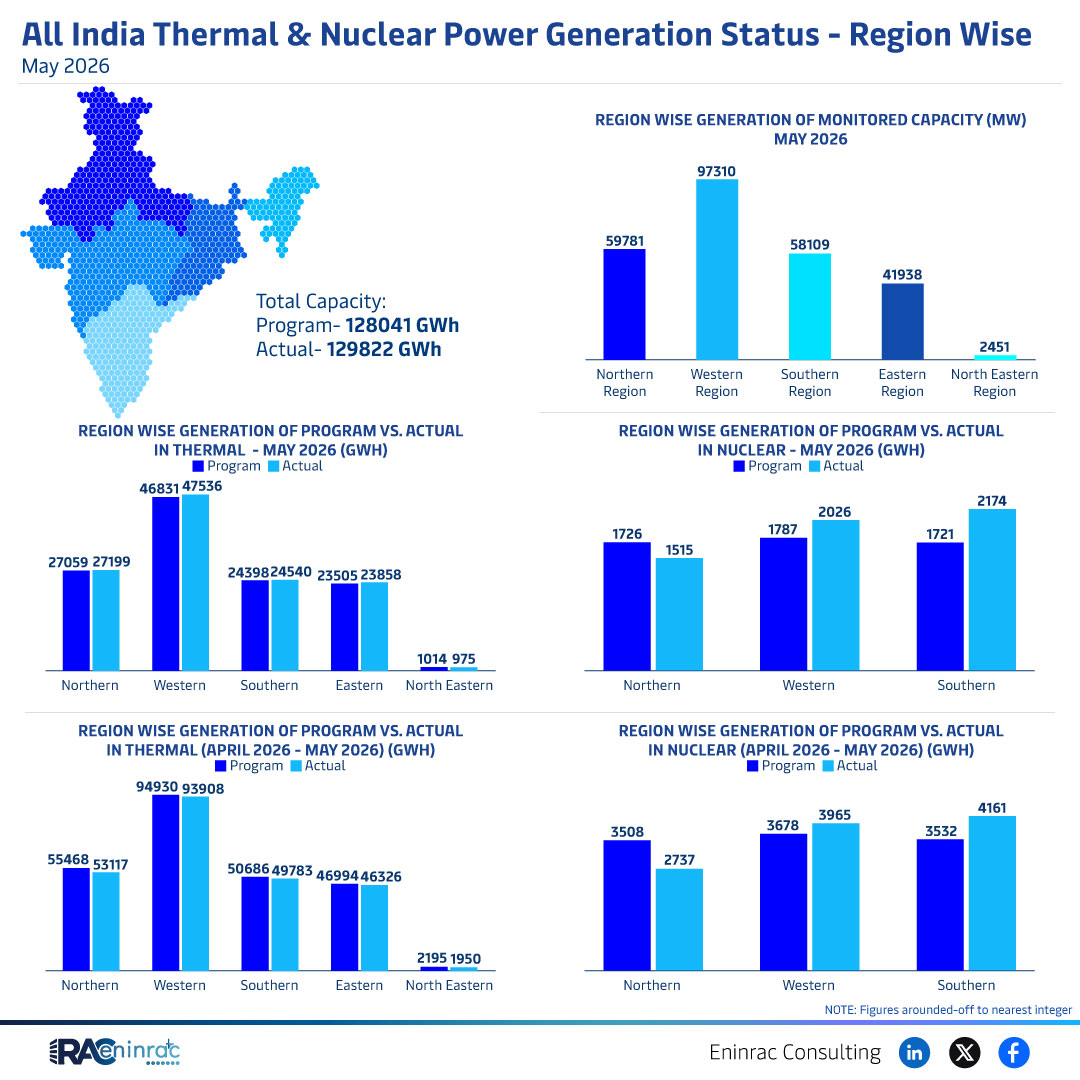
India’s power landscape in May 2026 reveals detailed performance of its two dominant conventional sources – thermal and nuclear. Understanding these numbers matters to policymakers, investors and industry observers because they indicate capacity utilisation, regional demand patterns and future infrastructure needs. This report summarises program targets versus actual generation, highlights regional strengths, and explains the broader implications for the Indian energy sector.
What Does the Data Reveal About India’s Power Generation in May 2026?
The raw figures show that total programmed generation across thermal and nuclear sources was 128,041 GWh, while actual output reached 129,822 GWh, indicating a modest overshoot of about 1.4 percent. Thermal generation accounted for the bulk of output, with notable regional variations, whereas nuclear contributed a smaller but steady share, surpassing its programmed figure in most zones.
Regional Performance Insights for Thermal and Nuclear Sectors
In the thermal segment, the Northern region led with the highest programmed capacity of approximately 97,310 MW and delivered close to its target, while the Western and Southern zones reported program‑actual gaps that suggest either operational constraints or better-than‑expected efficiency. The Eastern and North‑Eastern regions lagged behind, reflecting lower installed base and possible fuel supply challenges. Nuclear generation displayed a more balanced picture: Northern and Western zones marginally exceeded forecasts, whereas the Eastern zone fell slightly short. These patterns underline how geography influences both resource availability and grid integration.
Impact on Sectors and Industries
Higher than planned generation eases pressure on electricity markets, potentially stabilising tariffs for industrial consumers and supporting manufacturing growth. Investors view the overshoot as a positive signal for the reliability of conventional assets, encouraging further capital allocation to upgrade thermal plants and expand nuclear capacity. For policymakers, the data highlights the need to address regional disparities, improve fuel logistics in the East, and accelerate renewable integration to complement conventional baseload. Utilities can leverage the insights to fine‑tune maintenance schedules and optimise load dispatch across zones.
Key Takeaways
- Actual generation in May 2026 exceeded programmed output by roughly 1.4 %.
- Northern India remains the dominant thermal power generator, while the West shows strong nuclear performance.
- Eastern and North‑Eastern regions exhibit the greatest gaps between program and actual, indicating infrastructure or fuel challenges.
- Overall nuclear output slightly outperformed its target, reinforcing its role as a stable baseload source.
- Higher generation contributes to lower electricity price volatility for industrial users.
- Regional imbalances suggest targeted investments in transmission and fuel supply are essential for balanced growth.
FAQs
What was the total programmed generation for India in May 2026?
The programmed generation for all conventional sources combined was 128,041 GWh.
Did India’s actual power generation exceed the program in May 2026?
Yes, actual generation reached 129,822 GWh, a 1.4 % increase over the programmed figure.
Which region contributed the most thermal power?
The Northern region, with a programmed capacity of around 97,310 MW, delivered the highest thermal output.
How did nuclear generation perform compared to its target?
Nuclear generation mostly surpassed its programmed levels, especially in the Northern and Western zones.
What are the implications of these generation trends for investors?
Consistent or higher-than‑expected output signals operational reliability, encouraging further investment in plant upgrades and new conventional capacity.