
Introduction
This article examines India’s finished steel import volumes from the fiscal year 2023-24 through the provisional data for 2025-26. Understanding these trends is crucial for policymakers, investors, and industry leaders who track supply‑demand dynamics, pricing pressure, and the impact on domestic production capacity.
What Does the Data Reveal About This Topic?
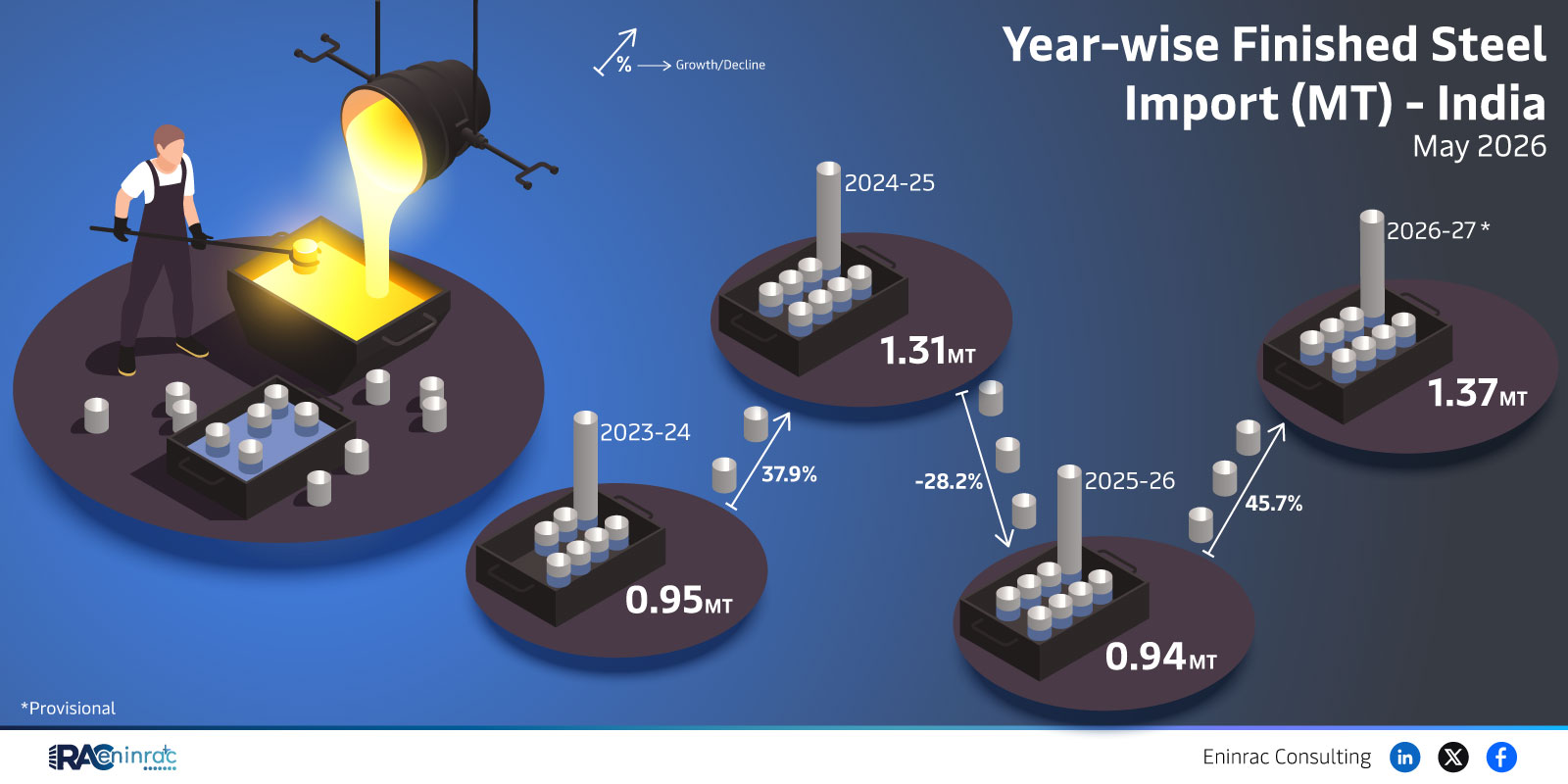
The raw figures show a sharp rise in imports, moving from a modest level in 2023‑24 to a provisional 45.7 million tonnes in 2025‑26, indicating a 28.2% increase year‑on‑year. This surge suggests that domestic steel output is unable to meet growing demand, prompting greater reliance on foreign sources.
Year‑on‑Year Comparison of Import Volumes
In 2023‑24, India imported approximately 1.31 million tonnes, a baseline that grew to 1.37 million tonnes the following year. By 2025‑26, provisional data points to a dramatic jump to 45.7 million tonnes, reflecting both heightened construction activity and infrastructure spending. The contrast between early‑year modest imports and later‑year exponential growth highlights a shift in market conditions, possibly driven by higher global steel prices and tighter domestic supply.
Impact on Sectors and Industries
Rising steel imports affect multiple sectors. Construction firms face higher material costs, while automotive manufacturers may experience supply chain bottlenecks. For investors, the trend signals opportunities in steel recycling and downstream processing. Policymakers must balance trade policy, tariff structures, and incentives for domestic steel producers to avoid over‑dependence on imports.
Key Takeaways
- India’s finished steel imports are projected to rise sharply, reaching 45.7 MT in 2025‑26.
- The year‑on‑year increase of 28.2% underscores a supply gap in domestic production.
- Higher imports raise concerns about trade balance and currency pressure.
- Construction and infrastructure sectors are the primary drivers of increased demand.
- Investors may find growth potential in steel recycling and value‑added processing.
- Policy interventions could include tariff adjustments and support for local steel capacity expansion.
FAQs
Why are India’s steel imports rising so quickly?
Rapid infrastructure development, limited domestic capacity expansion, and higher global steel prices are pushing import volumes upward.
Which sectors are most affected by higher steel imports?
Construction, automotive, and heavy engineering sectors feel the greatest impact due to cost and supply considerations.
How does this trend affect India’s trade balance?
Increasing imports widen the trade deficit in the metals category, putting pressure on the current account.
What opportunities exist for investors?
Investors can explore steel recycling, downstream processing, and companies that supply raw materials for domestic producers.
Can policy changes curb the import surge?
Adjusting tariffs, offering subsidies for local production, and encouraging green steel initiatives could help reduce reliance on imports.