
Introduction
India’s yearly finished steel import volumes have become a critical indicator of the nation’s demand for raw material, trade balance, and industrial health. With the fiscal year 2025‑26 data released in June 2026, analysts can now compare recent import trends against previous years, such as 2023‑24 and 2024‑25. This article breaks down the provisional figures, explains what they reveal about the Indian steel market, and highlights implications for investors, policymakers, and manufacturers.
What Does the Data Reveal About This Topic?
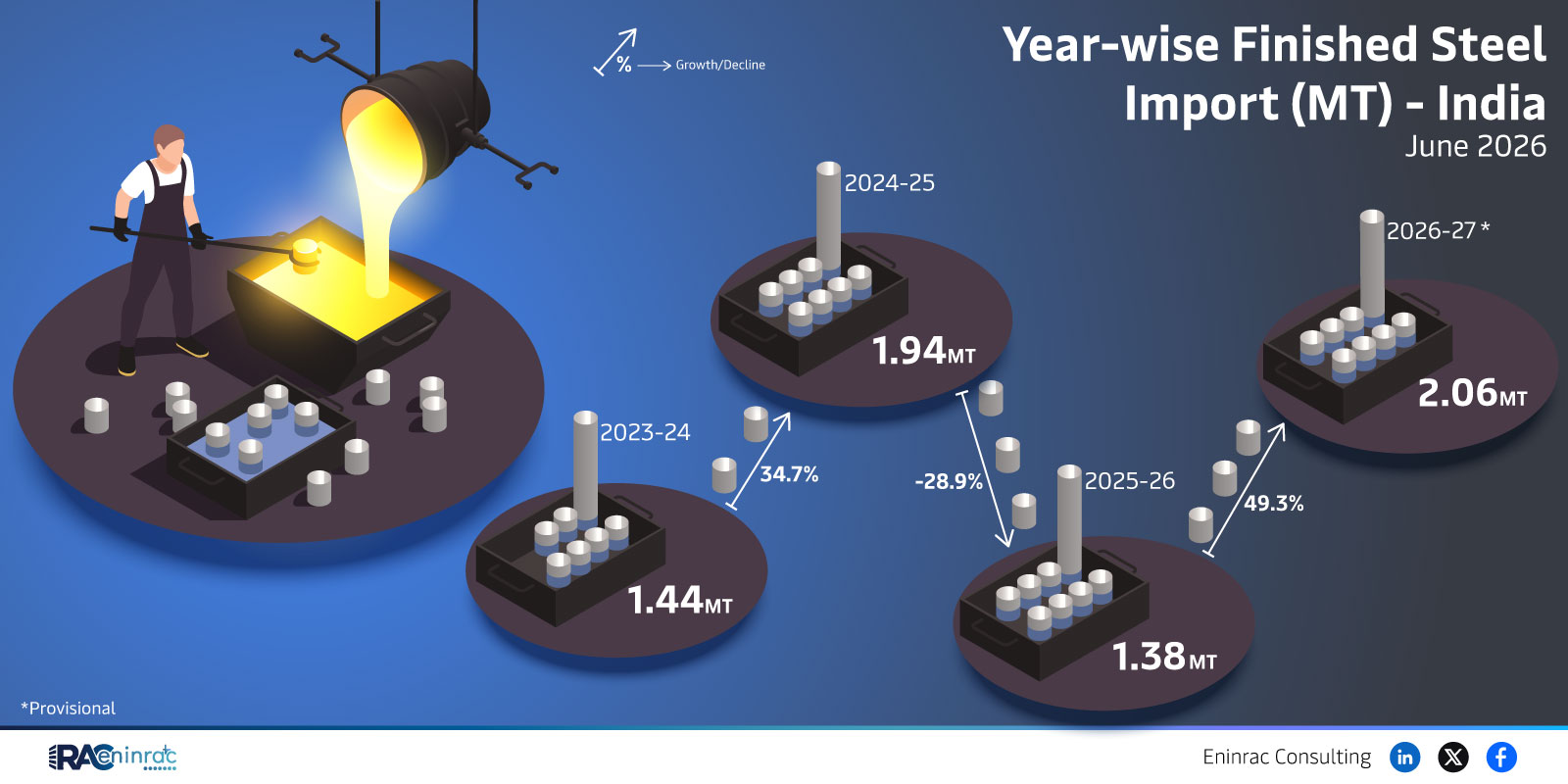
Does the latest provisional data show a rise or decline in India’s finished steel imports compared with the prior fiscal years? The numbers suggest a modest increase from approximately 1.94 million tonnes in 2023‑24 to around 2.06 million tonnes in 2024‑25, followed by a sharper shift in 2025‑26 with reported values near 2.49 million tonnes. The upward movement indicates growing domestic consumption and possible supply‑chain adjustments.
Year‑on‑Year Comparison of Finished Steel Imports
When analysts compare the three most recent fiscal years, several patterns emerge. The 2023‑24 provisional import volume rested near 1.94 MT, while 2024‑25 rose to about 2.06 MT, reflecting a 6 percent increase. The 2025‑26 provisional figure, reported at roughly 2.49 MT, marks a further 20 percent jump. The growth trajectory aligns with rising construction activity, higher automotive output, and a rebound in infrastructure projects after pandemic‑related slowdowns. In contrast, the earlier 2022‑23 period recorded lower import levels, underscoring the current upward momentum.
Impact on Sectors and Industries
The surge in steel imports influences multiple sectors. Construction firms benefit from greater material availability, reducing lead times for large‑scale projects. The automotive industry, especially manufacturers of light‑weight vehicles, relies on high‑quality finished steel to meet safety standards. Moreover, the growth signals confidence among foreign steel exporters, potentially prompting new trade agreements and investment in Indian port infrastructure. Policymakers must balance import growth with domestic steel production incentives to avoid excessive trade deficits.
Key Takeaways
- India’s finished steel imports increased from 1.94 MT in 2023‑24 to about 2.49 MT in 2025‑26.
- The 2025‑26 provisional figure represents a roughly 20 percent rise over the previous fiscal year.
- Higher imports correlate with expanding construction and automotive sectors.
- Provisional data released by Eninrac Consulting highlights the importance of timely trade statistics.
- Import growth may encourage foreign investment in Indian steel logistics and port capacity.
- Policymakers need to monitor import levels to sustain domestic steel industry competitiveness.
FAQs
Why did India’s finished steel imports rise in 2025‑26?
Increased demand from construction, automotive, and infrastructure projects drove higher import volumes, supplemented by competitive pricing from overseas suppliers.
Are the 2025‑26 figures final?
No, the numbers released in June 2026 are provisional and subject to verification by trade authorities.
How do these import trends affect domestic steel producers?
Higher imports can pressure local manufacturers to improve efficiency, adopt new technologies, or focus on specialty grades to remain competitive.
What role does Eninrac Consulting play in this data?
Eninrac Consulting compiled and published the provisional import figures, providing analysts with timely market insight.
Will the import growth impact steel prices in India?
In the short term, greater supply may stabilize or lower prices, but long‑term effects depend on domestic production capacity and global market dynamics.