
Introduction
India’s finished steel import figures for the April‑July 2026 window provide a critical snapshot of the country’s reliance on external steel supply. Understanding these numbers helps analysts, investors, and policymakers gauge the health of the domestic steel market, assess supply‑demand dynamics, and anticipate future pricing pressures. This article unpacks the provisional data released by Eninrac Consulting, compares it with recent fiscal periods, and outlines the broader implications for India’s manufacturing and construction sectors.
What Does the Data Reveal About This Topic?
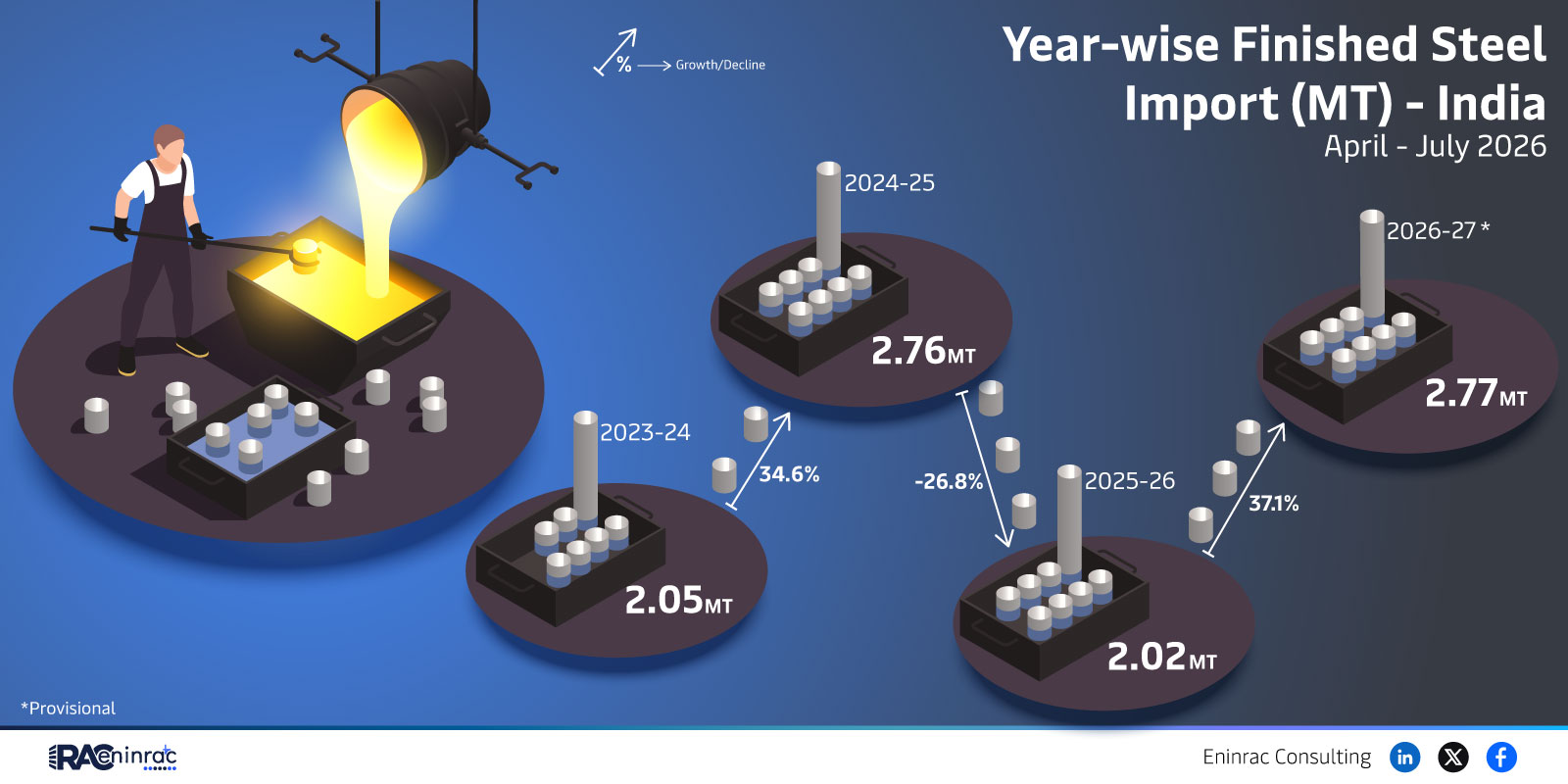
The provisional data shows that India imported approximately 2.02 million metric tonnes (MT) of finished steel between April and July 2026, a modest increase from the 2.05 MT recorded in the same period of the previous year. The rise suggests a slight rebound in demand after a dip in 2025‑26, while also reflecting the impact of global price volatility and shifting trade policies. The figures underscore that India remains a net importer of finished steel, relying on foreign sources to satisfy domestic consumption needs.
Year‑wise Steel Import Volumes and Trends
When placed alongside the 2023‑24 and 2024‑25 periods, the 2026 data reveal a nuanced trend. Imports in 2023‑24 peaked at about 2.76 MT, driven by robust infrastructure spending and limited domestic output. The subsequent 2024‑25 period saw a contraction to around 2.05 MT as local producers expanded capacity. The provisional 2026 figure of 2.02 MT indicates a stabilization phase, with imports hovering near the previous year’s level despite ongoing efforts to boost indigenous production. Looking ahead, estimates for the 2025‑26 and 2026‑27 fiscal years suggest a gradual decline toward 1.8 MT, reflecting anticipated improvements in domestic steel manufacturing and potential policy incentives.
Impact on Sectors and Industries
Finished steel imports directly affect key Indian industries such as automotive manufacturing, construction, and renewable energy equipment production. A modest increase in import volumes can ease short‑term shortages for manufacturers, but prolonged reliance may pressure the trade balance and expose the market to foreign price swings. Policymakers can use these insights to fine‑tune tariffs, import duties, and incentives for local steel production, thereby enhancing supply security and supporting economic growth.
Key Takeaways
- India imported roughly 2.02 MT of finished steel from April to July 2026.
- Import volumes show a slight rise from the previous year’s 2.05 MT.
- The data suggest a stabilization after a peak of 2.76 MT in 2023‑24.
- Provisional estimates point to a gradual decline toward 1.8 MT in 2025‑26 and 2026‑27.
- Import trends influence construction, automotive, and renewable energy sectors.
- Policy adjustments could reduce dependency on foreign steel and improve trade balance.
FAQs
Why does India import finished steel instead of producing it domestically?
Domestic capacity gaps, seasonal demand spikes, and price competitiveness often drive imports to meet immediate industry needs.
How do global steel price fluctuations affect Indian import volumes?
Higher global prices can increase import costs, prompting policy reviews or encouraging local production expansion.
What is the expected trend for Indian steel imports in the next two fiscal years?
Provisional forecasts anticipate a gradual reduction to around 1.8 MT as domestic output rises and policy measures take effect.
Which Indian sectors are most sensitive to changes in steel import levels?
Construction, automotive manufacturing, and renewable energy equipment production are particularly dependent on steady steel supply.
Can policy incentives help reduce India’s reliance on steel imports?
Yes, targeted tariffs, subsidies for local manufacturers, and investment in modern steel plants can lower import dependence.