
Introduction
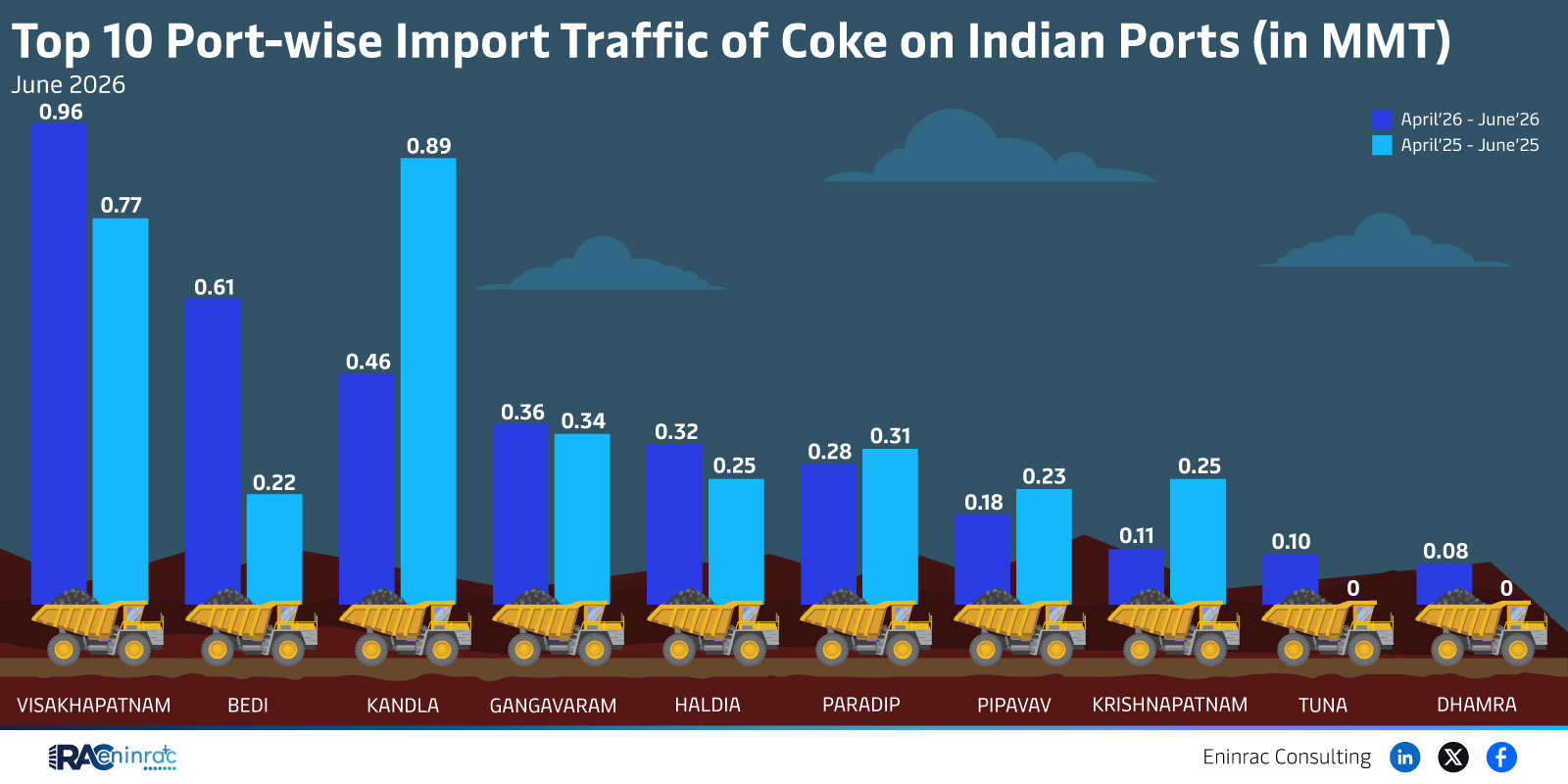
June 2026 saw a detailed snapshot of coke import volumes across India’s busiest ports. The report titled “Top 10 Port‑wise Import Traffic of Coke on Indian Ports (in MMT)” lists the leading gateways where metallurgical coke arrives for steel production and other industrial uses. Understanding these figures helps analysts gauge supply chain dynamics, regional demand, and potential bottlenecks in the conventional energy sector. This article breaks down the raw numbers, highlights the most active ports, and explains why the data matters to investors, policymakers, and industry stakeholders.
What Does the Data Reveal About This Topic?
The data shows that Visakhapatnam leads with 0.96 MMT of coke imported between April 26 and June 26, closely followed by Kandla at 0.89 MMT for the same period. Smaller ports such as Paradip and Dhamra recorded only 0.10 MMT and 0.08 MMT respectively, indicating a steep concentration of imports in a few major hubs. This disparity raises questions about port infrastructure, regional steel demand, and logistics efficiency across the coastal belt.
Port‑wise Comparison of Coke Imports in June 2026
Visakhapatnam, located on the east coast, captured the highest share with 0.96 MMT, reflecting its proximity to the growing steel clusters in Odisha and Jharkhand. Kandla on the west coast delivered 0.89 MMT, benefitting from established hinterland connections to Gujarat’s industrial zones. Bedi, Kandla’s neighboring port, showed modest volumes while Gangavaram, Haldia, and Krishnapatnam each contributed between 0.10 MMT and 0.15 MMT, suggesting emerging demand in eastern and southern regions. Pipavav and Tuna, both smaller facilities, recorded sub‑0.10 MMT movements, highlighting capacity constraints or limited contractual allocations. Dhamra’s 0.08 MMT underscores its nascent role in coke logistics despite recent infrastructure upgrades.
Impact on Sectors and Industries
Coke remains a critical feedstock for the steel sector, and shifts in import volumes directly affect raw material costs for manufacturers. Ports with higher throughput, such as Visakhapatnam and Kandla, often experience price premiums that ripple through downstream industries, including construction, automotive, and machinery. Investors monitor these patterns to anticipate profit margins for steel producers and to assess the need for domestic coke production expansion. Policymakers also use the data to prioritize port development projects, improve customs efficiency, and align energy security strategies with regional industrial plans.
Key Takeaways
- Visakhapatnam tops coke imports with 0.96 MMT in June 2026.
- Kandla follows closely, showing strong west‑coast demand.
- Import volumes are heavily concentrated in a few major ports.
- Smaller ports record sub‑0.10 MMT, indicating capacity or contractual limits.
- Trends directly influence steel production costs and regional competitiveness.
- Policymakers can target infrastructure upgrades at lagging ports to balance supply.
FAQs
Which Indian ports imported the most coke in June 2026?
Visakhapatnam led with 0.96 MMT, followed by Kandla at 0.89 MMT, making them the top two import gateways.
Why does Visakhapatnam lead in coke imports?
Its proximity to major steel hubs in eastern India and efficient rail‑port connections drive higher cargo volumes.
How do coke import trends affect steel prices?
Higher import volumes can lift coke prices, raising raw‑material costs for steelmakers and potentially increasing finished‑product prices.
What challenges do smaller ports face in handling coke?
Limited storage capacity, fewer berths, and lower contractual allocations restrict their ability to handle larger coke shipments.
How can policymakers use this data for infrastructure planning?
By identifying high‑growth ports for investment and upgrading smaller ports to improve overall cargo distribution and energy security.