
Introduction
This article examines the top steel‑importing nations for fiscal year 2025‑2026, highlighting volumes, regional patterns, and the implications for global supply chains. Understanding which countries rely most on imported steel helps investors, policymakers, and industry leaders anticipate demand shifts, price movements, and strategic opportunities.
What Does the Data Reveal About This Topic?
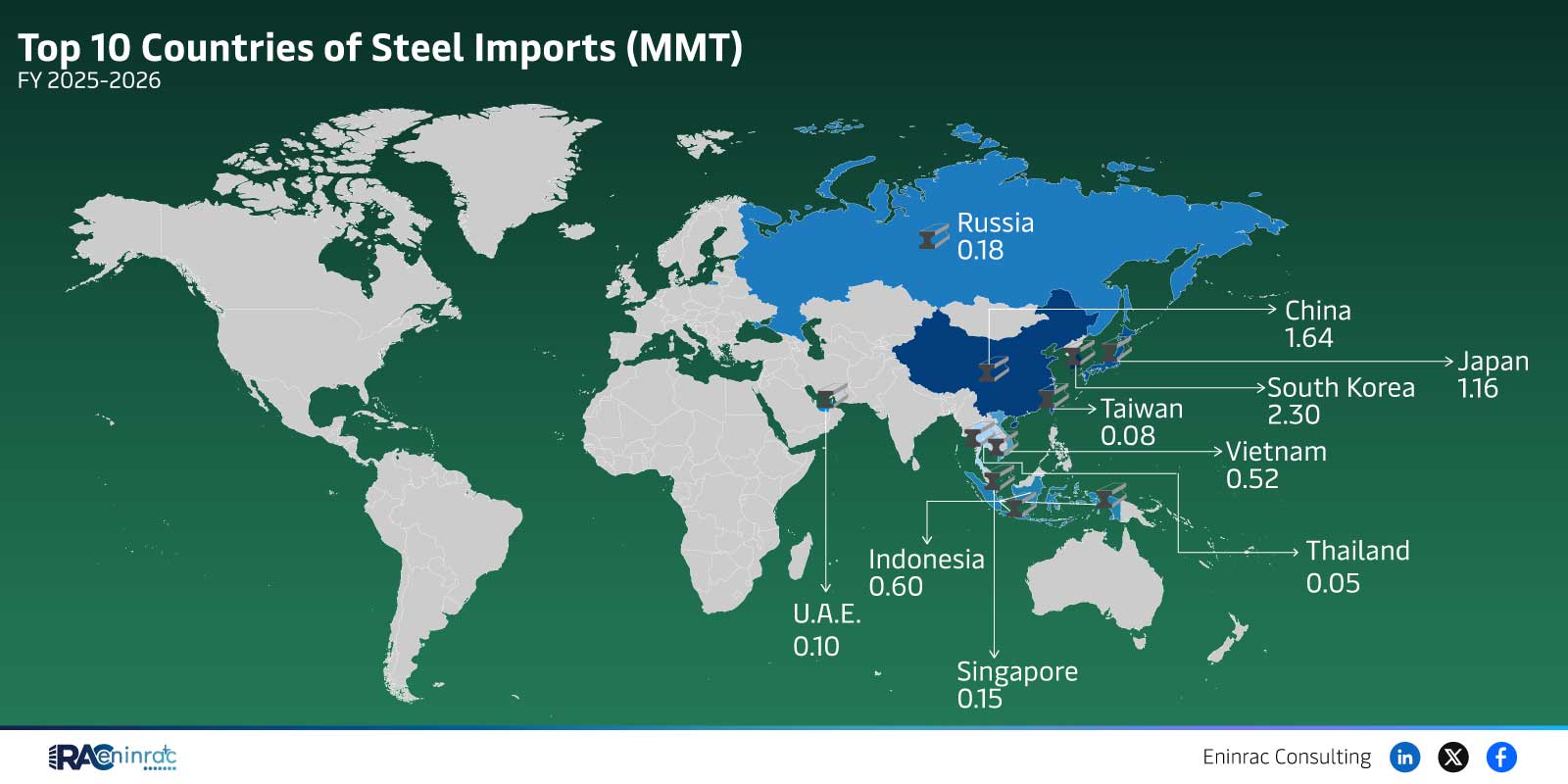
The data shows that a handful of Asian economies dominate steel imports, with Indonesia leading at roughly 2.30 million metric tons, followed by South Korea at 1.16 million metric tons. Smaller importers such as Thailand (0.60 MMT) and Singapore (0.05 MMT) round out the list, indicating a concentration of demand in rapidly industrializing markets.
Regional Comparison of Steel Import Volumes
Indonesia’s import figure of 2.30 MMT surpasses all other listed nations, reflecting its expanding construction sector and manufacturing base. South Korea, despite a strong domestic steel industry, still imports over a million tons, underscoring the need for specialty grades and supplemental supply. Thailand’s moderate imports align with its automotive and appliance production, while Singapore’s modest volume mirrors its role as a re‑export hub rather than a manufacturing base. The data suggests a clear north‑south gradient in import intensity across Southeast and East Asia.
Impact on Sectors and Industries
High steel import levels influence multiple sectors. Construction projects in Indonesia benefit from affordable foreign steel, accelerating infrastructure growth. South Korea’s imports support high‑tech manufacturing, including automotive and shipbuilding, where specific alloy requirements exceed domestic output. Thailand’s steel intake sustains its automotive parts industry, and Singapore’s imports facilitate its position as a logistics and distribution center for regional steel trade. Investors watch these trends to gauge commodity exposure, while policymakers consider trade policies that balance domestic production with import reliance.
Key Takeaways
- Indonesia leads FY 2025‑2026 steel imports with approximately 2.30 MMT.
- South Korea remains a major importer at 1.16 MMT despite strong local production.
- Thailand imports 0.60 MMT, reflecting its manufacturing focus.
- Singapore’s 0.05 MMT imports highlight its re‑export orientation.
- Asian economies dominate the top‑ten steel import list, indicating regional demand concentration.
- Import volumes directly affect construction, automotive, shipbuilding, and logistics sectors.
FAQs
Why does Indonesia import more steel than it produces?
Rapid infrastructure development and limited domestic capacity for certain alloy grades drive Indonesia to source steel internationally.
What types of steel does South Korea import?
South Korea mainly imports high‑strength and specialty alloys needed for advanced automotive, shipbuilding, and electronics applications.
Is Singapore’s steel import level typical for a trade hub?
Yes, Singapore imports modest amounts primarily for processing and redistribution rather than domestic manufacturing.
How do steel import trends affect global prices?
Increased demand from large importers can tighten global supply, supporting higher prices, while diversified sourcing can mitigate price spikes.
What should investors monitor regarding steel imports?
Key indicators include import volume changes, regional construction activity, and trade policy shifts that could alter supply dynamics.