
Introduction
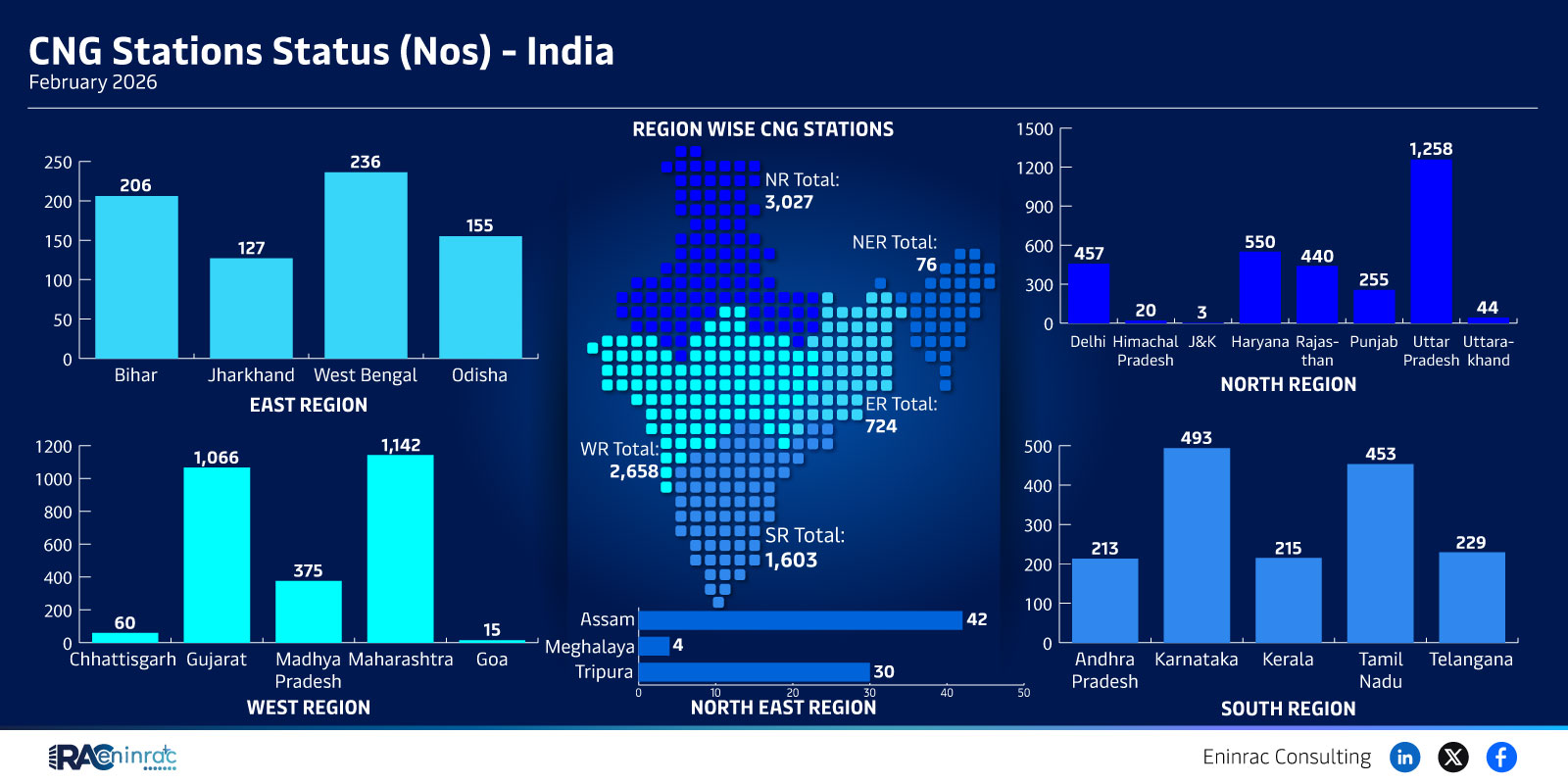
Compressed Natural Gas (CNG) stations are a critical component of India's clean‑fuel infrastructure. The raw data presents the number of operational CNG stations across major regions, highlighting where the network is strongest and where gaps remain. Understanding this distribution helps investors, policymakers, and consumers gauge the growth of alternative fuels and plan future expansions.
What Does the Data Reveal About This Topic?
The data shows a clear concentration of CNG stations in the West and South regions, with the East and North‑East lagging behind. This regional imbalance suggests differing levels of government support, vehicle adoption, and infrastructure investment across the country.
Regional Comparison of CNG Station Density
West Region states such as Maharashtra, Gujarat and Rajasthan collectively host the highest counts, exceeding 1,200 stations. The South Region, including Tamil Nadu and Karnataka, follows with around 1,000 stations. In contrast, the East Region reports roughly 500 stations, while the North‑East records the lowest figure, under 200. These differences reflect varied economic activity, urbanization rates and state‑level incentives for CNG adoption.
Impact on Sectors and Industries
Transport operators, fleet managers and auto manufacturers benefit from a dense CNG network through lower fuel costs and reduced emissions. Energy traders see new opportunities in natural gas distribution, while state governments can meet air‑quality targets. Investors looking at renewable and conventional energy projects can use the station map to identify high‑potential markets for ancillary services such as refuelling kiosks, maintenance hubs and digital payment platforms.
Key Takeaways
- West Region leads with over 1,200 operational CNG stations.
- South Region follows closely, indicating strong state‑level support.
- East Region lags with approximately 500 stations, highlighting growth potential.
- North‑East has the fewest stations, under 200, pointing to a need for targeted incentives.
- Regional disparities affect fleet operating costs and emissions reduction goals.
- Investors can target under‑served regions for infrastructure expansion and related services.
FAQs
Which Indian region has the most CNG stations?
The West Region, especially states like Maharashtra and Gujarat, has the highest number of CNG stations.
Why are there fewer CNG stations in the North‑East?
Lower vehicle density, limited natural gas pipelines and fewer state incentives contribute to the lower count.
How does CNG station density affect fuel prices?
Higher station density typically leads to competitive pricing and lower transportation costs for fleet operators.
Can the CNG network support electric vehicle growth?
Yes, a robust CNG network can complement EV adoption by providing a transitional low‑carbon fuel option for heavy‑duty vehicles.
What opportunities exist for investors in under‑served regions?
Investors can fund new stations, develop maintenance facilities, and introduce digital payment solutions to accelerate network growth.