
Introduction
India's steel import landscape shifted noticeably in May 2026 compared with the same month last year. Understanding which nations saw their share rise or fall helps traders, manufacturers, and policymakers gauge supply dynamics and price pressures.
What Does the Data Reveal About This Topic?
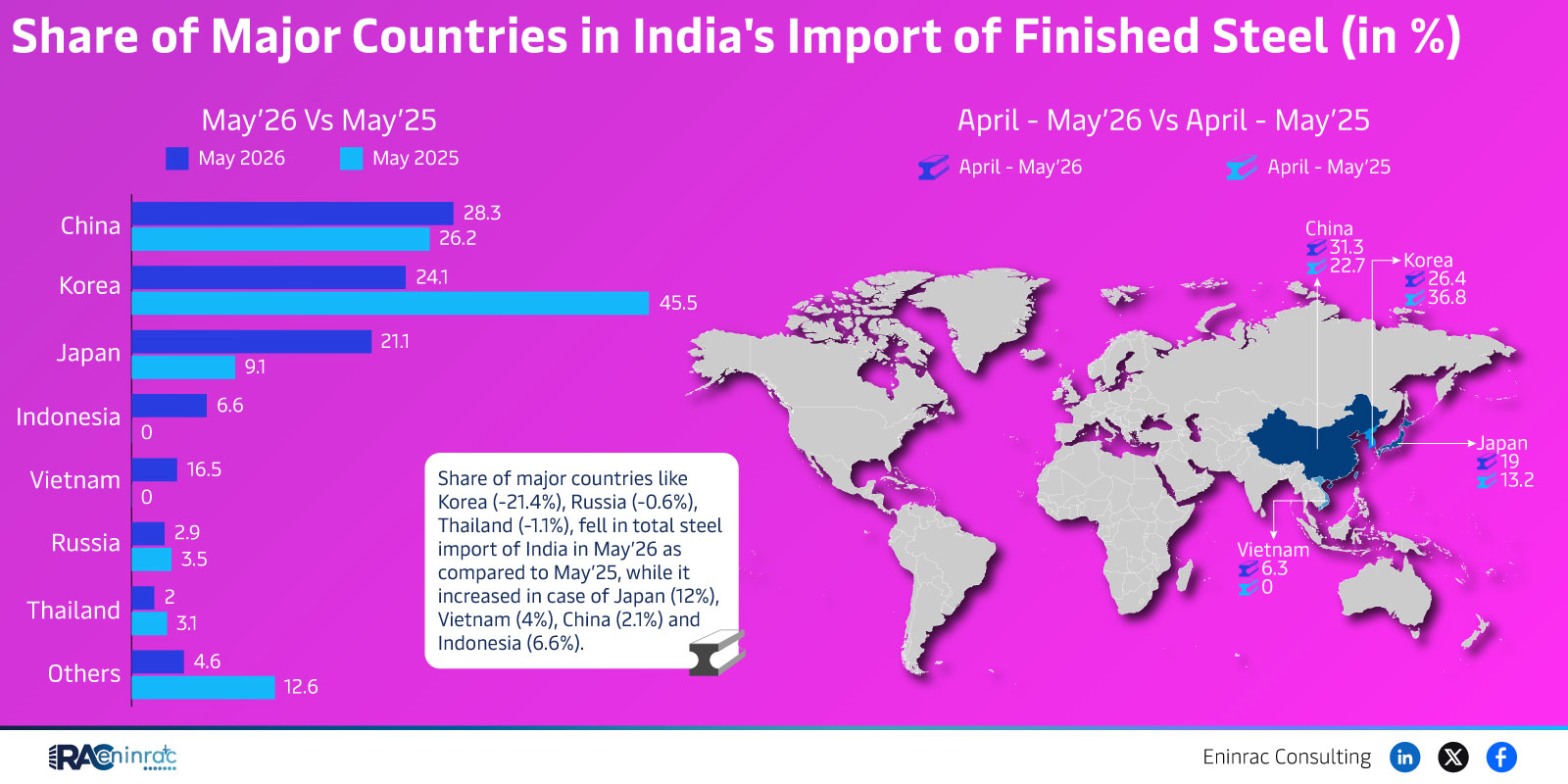
The data shows that Korea, Russia, and Thailand experienced declines in their share of India's total steel imports, while Japan, Vietnam, China, and Indonesia increased their shares. This contrast highlights changing trade patterns and regional demand influences.
Regional Shifts in Steel Import Shares
Korea's share dropped by 21.4%, the steepest decline, indicating possible competitive pressures or shifting sourcing strategies. Russia fell slightly by 0.6% and Thailand by 1.1%, suggesting modest re‑allocation. Conversely, Japan grew by 12%, Vietnam by 4%, China by 2.1%, and Indonesia by 6.6%, pointing to stronger buying interest or better pricing from these suppliers.
Impact on Sectors and Industries
These import trends affect construction, automotive, and infrastructure sectors that rely on imported steel. Higher shares from Japan and Indonesia may bring advanced alloy grades, while reduced Korean imports could affect high‑precision components. Investors watch these shifts to anticipate price volatility and supply chain risks.
Key Takeaways
- Korea's steel import share fell dramatically by 21.4%.
- Russia and Thailand saw modest declines of 0.6% and 1.1% respectively.
- Japan increased its share by 12%, becoming a leading growth contributor.
- Vietnam and Indonesia recorded gains of 4% and 6.6%.
- China's share grew modestly by 2.1%, maintaining a stable presence.
- Overall, the data signals a pivot toward East‑Southeast Asian suppliers.
FAQs
Why did Korea's steel import share drop so sharply?
Possible factors include higher domestic production, pricing competition, and shifting buyer preferences toward other Asian suppliers.
What does the increase from Japan indicate?
It suggests stronger demand for Japanese steel quality, possibly driven by automotive and high‑tech manufacturing needs.
Are these changes likely to affect steel prices in India?
Yes, shifts in supplier mix can influence price benchmarks, especially if higher‑cost imports rise in share.
How might policymakers respond to these trends?
They may review import tariffs, encourage domestic production, or negotiate trade agreements to balance supply security.
Will the trend continue into the next quarter?
While forecasts depend on global market conditions, the current momentum favors continued growth from Japan, Vietnam, and Indonesia.