
Introduction
India's renewable energy landscape continues to evolve rapidly, and the latest figures for April 2026 provide a clear snapshot of how generation is distributed across states and central public sector undertakings (CPSUs). Understanding these numbers helps investors, policymakers, and industry stakeholders gauge growth trends, identify leading regions, and assess the performance of key generating stations.
What Does the Data Reveal About This Topic?
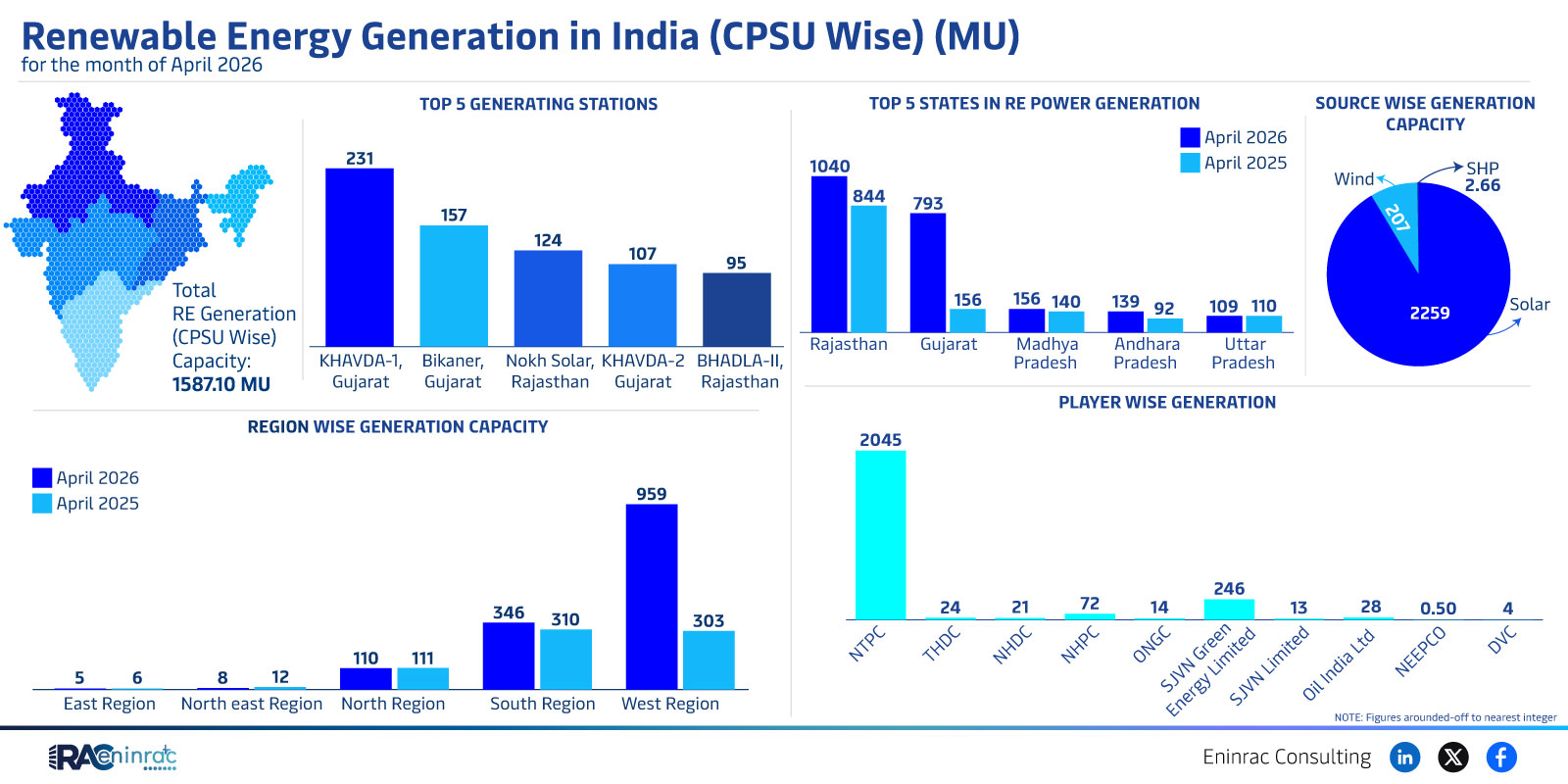
The data shows that Rajasthan and Gujarat dominate renewable generation in April 2026, with Rajasthan leading in wind output and Gujarat excelling in solar production. CPSUs such as KHAVDA-1 and Bikaner contribute significantly, highlighting the role of public entities in scaling clean power.
State‑wise and CPSU‑wise Generation Highlights
When comparing state performance, Rajasthan recorded the highest wind generation, while Gujarat topped solar generation, reflecting each state's resource endowment. Among the top five generating stations, KHAVDA‑1, Bikaner, and Nokh Solar stand out with combined output exceeding 1,500 MU. The CPSU‑wise breakdown shows Rajasthan, Gujarat, Madhya Pradesh, and Uttar Pradesh as the primary contributors, underscoring regional diversification.
Impact on Sectors and Industries
These generation patterns influence multiple sectors. The power sector benefits from increased grid stability and reduced reliance on fossil fuels. Investors see heightened opportunities in solar farms in Gujarat and wind projects in Rajasthan. Policymakers can tailor incentives to sustain growth in high‑performing regions, while equipment manufacturers and EPC firms gain clearer demand signals for turbines and PV modules.
Key Takeaways
- Rajasthan leads India in wind generation for April 2026.
- Gujarat is the top solar generation state, reflecting strong solar potential.
- Public sector undertakings such as KHAVDA‑1 and Bikaner remain critical to capacity expansion.
- Top five stations collectively produced over 1,500 MU, indicating robust output growth.
- Regional diversification reduces grid congestion and supports balanced national energy security.
- Data-driven insights guide investors, policymakers, and industry players toward high‑impact opportunities.
FAQs
Which state generated the most renewable energy in April 2026?
Rajasthan led in wind generation, while Gujarat topped solar output, making them the highest contributors overall.
What are the top renewable generating stations?
The top stations include KHAVDA‑1, Bikaner, Nokh Solar, KHAVDA‑2, and BHADLA‑II, together delivering more than 1,500 MU.
How do CPSUs contribute to renewable growth?
CPSUs such as those operating in Rajasthan, Gujarat, Madhya Pradesh, and Uttar Pradesh account for a large share of the total generation, highlighting public sector leadership.
What trends can investors expect from this data?
Investors can anticipate continued expansion in solar projects in Gujarat and wind projects in Rajasthan, along with opportunities in emerging CPSU‑driven initiatives.
How does this data affect energy policy?
Policymakers can use the state‑wise performance to design targeted subsidies, grid upgrades, and renewable integration strategies that align with regional strengths.