
Introduction
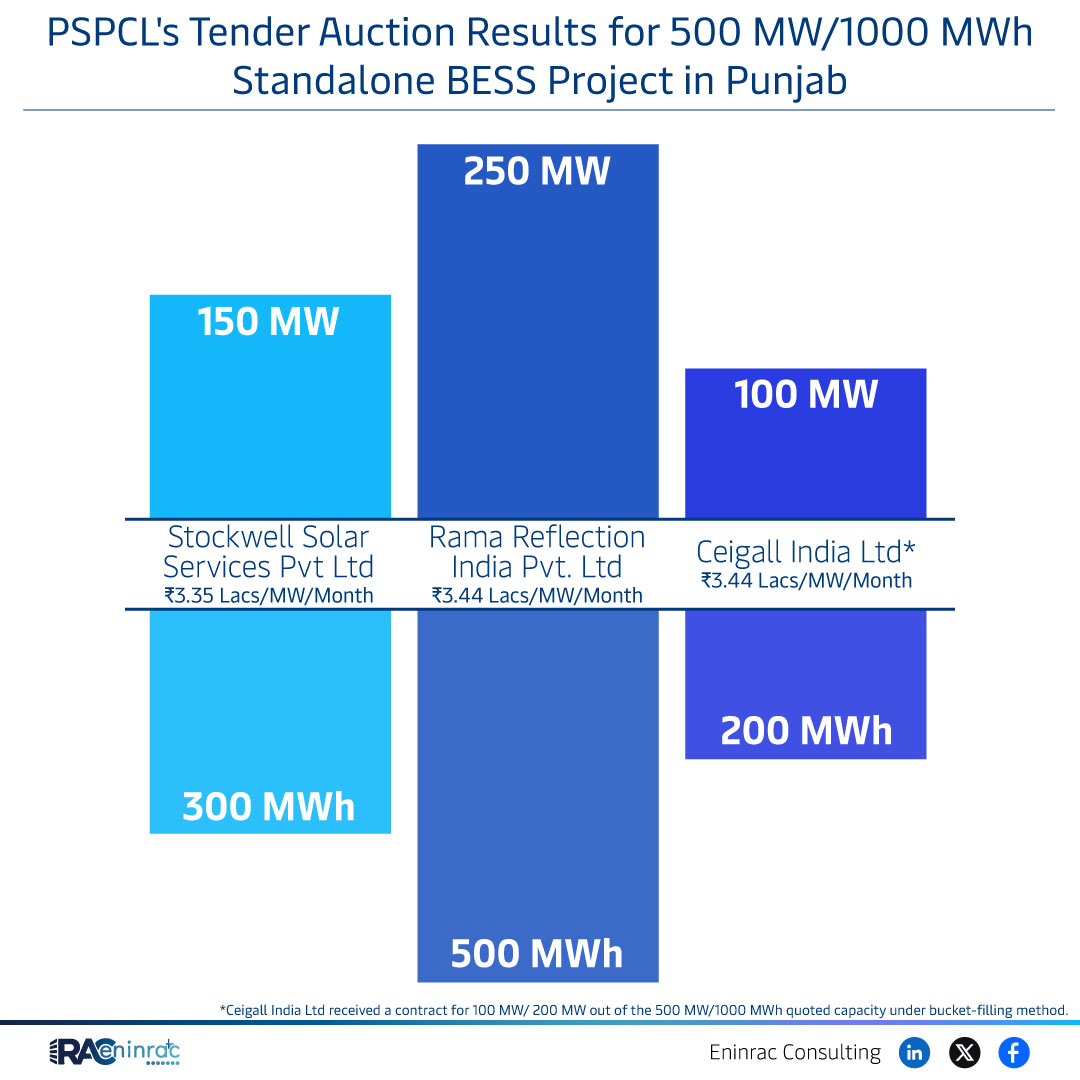
The Punjab State Power Corporation Limited (PSPCL) recently announced the outcome of its large‑scale battery energy storage system (BESS) tender, covering a total capacity of 500 MW and 1,000 MWh. Understanding these results is crucial for investors, policymakers, and industry players who track renewable storage projects in India. This article breaks down the key figures, explains the allocation method, and highlights what the data means for the broader energy market.
What Does the Data Reveal About This Topic?
Which companies secured contracts and how much capacity did they receive? The raw data shows that Ceigall India Ltd was awarded a portion of the tender—specifically 100 MW to 200 MW—through a bucket‑filling allocation method. The tender also listed pricing tiers of 33.35 Lacs per MW per month, 3.44 Lacs per MW per month, and 44 Lacs per MW per month, indicating a tiered cost structure that reflects project scale and risk.
Comparative Analysis of Pricing and Allocation
When comparing the three price points, the middle tier (3.44 Lacs/MW/Month) is dramatically lower than the high‑end 44 Lacs/MW/Month, suggesting that smaller or less‑risky projects may command premium rates. Ceigall’s awarded capacity falls within the lower‑mid range, implying a competitive bid that balances cost efficiency with project size. This pattern mirrors other Indian BESS auctions where larger aggregators secure bulk capacity at reduced per‑MW rates, while niche players target higher‑margin, smaller blocks.
Impact on Sectors and Industries
The PSPCL BESS tender influences several sectors. Renewable energy developers gain a reliable storage partner to smooth intermittent solar and wind output, enhancing grid stability. Financial investors see a clear revenue stream from long‑term power purchase agreements tied to the awarded capacity. Policymakers can use the pricing data to refine subsidy structures and encourage cost‑effective storage deployment across the nation.
Key Takeaways
- Ceigall India Ltd secured 100‑200 MW of the 500 MW BESS tender.
- The bucket‑filling method allocated capacity based on bid competitiveness and price tiers.
- Three distinct pricing tiers indicate a tiered risk‑reward model for bidders.
- Lower price tiers favor larger, more established storage providers.
- The tender supports grid reliability for Punjab’s growing renewable portfolio.
- Investors can anticipate stable cash flows from long‑term storage contracts.
FAQs
What is a bucket‑filling allocation method?
It is a bidding process where capacity is assigned in sequential “buckets” based on price and volume, ensuring the most cost‑effective offers fill the available quota first.
Why are there multiple price tiers in the tender?
Different tiers reflect varying project sizes, risk profiles, and technology specifications, allowing the utility to balance cost and reliability.
How does this tender affect renewable energy integration?
By providing 1,000 MWh of storage, the BESS can store excess solar or wind generation and release it during peak demand, reducing curtailment.
Can other companies still participate in similar tenders?
Yes, PSPCL and other state utilities regularly issue BESS tenders, and the disclosed pricing framework helps future bidders shape competitive offers.
What are the financial implications for Ceigall India Ltd?
The awarded capacity secures a long‑term revenue stream, improves the company’s market credibility, and may attract additional investment for scaling storage solutions.