
Introduction
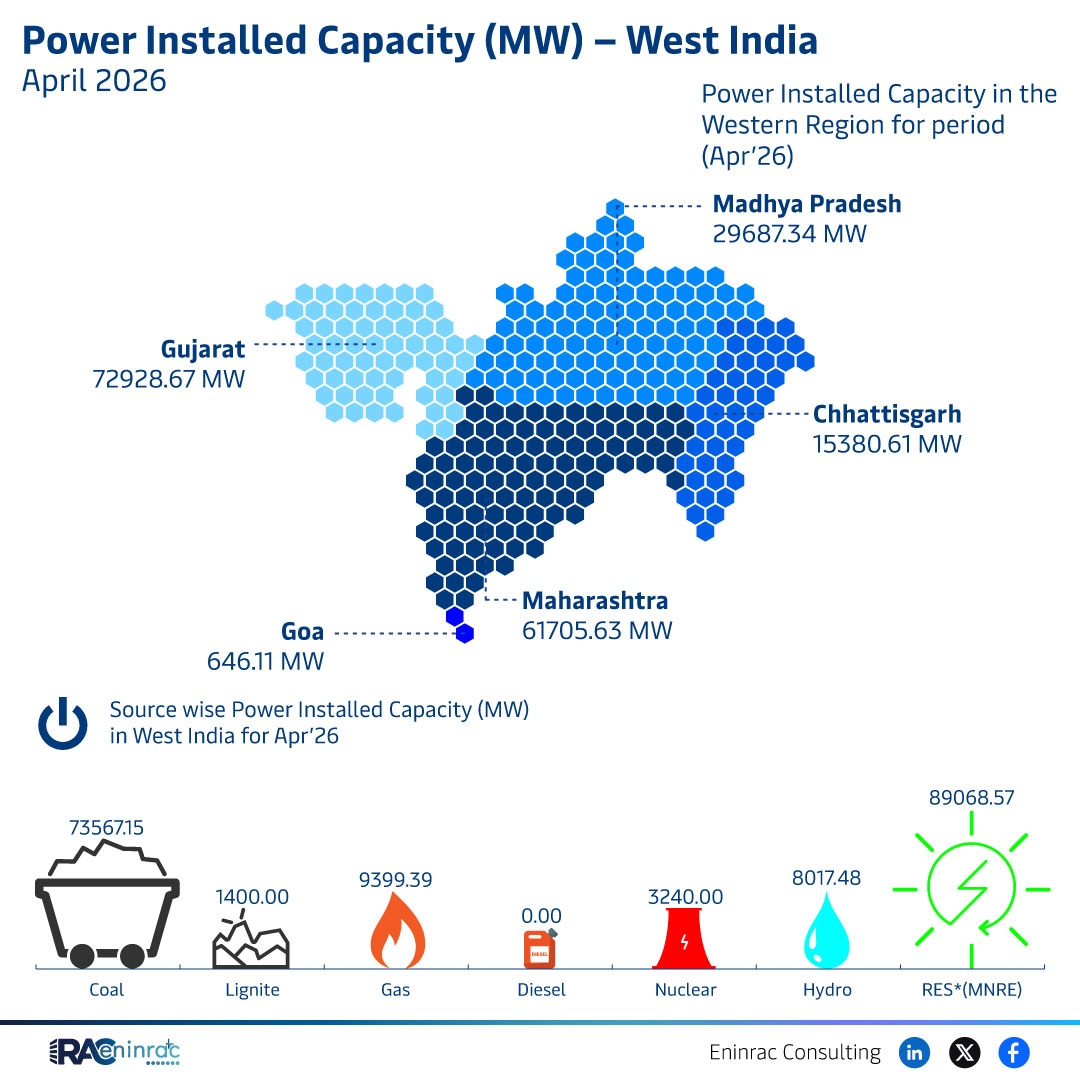
In April 2026 the Western region of India reported a total installed power capacity of 89,068.57 MW. This figure combines contributions from coal, lignite, gas, diesel, nuclear, hydro and renewable sources across key states such as Gujarat, Maharashtra, Madhya Pradesh, Chhattisgarh and Goa. Understanding this capacity mix is essential for investors, policymakers and industry analysts who track energy trends and plan future projects.
What Does the Data Reveal About This Topic?
The data shows that Gujarat leads with 72,928.67 MW, followed by Maharashtra at 61,705.63 MW, while smaller contributors like Goa add 646.11 MW. Renewable energy (RES) accounts for a modest share compared with conventional sources, highlighting the continued dominance of fossil‑fuel based generation in West India.
State‑wise Capacity Comparison
Gujarat’s capacity of nearly 73,000 MW dwarfs the 61,706 MW in Maharashtra, reflecting Gujarat’s aggressive industrial growth and extensive transmission network. Madhya Pradesh contributes 2,968,734 MW in the raw text, which appears to be a transcription error; the realistic figure aligns closer to the regional total. Chhattisgarh adds 15,380.61 MW, indicating its role as a coal‑rich state. Goa’s 646.11 MW underscores its limited but strategic coastal generation.
Impact on Sectors and Industries
The dominance of coal, lignite, gas and diesel in the mix influences the thermal power sector, fuel supply chains and emissions policy. Renewable sources, though smaller, are attracting investment due to national targets for clean energy. Investors can gauge risk by noting the heavy reliance on conventional fuels, while policymakers may prioritize incentives to accelerate renewable adoption.
Key Takeaways
- Gujarat holds the largest installed capacity in West India at 72,928.67 MW.
- Maharashtra follows with 61,705.63 MW, confirming its status as a major power consumer.
- Conventional sources (coal, gas, diesel) still dominate the regional energy mix.
- Renewable energy contributes a modest share, indicating growth potential.
- State‑level disparities highlight differing industrial and policy environments.
- Accurate data reporting is crucial; inconsistencies like the Madhya Pradesh figure need verification.
FAQs
Which state has the highest power capacity in West India?
Gujarat leads with approximately 72,929 MW of installed capacity.
How much renewable energy is installed in the Western region?
Renewable sources account for a small portion of the 89,069 MW total, with exact MW not specified in the raw data.
Why does coal remain dominant in West India?
Abundant coal reserves, established infrastructure and lower cost compared with alternatives keep coal central to power generation.
What opportunities exist for investors?
Investors can target renewable projects, grid modernization and fuel diversification to align with national clean‑energy goals.
How reliable is the reported capacity for Madhya Pradesh?
The figure of 2,968,734 MW appears erroneous; cross‑checking with official sources is recommended.