
Introduction
The May 2026 power installed capacity report for East India provides a detailed snapshot of generation potential across eight states. Understanding this data is essential for investors, policymakers, and energy analysts who track regional growth, resource allocation, and the balance between conventional and renewable sources. This article breaks down the figures, highlights key trends, and explains the implications for the broader Indian power sector.
What Does the Data Reveal About This Topic?
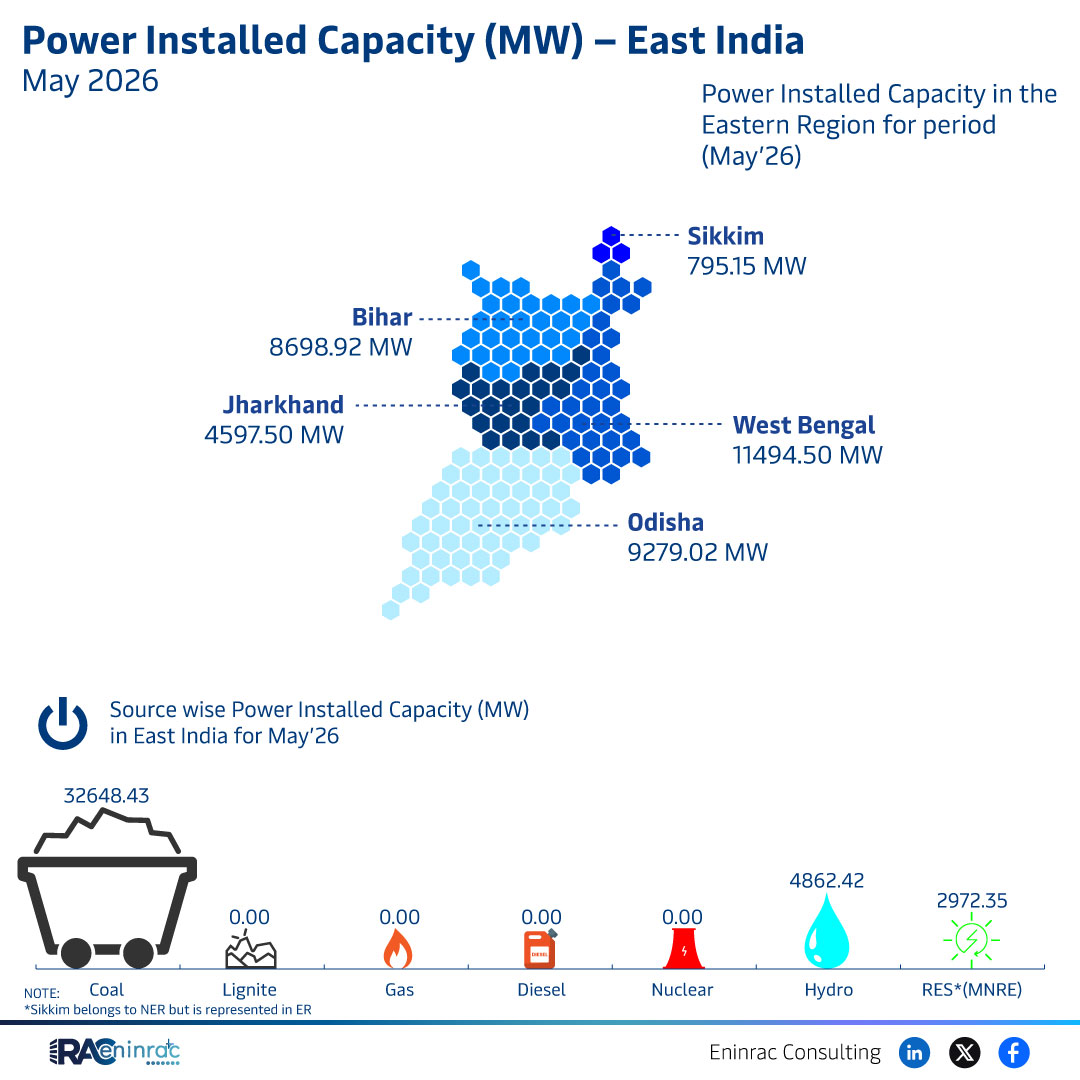
What does the May 2026 East India power installed capacity data tell us about regional energy dynamics? The numbers show that West Bengal leads with 11,494.50 MW, followed by Bihar at 8,698.92 MW and Odisha at 9,279.02 MW. Smaller states such as Sikkim contribute modestly with 795.15 MW, while Jharkhand’s data is missing, indicating potential reporting gaps. The total installed capacity across the region reaches 32,648.43 MW, reflecting a mix of coal, hydro, gas, and renewable sources.
Regional Capacity Comparison and Source Mix
When comparing states, West Bengal’s capacity surpasses the combined total of Bihar and Odisha, underscoring its strategic importance in the eastern grid. The source‑wise breakdown reveals that coal and lignite still dominate, but hydro and other renewable energy sources (RES) are gaining traction, especially in states with abundant water resources. The presence of zero values for several categories suggests either under‑development or data collection issues that need addressing for accurate planning.
Impact on Sectors and Industries
The capacity figures influence multiple sectors. Power‑intensive industries such as steel, cement, and textiles rely on stable supply, making West Bengal’s high capacity a competitive advantage. Renewable energy developers see opportunities in states where hydro and RES are highlighted, encouraging investment in solar and wind projects. Policymakers can use the gaps in Jharkhand’s reporting to improve data transparency, which is critical for grid reliability and future expansion planning.
Key Takeaways
- West Bengal holds the highest installed capacity in East India at 11,494.50 MW.
- Bihar and Odisha each exceed 8,000 MW, contributing significantly to regional supply.
- Coal remains the dominant source, but hydro and renewable energy are present and growing.
- Data gaps, especially for Jharkhand, highlight the need for improved reporting mechanisms.
- Sikkim’s modest capacity reflects its smaller market but still adds to the regional mix.
- The total regional capacity of 32,648.43 MW positions East India as a key contributor to India’s overall power generation goals.
FAQs
Which state has the largest power installed capacity in East India?
West Bengal leads with 11,494.50 MW of installed capacity as of May 2026.
What are the main sources of power in East India?
Coal and lignite dominate, while hydro, gas, diesel, nuclear, and renewable energy sources also contribute.
Why is Jharkhand's capacity data missing?
The report shows a placeholder, indicating possible reporting delays or data collection issues that need clarification.
How does the installed capacity affect industrial growth?
Higher capacity ensures reliable electricity for energy‑intensive industries, supporting production, expansion, and competitiveness.
What opportunities exist for renewable energy investors?
States with hydro potential and emerging RES figures present attractive sites for solar, wind, and hydro projects, especially as the region diversifies its energy mix.