
Introduction
The Government of India’s PM E‑DRIVE scheme is accelerating the adoption of electric two‑wheelers across the country. Running from April 2024 to January 2026, the programme offers financial incentives to manufacturers and buyers, aiming to reduce emissions and boost the domestic EV ecosystem. This page breaks down the state‑wise allocation of incentives, highlights the leading regions, and explains what the numbers mean for investors, policymakers, and consumers.
What does the data reveal about this topic?
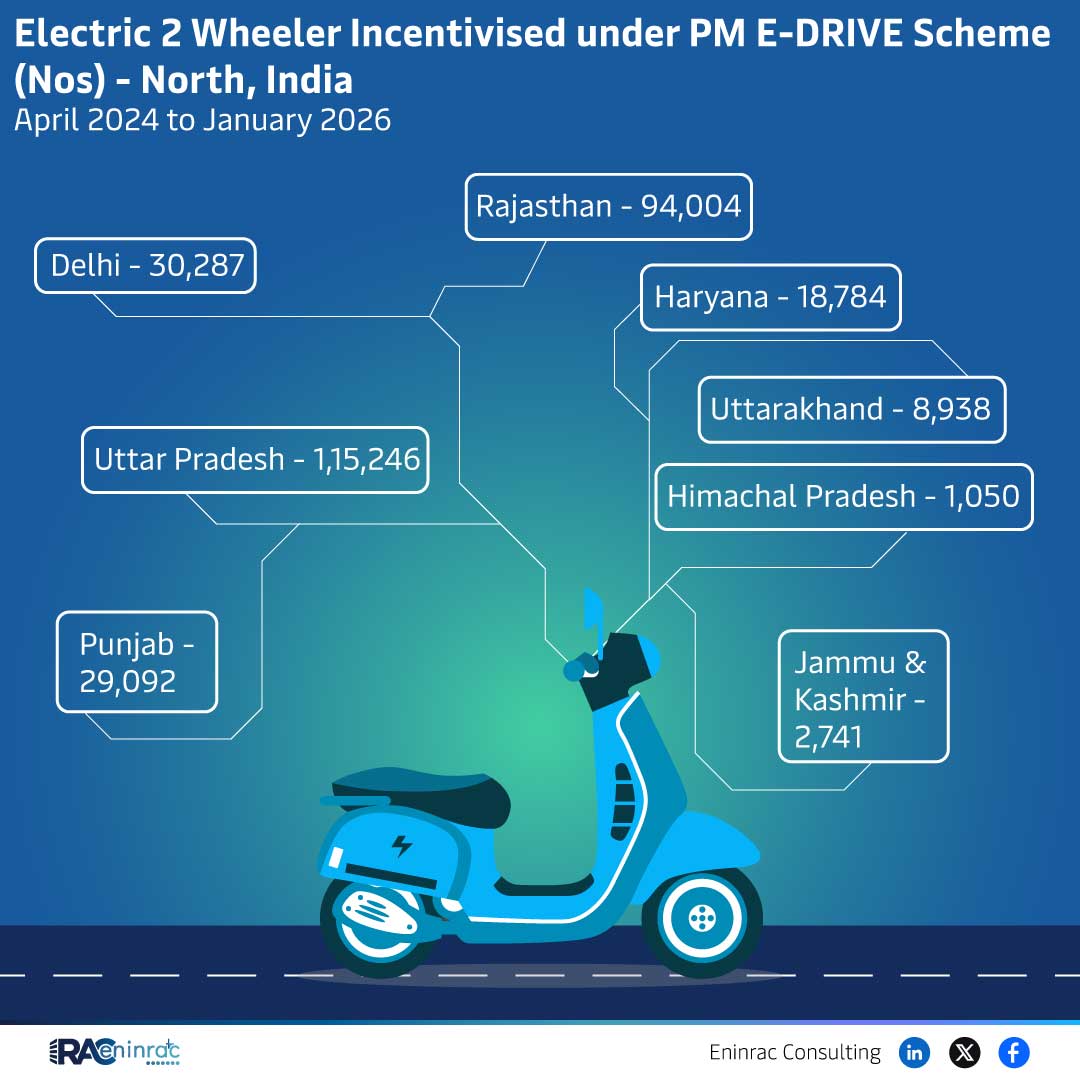
Which states receive the highest E‑DRIVE incentives? Rajasthan tops the list with an allocation of 35,910.95 units, followed by Uttar Pradesh (3,811.63) and Jammu & Kashmir (1,546.71). Smaller allocations go to Uttarakhand (837.89), Himachal Pradesh (310.29), Delhi (384.40), and Ladakh (11.40). The distribution reflects both market potential and regional policy focus.
State‑wise Incentive Landscape
Rajasthan’s dominant share (nearly 70 % of the total listed) signals strong manufacturing capacity and a proactive state EV policy. Uttar Pradesh, with its large population and growing urban centres, shows a solid mid‑range allocation. Jammu & Kashmir’s notable figure indicates targeted support for hilly and remote areas. In contrast, Ladakh’s modest number underscores limited market size but also highlights the scheme’s reach into remote territories.
Impact on Sectors and Industries
The PM E‑DRIVE incentives influence several key sectors:
- EV manufacturers: Higher subsidies lower production costs, encouraging new models and scaling up factories, especially in Rajasthan.
- Battery suppliers: Increased two‑wheeler sales drive demand for lithium‑ion cells, boosting the EV batteries market.
- Renewable energy integration: More electric vehicles create a need for clean charging infrastructure, aligning with India’s renewable energy goals.
- Investors: Clear state‑wise incentives provide a data‑driven basis for allocating capital to high‑growth EV hubs.
- Policymakers: The allocation map helps refine future subsidy structures and identify regions needing additional support.
Key Takeaways
- Rajasthan receives the largest share of PM E‑DRIVE incentives, positioning it as the flagship EV two‑wheeler market.
- Uttar Pradesh and Jammu & Kashmir also attract significant funding, indicating diverse regional growth opportunities.
- Smaller allocations to Himachal Pradesh, Uttarakhand, Delhi, and Ladakh reflect tailored support for varied market sizes.
- The incentive distribution is expected to accelerate EV battery demand and spur local manufacturing.
- Investors can leverage the data to target high‑potential states for venture and private‑equity funding.
- Policymakers can use these insights to fine‑tune future subsidy schemes and infrastructure planning.
FAQs
What is the PM E‑DRIVE scheme?
PM E‑DRIVE is a government initiative that provides financial incentives for electric two‑wheelers to promote clean mobility and reduce carbon emissions.
How long does the incentive period last?
The current incentive window runs from April 2024 to January 2026.
Why does Rajasthan receive the highest allocation?
Rajasthan has a strong manufacturing base, supportive state policies, and a growing urban population, making it an ideal hub for EV expansion.
Can consumers in low‑allocation states still benefit?
Yes. The scheme offers nationwide benefits; the state‑wise numbers reflect the amount of funding earmarked for manufacturers and infrastructure, not consumer eligibility.
What impact will these incentives have on EV battery demand?
Increased two‑wheeler sales will boost demand for battery packs, encouraging local battery production and reducing import reliance.
How should investors use this data?
Investors can prioritize funding in states with higher allocations—like Rajasthan and Uttar Pradesh—where market growth and policy support are strongest.