
Introduction
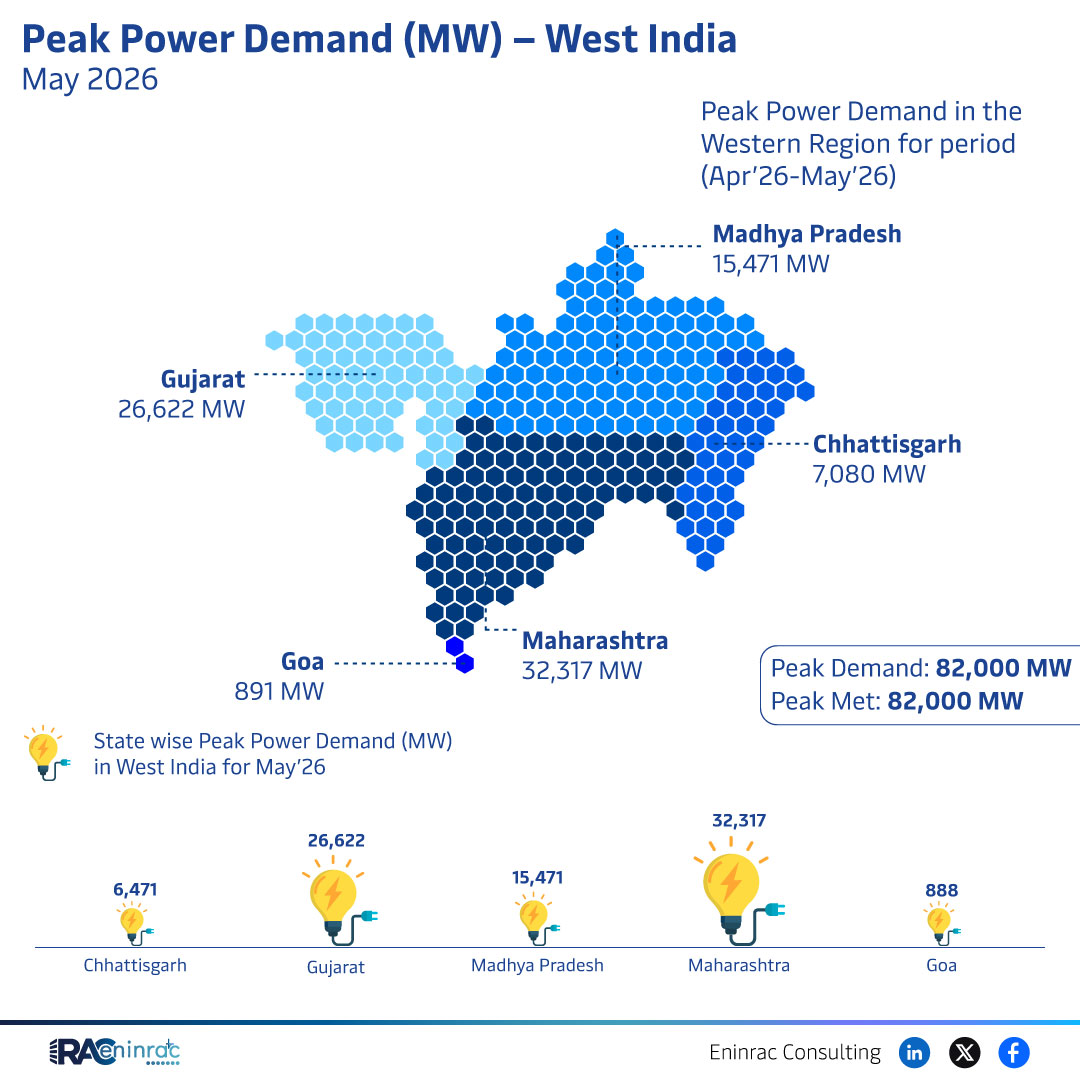
In May 2026 the western region of India recorded a total peak power demand of 82,000 megawatts (MW). Understanding how this demand is distributed across key states such as Gujarat, Maharashtra, Madhya Pradesh and Chhattisgarh helps utilities, investors and policymakers gauge regional energy pressure and plan capacity upgrades.
What Does the Data Reveal About This Topic?
The data shows that Maharashtra led the region with a peak demand of 32,317 MW, followed by Gujarat at 26,622 MW. Madhya Pradesh contributed 15,471 MW and Chhattisgarh 7,080 MW. Together these four states account for the full 82,000 MW peak, indicating that the western corridor is the primary driver of electricity consumption in May 2026.
State‑Level Comparison of Peak Power Demand
When comparing the four states, Maharashtra’s demand exceeds Gujarat’s by roughly 5,700 MW, reflecting its larger industrial base and higher population density. Gujarat, while second, still shows strong demand due to its manufacturing hubs and expanding renewable capacity. Madhya Pradesh’s demand is less than half of Gujarat’s, highlighting its more balanced mix of agriculture and industry. Chhattisgarh’s relatively low figure points to a smaller industrial footprint and lower urbanisation.
Impact on Sectors and Industries
High peak demand in Maharashtra and Gujarat pressures the conventional energy sector to ensure reliable generation, while also accelerating investment in renewable projects to meet sustainability goals. Heavy‑industry players must consider load‑shedding risks, and investors view the region as attractive for new gas‑turbine or solar farms. Policymakers need to balance grid stability with the push for clean energy, especially as demand peaks during summer months.
Key Takeaways
- Maharashtra recorded the highest peak demand in West India at 32,317 MW.
- Gujarat contributed 26,622 MW, confirming its role as a major power consumer.
- Madhya Pradesh and Chhattisgarh together supplied 22,551 MW, completing the regional total.
- The combined peak of 82,000 MW underscores the western region’s importance in the national grid.
- Industrial growth and urbanisation are the main drivers of the observed demand patterns.
- Future capacity planning must address both conventional and renewable sources to meet peak loads.
FAQs
Which state had the highest peak power demand in May 2026?
Maharashtra, with 32,317 MW.
What is the total peak demand for the western region?
The region reached a combined peak of 82,000 MW.
How does Gujarat’s demand compare to Madhya Pradesh’s?
Gujarat’s demand (26,622 MW) is about 1.7 times higher than Madhya Pradesh’s (15,471 MW).
Why is peak demand important for investors?
It signals where new generation capacity, grid upgrades and renewable projects are most needed, guiding investment decisions.
What sectors are most affected by these peak figures?
Heavy industry, manufacturing, and large‑scale commercial consumers face the greatest impact, while utilities must ensure reliable supply.