
Introduction
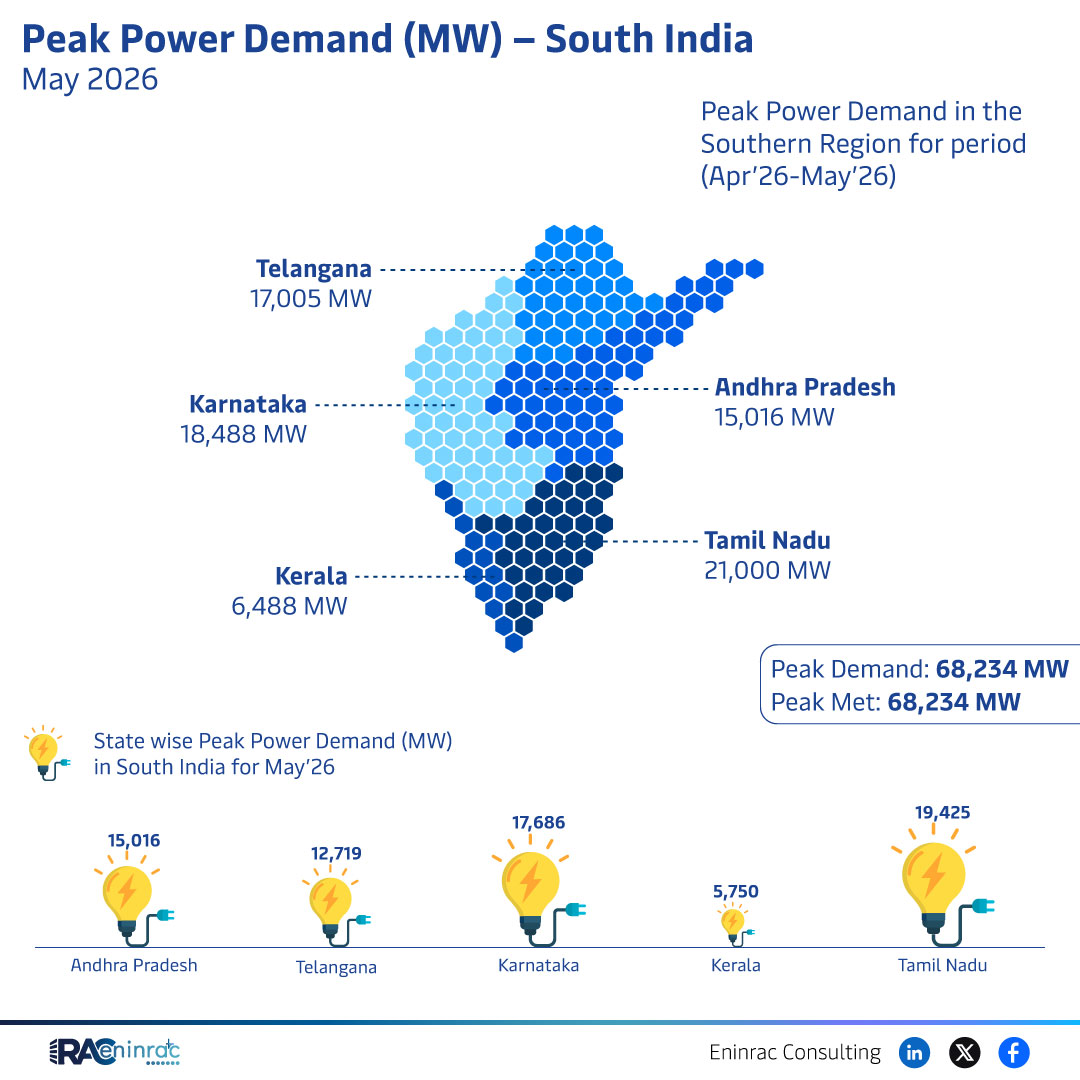
Understanding peak power demand is essential for energy planners, utilities, and investors. In May 2026 the Southern Region of India recorded a total peak demand of 68,234 MW across five states. This article examines the state‑wise figures, highlights the leading demand centers, and explains why these numbers matter for the power sector.
What Does the Data Reveal About This Topic?
The raw data shows that Tamil Tamil Nadu leads with 21,000 MW, followed by Karnataka at 18,488 MW, Telangana at 17,005 MW, Andhra Pradesh at 15,016 MW and Kerala at 6,488 MW. The question is: how do these figures shape regional grid stability and future capacity planning? The answer lies in the concentration of demand in the three largest states, which drives investment in generation, transmission and demand‑side management.
State‑wise Comparison of May 2026 Peak Demand
When the numbers are placed side by side, Tamil Tamil Nadu’s demand is roughly 12 % higher than Karnataka’s and 24 % higher than Telangana’s. Andhra Pradesh, while lower than the top three, still contributes a significant 15,016 MW, indicating a balanced demand spread across the core industrial and residential zones. Kerala’s demand is modest at 6,488 MW, reflecting its smaller industrial base and lower population density. These differences suggest that capacity upgrades will be prioritized in the high‑demand states.
Impact on Sectors and Industries
High peak demand influences multiple sectors. Power generators must secure additional capacity, prompting new thermal, hydro and renewable projects. Transmission operators face pressure to reinforce inter‑state corridors, especially between Karnataka and Tamil Tamil Nadu. Industrial users in these states may encounter higher tariffs during peak periods, encouraging adoption of energy‑efficient technologies and on‑site generation. Policymakers can use this data to design demand‑response programs and to allocate subsidies for renewable integration where demand is greatest.
Key Takeaways
- Tamil Tamil Nadu recorded the highest peak demand at 21,000 MW.
- Karnataka and Telangana follow closely, together accounting for over half of the region’s total demand.
- Kerala’s demand remains the lowest, highlighting regional disparity.
- The combined peak of 68,234 MW underscores the need for expanded generation and transmission.
- Investors should focus on high‑demand states for new power projects.
- Policymakers can target demand‑side measures where peaks are most acute.
FAQs
Which state had the highest peak power demand in May 2026?
Tamil Tamil Nadu led with 21,000 MW.
What is the total peak demand for South India in this period?
The region reached a combined peak of 68,234 MW.
How does Karnataka’s demand compare to Telangana’s?
Karnataka’s 18,488 MW is about 1,483 MW higher than Telangana’s 17,005 MW.
Why is Kerala’s demand significantly lower?
Kerala has a smaller industrial base and lower population density, resulting in 6,488 MW.
What implications does this data have for future energy investments?
High‑demand states present attractive opportunities for new generation, transmission upgrades and demand‑response initiatives.