
Introduction
The May 2026 peak power demand data for North India provides a detailed snapshot of electricity consumption across the region’s major states. Understanding which states generate the highest demand helps utilities, policymakers, and investors plan capacity upgrades, manage grid stability, and allocate resources efficiently. This article breaks down the state‑wise figures, highlights key trends, and explains the broader implications for the energy sector.
What Does the Data Reveal About This Topic?
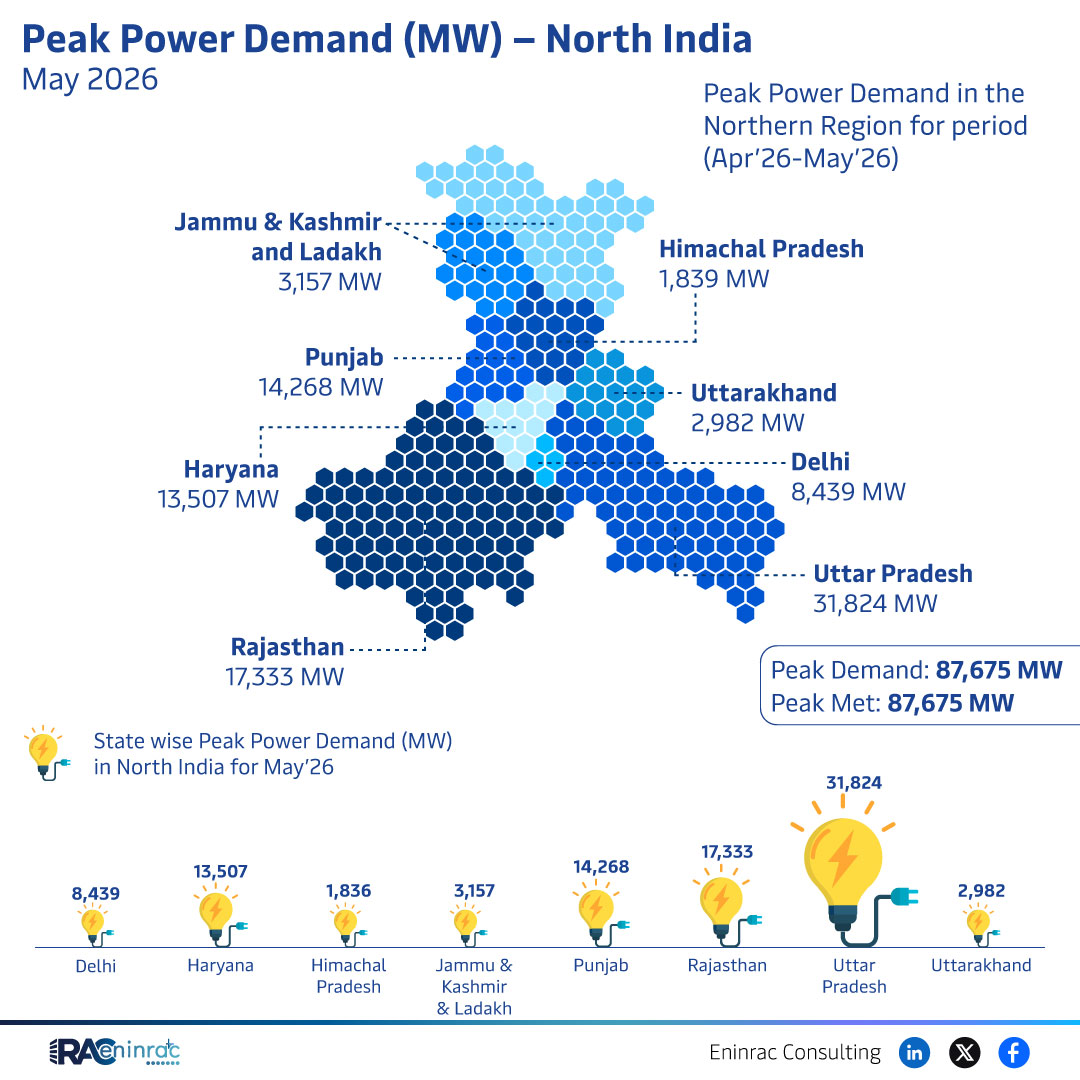
Which states are driving the highest electricity demand in North India during May 2026? The data shows that Uttar Pradesh leads with a peak demand of 31,824 MW, followed by Rajasthan at 17,333 MW and Haryana at 13,507 MW. The total regional peak demand reaches 87,675 MW, indicating a substantial load that must be met by both conventional and renewable generation sources.
State‑Wise Comparison of Peak Power Demand
When comparing the figures, Uttar Pradesh’s demand is nearly double that of the next highest state, Rajasthan, underscoring its role as the primary consumption hub. Haryana and Punjab also show strong demand levels at 13,507 MW and 14,268 MW respectively, reflecting industrial activity and dense population centers. Smaller contributors include Himachal Pradesh (1,839 MW), Jammu & Kashmir‑Ladakh (3,157 MW), and Uttarakhand (2,982 MW). Delhi’s demand, while not explicitly listed, is included within the regional total, emphasizing the urban load component.
Impact on Sectors and Industries
The high peak demand influences several sectors. Power generators must ensure sufficient capacity, prompting investments in both conventional thermal plants and renewable projects such as solar and wind farms. Transmission operators face increased stress on inter‑state lines, requiring upgrades to avoid bottlenecks. For investors, the data signals opportunities in grid modernization, energy storage, and demand‑side management solutions. Policymakers can use these insights to shape tariffs, incentivize efficiency, and support clean energy transitions.
Key Takeaways
- Uttar Prasad leads North India with 31,824 MW peak demand in May 2026.
- Rajasthan and Haryana rank second and third, highlighting regional consumption patterns.
- The combined peak demand of 87,675 MW stresses existing generation and transmission assets.
- Industrial and urban centers drive the highest loads, creating investment opportunities in capacity expansion.
- Renewable integration is critical to meet demand while reducing carbon emissions.
- Policymakers must prioritize grid resilience and demand‑response programs.
FAQs
What was the total peak power demand for North India in May 2026?
The region recorded a total peak demand of 87,675 MW.
Which state had the highest demand?
Uttar Pradesh, with a peak demand of 31,824 MW.
How does Rajasthan’s demand compare to Haryana’s?
Rajasthan’s demand (17,333 MW) is lower than Haryana’s 13,507 MW, but both are significant contributors.
Why is peak demand data important for investors?
It highlights where capacity gaps exist, guiding investments in generation, transmission, and storage assets.
What role does renewable energy play in meeting this demand?
Renewables are essential for sustainable growth, helping to offset the reliance on conventional thermal power and reduce emissions.