
Introduction
This overview summarizes the current status of on‑river pumped storage projects across India as of April 2026. Pumped storage is a critical technology for balancing renewable electricity supply, and understanding which projects are under examination, survey, or investigation helps investors, policymakers, and industry analysts gauge future capacity growth.
What Does the Data Reveal About This Topic?
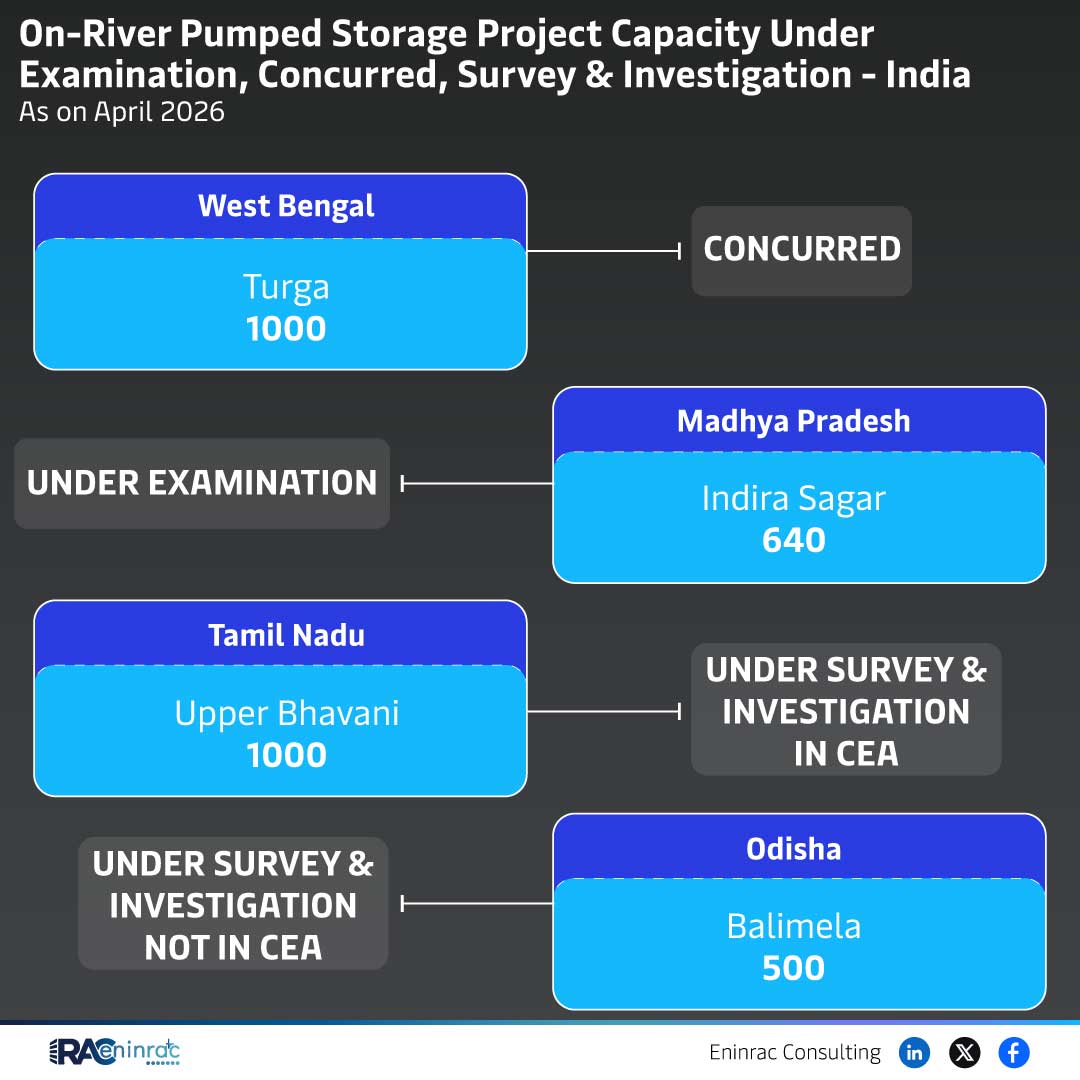
The data shows that West Bengal has a 1,000 MW project already concurred, Madhya Pradesh’s Indira Sagar project (640 MW) is under examination, and Tamil Nadu’s Upper Bhavani project is still in survey and investigation phases. These differing stages highlight regional variation in project readiness and regulatory progress.
Regional Progress and Capacity Comparison
West Bengal leads with a fully concurred 1,000 MW pumped storage scheme, indicating cleared regulatory and financial pathways. Madhya Pradesh’s 640 MW Indira Sagar is being examined, suggesting it is near a decision point but still requires detailed feasibility and environmental clearances. Tamil Nadu’s Upper Bhavani remains in early survey and investigation, reflecting the longest timeline before construction can begin. This contrast underscores how state‑level policies and resource availability influence project momentum.
Impact on Sectors and Industries
Pumped storage projects directly support the renewable energy sector by providing grid‑scale storage, enabling higher penetration of solar and wind power. They also create opportunities for engineering, construction, and equipment manufacturers, while offering investors a stable, long‑term asset class. Policymakers can use these projects to meet national renewable targets and improve grid reliability.
Key Takeaways
- West Bengal’s 1,000 MW project is fully concurred, representing immediate capacity addition.
- Madhya Pradesh’s 640 MW Indira Sagar is under examination, indicating near‑term approval potential.
- Tamil Nadu’s Upper Bhavani remains in survey and investigation, highlighting longer lead times.
- Regional regulatory environments heavily influence project timelines.
- Pumped storage enhances renewable integration and grid stability across India.
- Investors should monitor examination outcomes for Madhya Pradesh and survey results for Tamil Nadu for future opportunities.
FAQs
What is pumped storage and why is it important for India?
Pumped storage uses excess electricity to pump water uphill, then generates power when released, providing large‑scale, fast‑response energy storage essential for balancing renewable generation.
Which Indian state has the most advanced pumped storage project?
West Bengal, with a 1,000 MW project already concurred, leads in project readiness.
What does “under examination” mean for a project?
It indicates that detailed technical, financial, and environmental reviews are underway before a final approval decision.
How long does a “survey & investigation” phase typically last?
This early stage can take 12‑24 months, depending on site complexity, data collection, and stakeholder consultations.
Are pumped storage projects considered renewable energy?
Yes, because they store and release renewable electricity without emitting greenhouse gases.