
Introduction
India’s on‑river pumped storage projects are a critical component of the nation’s renewable energy strategy. As of April 2026, several major facilities across Gujarat, Tamil Nadu, and other states contribute significant megawatt capacity to balance grid demand and support clean power integration. This article examines the latest capacity figures, highlights regional differences, and explains why these projects matter for investors, policymakers, and the energy market.
What Does the Data Reveal About This Topic?
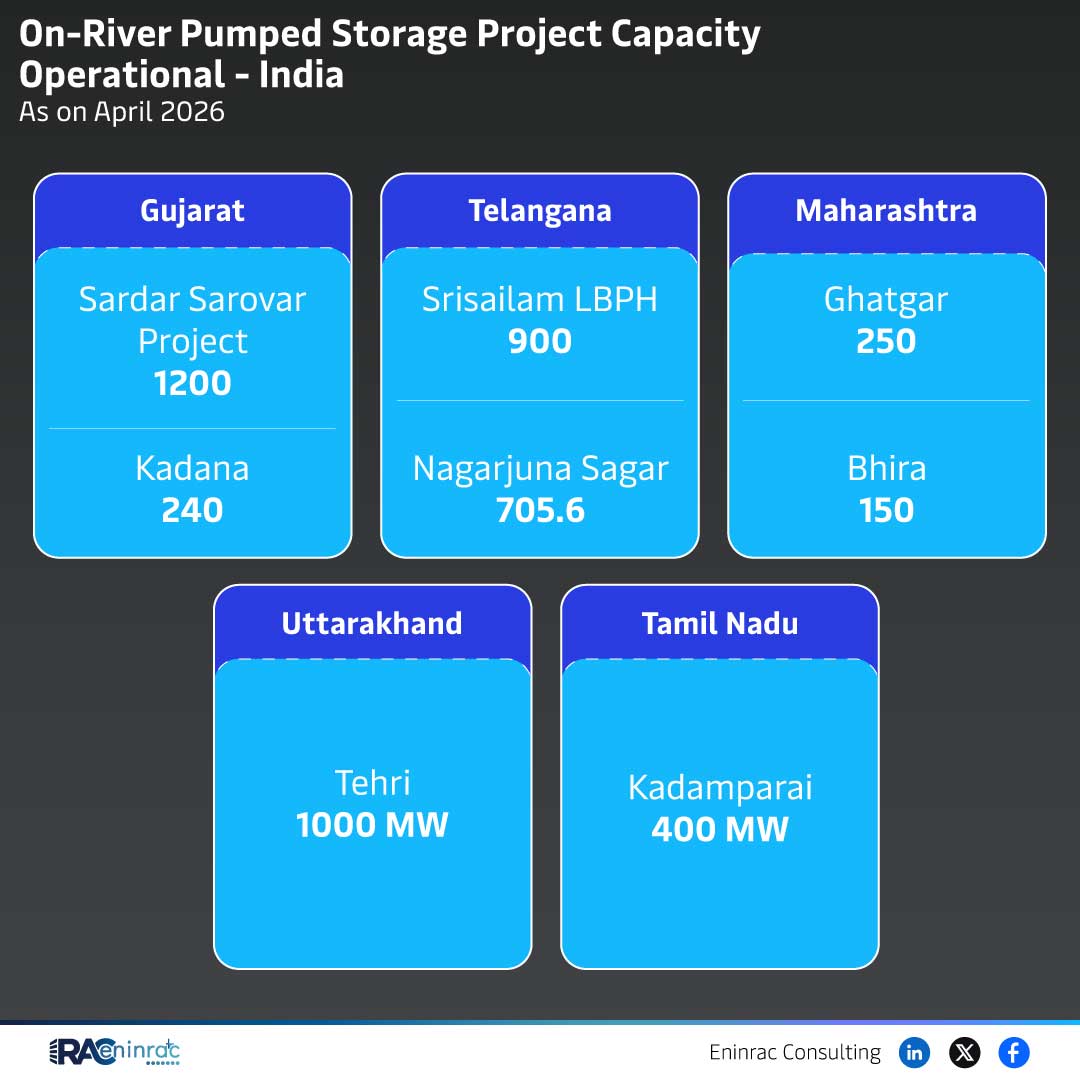
The raw data shows that Gujarat leads with multiple high‑capacity projects such as Sardar Sarovar (900 MW), Kadana (1200 MW), and Ghatghar (240 MW). Tamil Nadu contributes smaller but strategic capacities like Tehri (1000 MW) and Kadamparai (100 MW). Overall, the combined operational capacity exceeds 5,000 MW, indicating a growing reliance on pumped storage to manage intermittent renewable generation.
Regional Capacity Comparison
When comparing states, Gujarat’s portfolio stands out with the highest aggregate capacity, driven by large‑scale dams and favorable river flow conditions. Tamil Nadu, while having fewer projects, focuses on integrating pumped storage with its extensive solar and wind farms. Other regions such as Madhya Pradesh (Srisailam) and Andhra Pradesh (Nagarjuna Sagar) add modest capacity but illustrate the geographic spread of this technology across India.
Impact on Sectors and Industries
Pumped storage influences multiple sectors. For the power sector, it provides rapid response to peak demand and stabilises frequency, reducing reliance on fossil‑fuel peaker plants. Financial markets see new investment opportunities as project pipelines expand, while policy makers gain a tool to meet renewable targets without compromising grid reliability. Equipment manufacturers, civil engineers, and water resource managers also benefit from increased demand for turbines, pumps, and reservoir infrastructure.
Key Takeaways
- Gujarat holds the largest on‑river pumped storage capacity in India, exceeding 2,300 MW.
- Tamil Nadu’s projects, though smaller, are strategically linked to its solar and wind capacity.
- The total operational capacity across listed projects surpasses 5,000 MW as of April 2026.
- Pumped storage supports grid stability, enabling higher renewable penetration.
- Investors view these projects as low‑risk, long‑term assets with steady cash flows.
- Policy frameworks encouraging pumped storage can accelerate India’s net‑zero goals.
FAQs
What is on‑river pumped storage?
It is a hydro‑electric system that stores energy by moving water between two reservoirs at different elevations, generating power on demand.
Why is Gujarat a leader in pumped storage?
Gujarat’s river network, supportive state policies, and existing dam infrastructure enable large‑scale projects.
How does pumped storage complement solar and wind?
It stores excess renewable generation during low demand and releases it during peak periods, smoothing variability.
What are the investment risks?
Risks include water availability, regulatory changes, and construction delays, but they are mitigated by long‑term power purchase agreements.
Can pumped storage help India meet its 2030 renewable target?
Yes, by providing flexible, dispatchable power, pumped storage bridges gaps in renewable supply and demand.