
Introduction
India’s energy landscape is rapidly evolving, and off‑river pumped storage projects are emerging as a critical component of the nation’s grid stability strategy. As of September 2026, a series of large‑scale facilities are under construction, offering a combined capacity that exceeds 10 GW. This guide reviews the key sites, their individual capacities, and the broader implications for renewable integration, investment planning, and policy development.
What Does the Data Reveal About This Topic?
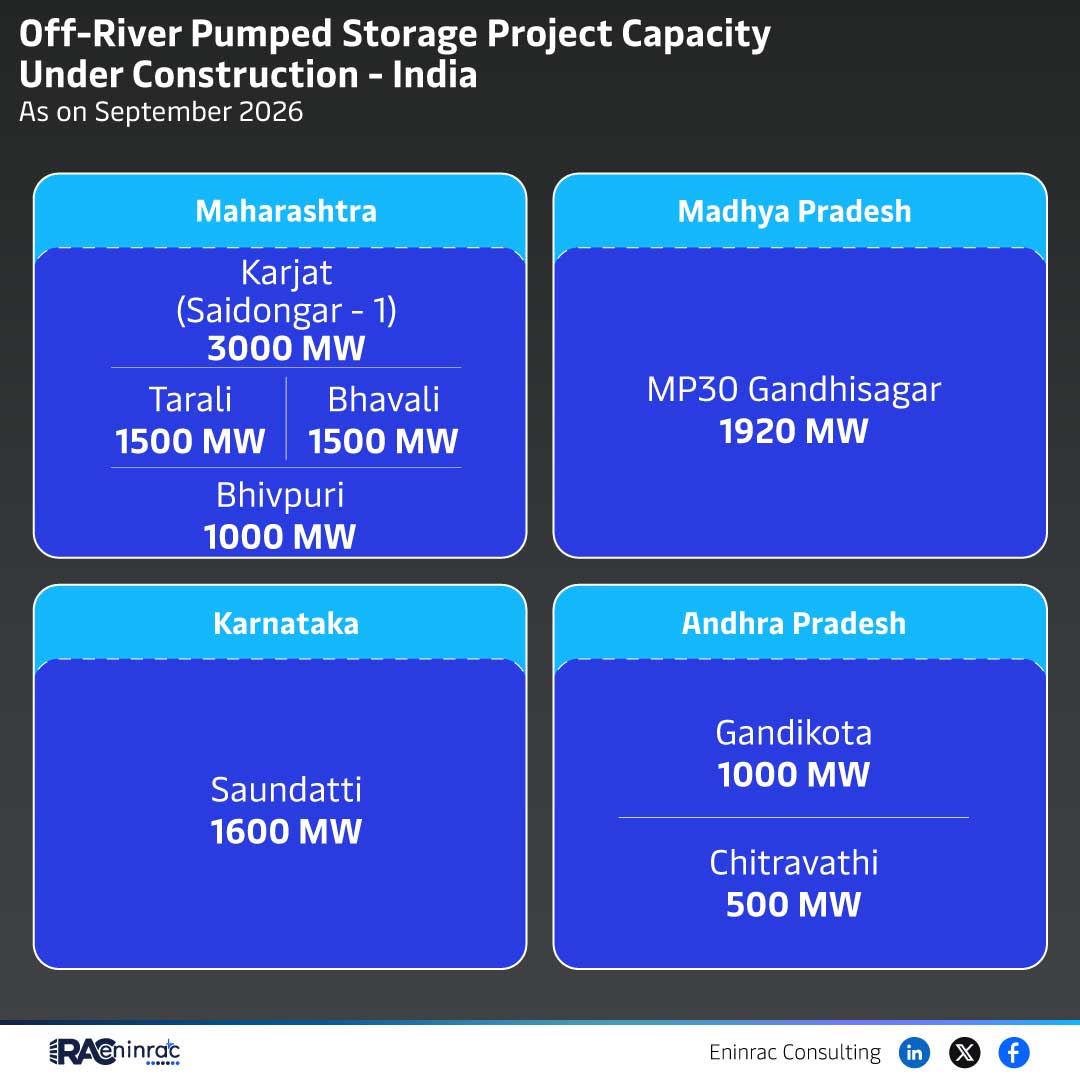
The raw data shows a clear focus on high‑capacity installations spread across multiple states. The largest single project, located at Karjat (Saidongar‑1), delivers 3 000 MW, while other sites such as Bhivpuri, Gandikota, Saundatti and Chitravathi contribute between 500 MW and 1 600 MW. In total, the listed projects represent a diversified portfolio that together pushes India’s off‑river pumped storage capacity into a new tier.
Regional Capacity Distribution
When the capacities are grouped by region, western and central zones dominate the landscape. Karjat in Maharashtra leads with a 3 GW unit, followed by projects in Karnataka’s Saundatti (1 600 MW) and Gujarat’s Gandikota (1 000 MW). Smaller but strategically important sites such as Chitravathi in Andhra Pradesh (500 MW) and Bhivpuri in Maharashtra (1 000 MW) illustrate a balanced geographic spread that reduces transmission bottlenecks and supports regional load balancing.
Impact on Sectors and Industries
The surge in off‑river pumped storage capacity strengthens India’s renewable energy grid by providing reliable, dispatchable power that can absorb intermittent solar and wind generation. Investors gain confidence from the scale of these projects, while policymakers can rely on stored energy to meet peak demand without resorting to fossil‑fuel peaker plants. The construction phase also creates jobs in civil engineering, turbine manufacturing, and environmental consulting, stimulating local economies.
Key Takeaways
- Karjat’s 3 GW plant is the largest off‑river pumped storage facility under construction in India.
- Combined capacity of listed projects surpasses 10 GW, a significant boost to national storage assets.
- Geographic diversity reduces transmission constraints and enhances regional grid resilience.
- Projects support renewable integration by providing fast‑response, large‑scale energy storage.
- Construction activity generates economic benefits across engineering, manufacturing, and services.
- Policy frameworks that encourage storage will likely attract further private and foreign investment.
FAQs
What is off‑river pumped storage?
It is a type of hydro‑electric energy storage where water is pumped to an elevated reservoir during low demand and released to generate power during peak demand.
Why is the 3 GW Karjat project significant?
At 3 GW, it becomes the single largest pumped storage unit in India, dramatically increasing the country’s flexible generation capacity.
How does pumped storage aid renewable integration?
It stores excess solar or wind energy and releases it when generation falls, smoothing variability and improving grid reliability.
What regions host the new projects?
Key locations include Maharashtra (Karjat, Bhivpuri), Karnataka (Saundatti), Gujarat (Gandikota) and Andhra Pradesh (Chitravathi).
When will these projects be operational?
Most facilities are slated for commissioning between 2027 and 2030, aligning with India’s 2030 renewable energy targets.