
Introduction
India is rapidly expanding its off‑river pumped storage capacity as part of the broader push toward clean energy and grid stability. The latest data, compiled as of April 2026, lists several high‑capacity projects under construction across the country, each contributing significantly to the nation’s renewable energy mix. This article explains the key figures, compares project sizes, and outlines the implications for investors, policymakers, and the energy sector.
What Does the Data Reveal About This Topic?
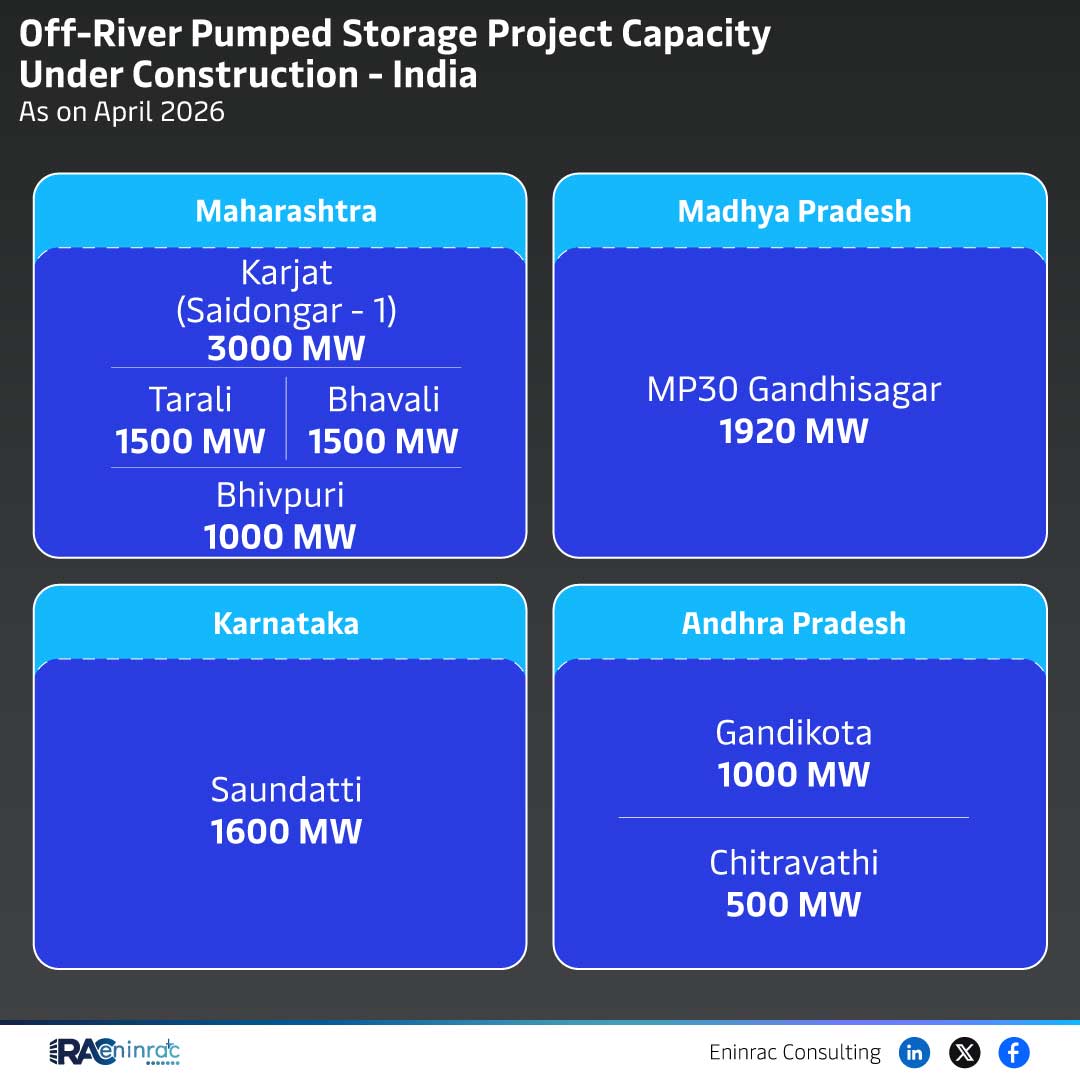
The data shows a total of six off‑river pumped storage projects under construction, with capacities ranging from 500 MW to 1,920 MW. The largest project, identified as "Saidongar‑1," is slated for 1,920 MW, while smaller installations such as Chitravathi are planned at 500 MW. The spread indicates a strategic focus on both large‑scale and medium‑scale storage solutions to balance intermittent renewable generation.
Comparative Overview of Project Capacities
When comparing the listed projects, the capacity gap is evident. Saidongar‑1 (1,920 MW) and Gandikota (1,000 MW) together account for more than half of the total planned capacity. Medium‑size projects like Saundatti (1,600 MW) and Bhavali (1,000 MW) provide substantial storage without the logistical complexities of the mega‑projects. The smallest entry, Chitravathi (500 MW), demonstrates that regional grid operators are also pursuing targeted storage to support local renewable farms.
Impact on Sectors and Industries
Off‑river pumped storage directly supports the renewable energy sector by offering large‑scale, long‑duration storage that can absorb excess solar and wind output. For investors, the varied project sizes present diversified risk‑adjusted opportunities. Policymakers gain a flexible tool to meet national renewable targets and improve grid reliability. Utilities benefit from reduced curtailment, while equipment manufacturers see increased demand for turbines, pumps, and control systems.
Key Takeaways
- Six off‑river pumped storage projects are under construction in India as of April 2026.
- Total planned capacity exceeds 6,000 MW, highlighting a major storage push.
- Saidongar‑1 (1,920 MW) is the largest single project, setting a new benchmark.
- Medium‑size projects like Saundatti and Gandikota provide balanced growth across regions.
- Smaller installations such as Chitravathi enable localized grid support.
- The mix of project sizes diversifies investment opportunities and aids grid stability.
FAQs
What is off‑river pumped storage?
It is a type of hydroelectric energy storage where water is pumped to an elevated reservoir during low demand and released to generate power during peak demand.
Why is pumped storage important for renewable energy?
It provides large‑scale, long‑duration storage that can balance intermittent solar and wind generation, reducing curtailment and enhancing grid reliability.
Which Indian region hosts the largest pumped storage project?
The Saidongar‑1 project, with 1,920 MW capacity, is the largest and is located in the central‑to‑northern part of India.
How does project size affect investment risk?
Larger projects benefit from economies of scale but involve higher capital exposure, while medium and smaller projects spread risk across multiple sites.
When are these projects expected to become operational?
Most projects aim for commissioning between 2027 and 2030, subject to regulatory approvals and financing timelines.