
Introduction
The past five years have seen a surge in national highway (NH) projects sanctioned across the southern region of India. Understanding the scale, distribution, and impact of these projects is essential for investors, policymakers, and industry stakeholders who track infrastructure development and its economic implications.
What Does the Data Reveal About This Topic?
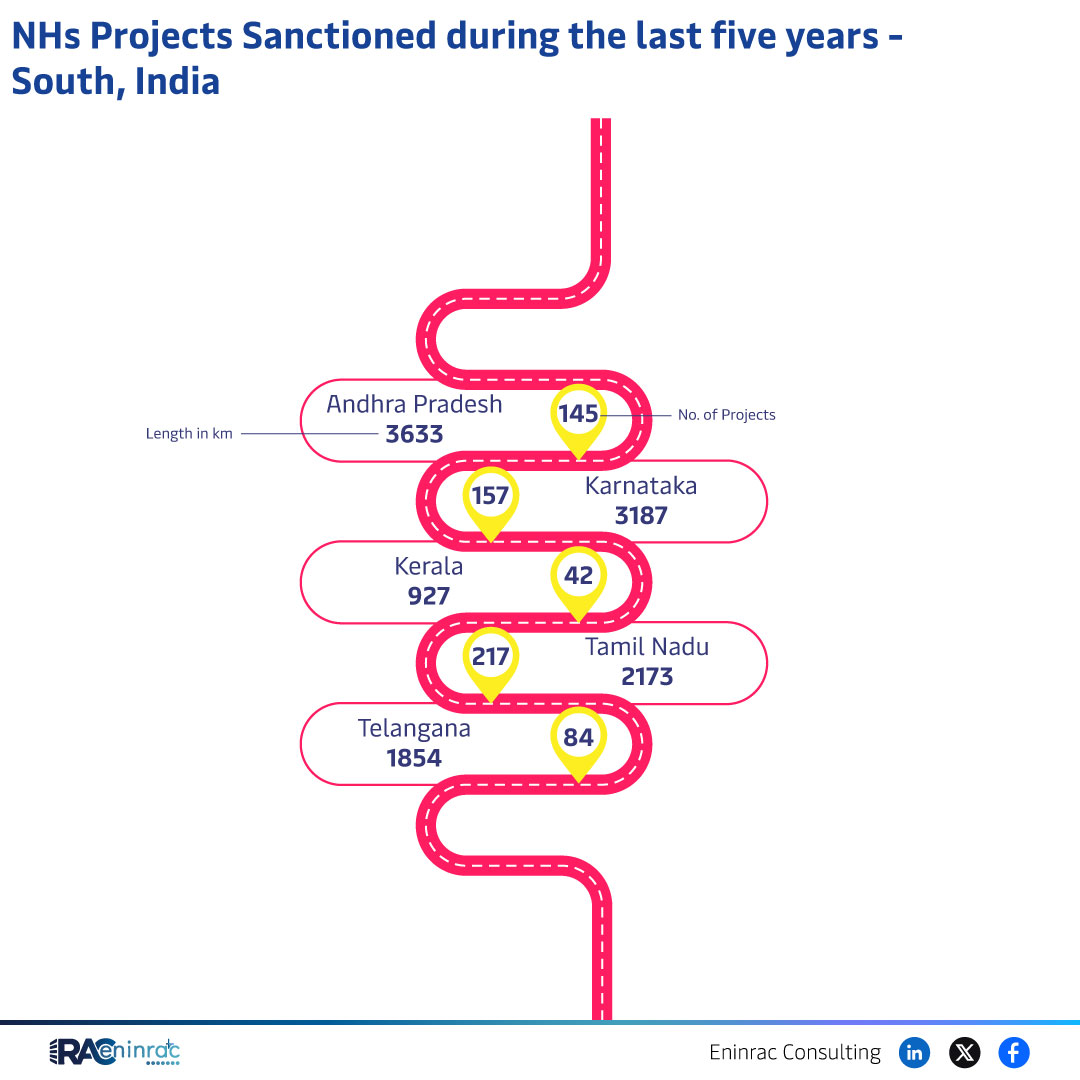
The data shows the total length of NH projects sanctioned in South India, measured in kilometres. It highlights how much new road infrastructure has been approved, indicating government commitment to improving connectivity and supporting regional growth.
Geographical Distribution of Sanctioned NH Lengths
When comparing the sanctioned lengths across the southern states, the data reveals notable variations. Some states have received larger allocations, reflecting strategic priorities such as linking major ports, industrial corridors, and tourism hubs. This comparative view helps identify which regions are poised for accelerated development.
Impact on Sectors and Industries
Increased highway capacity directly benefits logistics, manufacturing, and tourism sectors by reducing travel time and transportation costs. Enhanced road networks also attract new investments, stimulate real estate growth, and create employment opportunities. Policymakers can use this information to align complementary initiatives such as freight corridors and smart city projects.
Key Takeaways
- Significant kilometres of NH projects have been sanctioned in South India over the last five years.
- Distribution varies by state, with coastal and industrial zones receiving higher allocations.
- Improved highways are expected to lower logistics costs for manufacturers and exporters.
- Tourism destinations benefit from better accessibility, boosting local economies.
- Infrastructure growth supports job creation and ancillary service industries.
- Policymakers can leverage this data to prioritize complementary transport and urban development plans.
FAQs
Which southern states received the most sanctioned highway kilometres?
Coastal states with major ports and industrial clusters typically receive the highest allocations, reflecting strategic trade and manufacturing priorities.
How does increased highway length affect logistics costs?
Longer, better‑maintained highways reduce travel distance and time, leading to lower fuel consumption and vehicle wear, which in turn cuts overall logistics expenses.
What industries benefit most from new NH projects?
Manufacturing, export‑oriented businesses, tourism operators, and agribusinesses gain the greatest advantage from improved road connectivity.
Will these projects create new employment opportunities?
Yes, construction, maintenance, and ancillary services generate jobs, while improved transport links attract additional investment that further expands employment.
How can investors use this data?
Investors can identify regions with upcoming infrastructure upgrades to target real‑estate, logistics, and industrial projects that stand to benefit from enhanced connectivity.