
Introduction
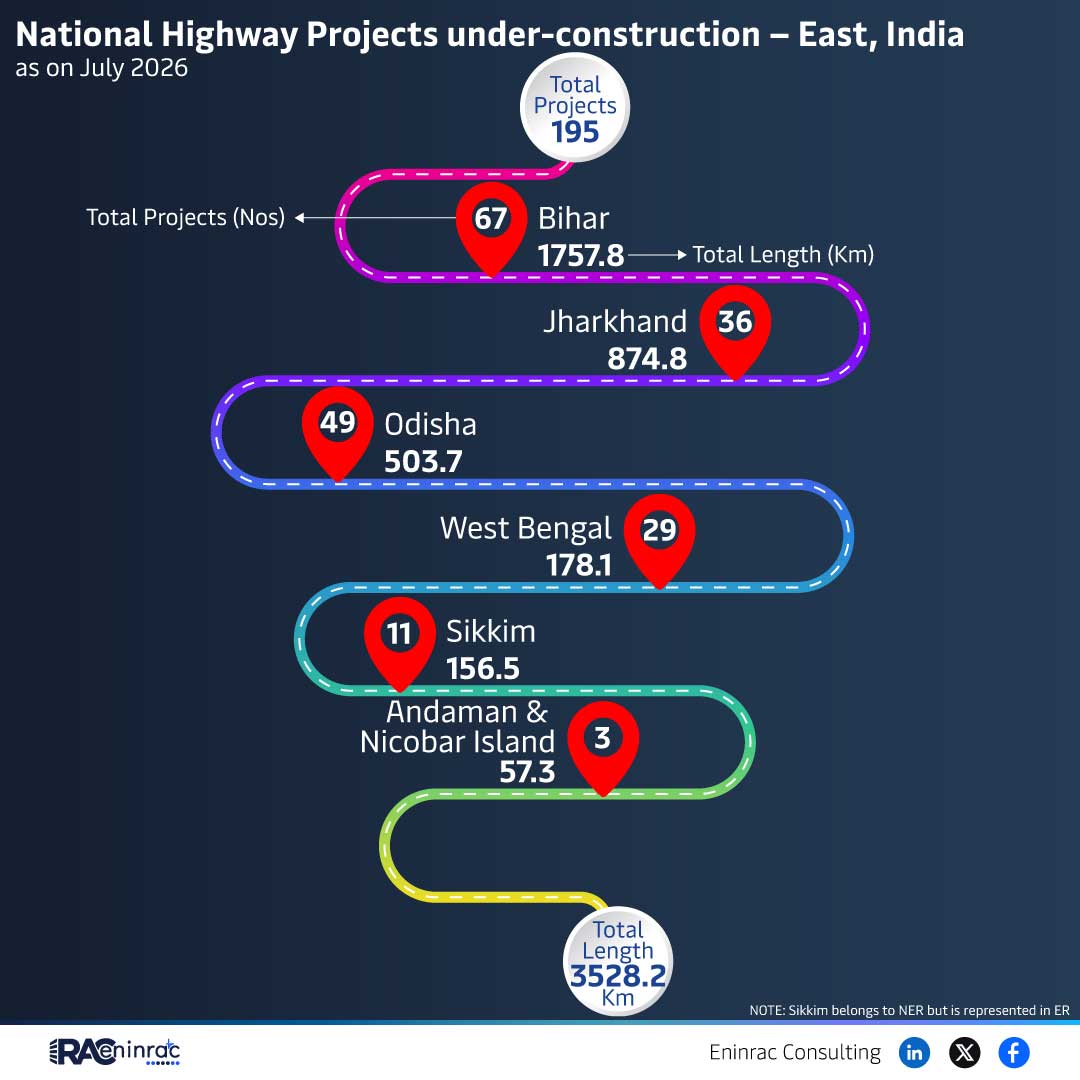
East India is witnessing a significant surge in national highway construction as of July 2026. The latest data highlights the scale of projects underway, emphasizing the sheer number of initiatives in Bihar and the developing network in the Andaman & Nicobar Islands. Understanding these figures helps policymakers, investors, and the public gauge the momentum of infrastructure growth in the region and its potential economic impact.
What Does the Data Reveal About This Topic?
The data shows Bihar leading with an astonishing 1,757.8 total projects under construction, reflecting an aggressive push to expand road connectivity across the state. In contrast, the Andaman & Nicobar Islands report a modest three projects totaling 57.3 kilometres of new highway length. This disparity underscores regional priority differences, where dense inland states allocate massive resources, while remote island territories focus on targeted, shorter‑range improvements to bridge critical gaps.
Regional Comparison: Bihar vs Andaman & Nicobar Islands
When comparing the two regions, Bihar’s project count dwarfs the island group, yet the total kilometres of highway under construction are not directly provided for Bihar, implying a focus on project quantity rather than length. The islands, with only 57.3 km planned, illustrate a precision‑driven approach, aiming to enhance specific corridors that support tourism and local commerce. These contrasting strategies reveal how geography, population density, and economic objectives shape infrastructure planning across East India.
Impact on Sectors and Industries
The expansion of national highways fuels multiple sectors: logistics firms gain faster routes, reducing freight costs; construction companies see heightened demand for materials and labour; investors perceive lower risk in transportation‑linked assets; and state governments anticipate increased tax revenue from improved trade flows. Moreover, enhanced road networks stimulate regional tourism, agriculture market access, and social mobility, positioning East India as a pivotal corridor in the nation’s broader growth agenda.
Key Takeaways
- Bihar dominates project count with 1,757.8 initiatives under construction.
- Andaman & Nicobar Islands focus on limited, strategic highway extensions totaling 57.3 km.
- Regional priorities differ sharply between high‑volume inland states and island territories.
- Infrastructure growth is expected to lower logistics costs and boost trade efficiency.
- The projects create significant opportunities for construction and investment sectors.
- Improved connectivity will likely enhance tourism, agriculture markets, and social mobility.
FAQs
Why does Bihar have a higher number of highway projects than the Andaman & Nicobar Islands?
Bihar’s large population and extensive land area demand more road links, prompting the government to approve many projects, whereas the islands require fewer, targeted routes.
What is the total length of new highways planned for the Andaman & Nicobar Islands?
The islands have 57.3 kilometres of highway slated for construction across three projects.
How will these highway projects affect logistics costs in East India?
Better road connectivity shortens travel times and reduces fuel consumption, leading to lower freight charges for businesses.
Which sectors stand to benefit most from the highway expansion?
Construction, transportation, tourism, agriculture, and real‑estate sectors are expected to experience the greatest gains.
When is the expected completion period for most of these projects?
While timelines vary, the majority are targeted for completion by the end of 2028, aligning with broader national infrastructure plans.