
Introduction
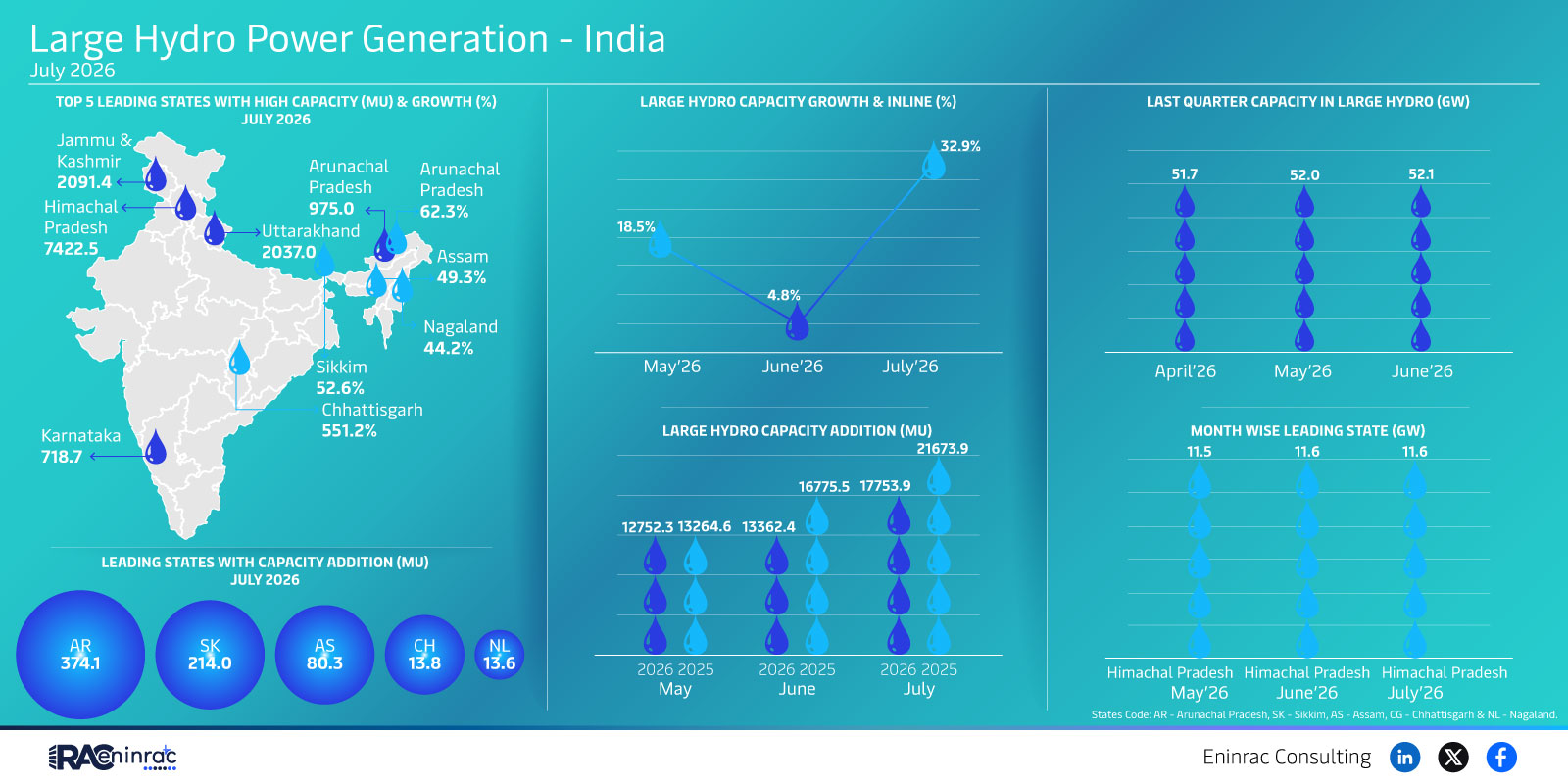
India’s large hydro power generation continues to play a pivotal role in the nation’s renewable energy mix. As of July 2026, the sector has reached a cumulative capacity of 32.9 gigawatts (GW), reflecting ongoing investments, policy support, and favourable geographic conditions. This article explores the latest state‑wise capacity figures, growth rates, and recent capacity additions, providing readers with a clear picture of how large hydro projects are shaping India’s energy future. By examining the data, stakeholders can understand regional performance, identify emerging opportunities, and anticipate the implications for investors, policymakers, and the broader power market.
What Does the Data Reveal About This Topic?
The data indicates that large hydro capacity is expanding steadily, with a notable quarter‑end total of 32.9 GW. Himachal Pradesh emerges as the top contributor with 975 MW of capacity, followed by Uttarakhand and Karnataka, each adding substantial megawatts during the reporting period. Month‑wise figures show consistent capacity additions in May, June, and July 2026, underscoring a robust pipeline of projects. The growth pattern suggests that northern and western states are capitalising on their mountainous terrain and water resources to accelerate hydro development, while southern states such as Karnataka are also making significant strides.
State‑wise Capacity and Growth Highlights
Himachal Pradesh leads with an impressive 975 MW of installed large hydro capacity, driven by multiple commissioned projects that leverage the state’s steep river gradients. Uttarakhand follows closely, contributing a comparable volume of megawatts through both completed and under‑construction facilities. Karnataka, traditionally known for its solar and wind assets, records a capacity addition of 718.7 MW, reflecting diversified renewable investments. Arunachal Pradesh and Kashmir also feature in the top five, showcasing the strategic importance of the Himalayas for hydro potential. The month‑wise capacity addition chart for May, June, and July 2026 shows a gradual increase, with Karnataka posting the highest monthly addition in July.
Impact on Sectors and Industries
The surge in large hydro capacity influences several economic sectors. Power generation companies gain additional baseload supply, improving grid stability and reducing reliance on fossil fuels. Construction firms benefit from increased project contracts, while equipment manufacturers see heightened demand for turbines, generators, and civil engineering services. Financial institutions observe new investment avenues, especially in green bonds and hydro‑focused funds. For policymakers, the data supports the case for continued incentives, streamlined permitting, and water‑resource management strategies to sustain growth while balancing ecological considerations.
Key Takeaways
- India’s large hydro capacity reached 32.9 GW by July 2026.
- Himachal Pradesh leads with 975 MW, followed by Uttarakhand and Karnataka.
- Month‑wise additions show consistent growth across May‑July 2026.
- Hydro projects are enhancing grid reliability and renewable share.
- Construction, equipment, and finance sectors experience uplift from hydro expansion.
- Policy support remains critical to balance development with environmental stewardship.
FAQs
What is the total large hydro capacity in India as of July 2026?
It stands at 32.9 GW, reflecting accumulated installations across the country.
Which state has the highest large hydro capacity?
Himachal Pradesh leads with about 975 MW of installed capacity.
How much capacity did Karnataka add in July 2026?
Karnataka contributed a significant portion of the July addition, part of its 718.7 MW total growth.
Why is large hydro important for India’s renewable mix?
It provides reliable baseload power, supports grid stability, and reduces carbon emissions.
What sectors benefit most from the hydro capacity growth?
Construction, turbine manufacturing, financing, and power generation firms see the biggest gains.