
Introduction
In January 2026 the Indian government released detailed figures on the disbursement of electric vehicle (EV) incentives across three major vehicle categories: two‑wheelers, three‑wheelers and four‑wheelers. Understanding these numbers is crucial for manufacturers, investors, policymakers and consumers who are tracking the growth of the EV market and the effectiveness of subsidy programmes.
What Does the Data Reveal About This Topic?
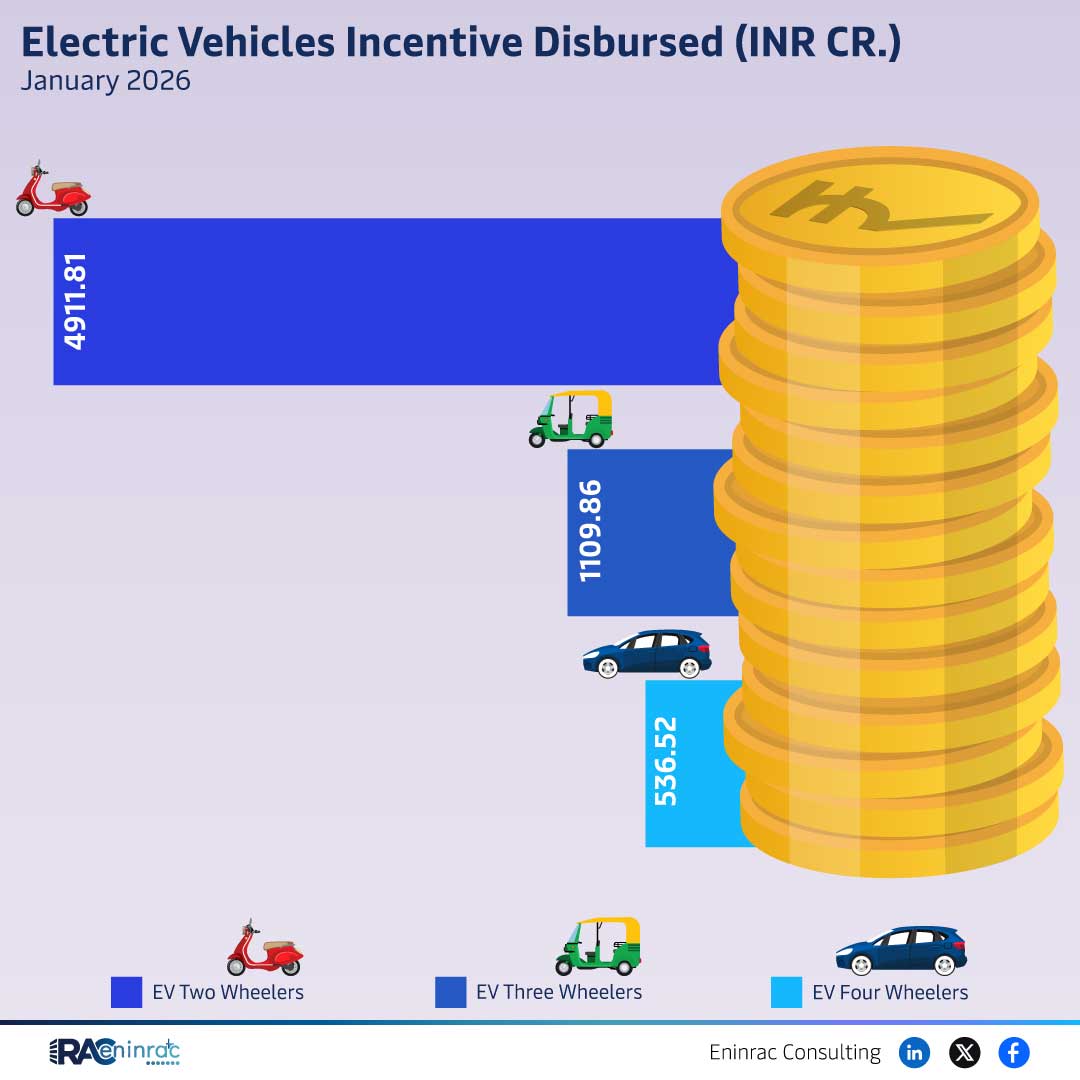
The data shows that incentive payments were allocated in crore rupees (INR CR.) to each vehicle segment, highlighting where financial support is strongest. The question is: which segment received the highest incentive amount and what does that imply for market dynamics? The answer indicates a clear priority on two‑wheelers, reflecting their popularity and potential for rapid adoption in urban areas.
Comparative Incentive Allocation Across EV Segments
When comparing the three segments, two‑wheelers received the largest share of incentives, followed by three‑wheelers, with four‑wheelers receiving the smallest portion. This distribution suggests that the government is targeting affordable, high‑volume vehicles to accelerate electrification. The trend aligns with broader policy goals to reduce emissions in densely populated cities where two‑wheelers dominate traffic. Additionally, the relatively lower incentive for four‑wheelers may indicate reliance on market‑driven pricing and the presence of established manufacturers already investing in EV technology.
Impact on Sectors and Industries
The incentive disbursement influences several key sectors. Automotive manufacturers can plan production ramps and pricing strategies based on subsidy availability. Battery suppliers benefit from increased demand for smaller, high‑cycle batteries used in two‑ and three‑wheelers. Investors gain insight into where capital may yield the highest returns, while policymakers can assess the effectiveness of current subsidy structures and consider adjustments for future fiscal years. Consumers also stand to benefit from lower purchase costs, encouraging broader adoption of electric mobility.
Key Takeaways
- Two‑wheelers received the highest incentive allocation in January 2026, underscoring a focus on affordable urban mobility.
- Three‑wheelers received a moderate share, supporting commercial and passenger transport in smaller cities.
- Four‑wheelers received the smallest incentive portion, reflecting a market‑driven approach for higher‑priced vehicles.
- Incentive distribution aligns with government goals to reduce urban emissions quickly.
- Manufacturers can align production plans with subsidy trends to optimise pricing.
- Investors should monitor incentive patterns to identify high‑growth segments.
FAQs
Which EV segment received the most government incentive in January 2026?
Two‑wheelers received the largest share of incentive disbursement.
Why are two‑wheelers prioritized in the incentive scheme?
Because they are the most common mode of transport in Indian cities, offering rapid emission reductions at lower cost.
How do incentives affect EV battery manufacturers?
Higher subsidies for two‑ and three‑wheelers increase demand for smaller, high‑cycle batteries, boosting production volumes.
Will the incentive amounts change in the next fiscal year?
The government reviews subsidy allocations annually, so future amounts may adjust based on market response and policy goals.
How can investors use this data?
Investors can target companies focused on two‑wheelers and battery technology, as these areas show strong government support.