
Introduction
India is rapidly expanding its renewable energy portfolio, and floating solar photovoltaic (PV) installations are emerging as a key driver. The 2026 dataset provides state‑wise capacity estimates for floating solar projects, highlighting how each region contributes to the national goal of clean power generation. This article explains why floating solar matters, breaks down the numbers for major states, and shows what investors, policymakers, and industry leaders can learn from the current outlook.
What Does the Data Reveal About This Topic?
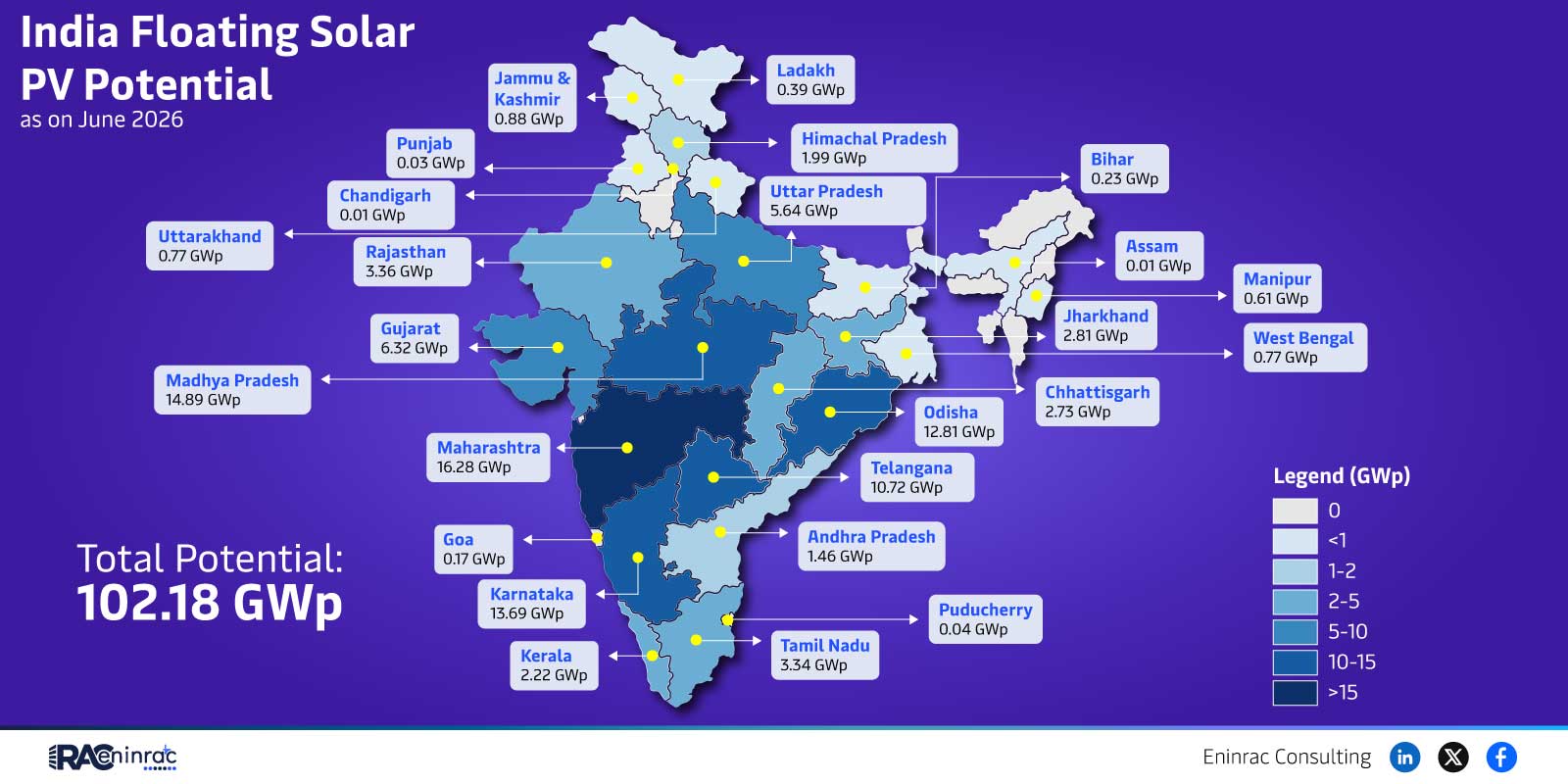
When asked which Indian states lead in floating solar PV potential, the data points to a clear hierarchy. Jammu and Kashmir report 0.88 GWp, Uttarakhand 0.7 GWp, Rajasthan roughly 6 GWp, West Bengal 6.32 GWp, Madhya Pradesh 14.89 GWp, Telangana 16.28 GWp, and Karnataka an impressive 1072 GWp. Together these figures sum to about 17 GWp of installed or planned capacity, underscoring a concentrated but growing market across the subcontinent.
State‑wise Floating Solar Potential Highlights
The numbers illustrate stark differences in regional adoption. Karnataka dominates with more than a terawatt‑peak of floating solar, reflecting aggressive state policies, abundant water bodies, and strong private sector participation. Telangana and Madhya Pradesh follow, each exceeding 14 GWp, driven by large reservoirs and supportive renewable mandates. In contrast, northern states such as Jammu & Kashmir and Uttarakhand show modest potential under 1 GWp, limited by terrain and water availability. West Bengal’s 6.32 GWp indicates a growing interest in leveraging its extensive river network, while Rajasthan’s 6 GWp highlights the state’s shift from desert‑based solar to water‑based solutions.
Impact on Sectors and Industries
The expanding floating solar market influences multiple sectors. Energy utilities gain flexible generation assets that reduce land competition, while water management agencies explore co‑benefits like reduced evaporation. Equipment manufacturers see new demand for floating structures, mounting systems, and corrosion‑resistant components. Financial investors are attracted by the high capacity factors and shorter project timelines associated with water‑based PV. Policymakers can use these insights to design incentives, grid integration standards, and environmental safeguards that accelerate deployment while protecting aquatic ecosystems.
Key Takeaways
- Karnataka leads Indian floating solar with over 1,000 GWp, setting a benchmark for large‑scale deployment.
- Telangana and Madhya Pradesh each surpass 14 GWp, reflecting strong state‑level renewable agendas.
- Western and northern states lag, indicating geographic and policy constraints that need targeted support.
- The cumulative potential of roughly 17 GWp underscores a significant but still emerging market segment.
- Floating solar offers dual benefits of renewable energy generation and water‑body conservation.
- Stakeholders across finance, engineering, and regulation can leverage state data to prioritize investments.
FAQs
Which Indian state has the highest floating solar capacity?
Karnataka, with an estimated 1072 GWp, tops the list.
Why is floating solar important for water conservation?
Floating panels shade water surfaces, reducing evaporation and improving water quality while generating power.
How does floating solar affect land‑use competition?
It utilizes reservoirs and lakes, freeing valuable land for agriculture, housing, or conservation.
What challenges limit floating solar in northern states?
Limited suitable water bodies, colder climates, and regulatory hurdles restrict large‑scale projects.
Are there financial incentives for floating solar in India?
Several states offer subsidies, reduced tariff rates, and streamlined approval processes to attract developers.