
Introduction
The Western region of India recorded its energy power requirement for May 2026, providing a snapshot of demand across key states. Understanding these figures helps policymakers, investors, and industry stakeholders gauge supply adequacy, plan infrastructure, and anticipate market trends.
What Does the Data Reveal About This Topic?
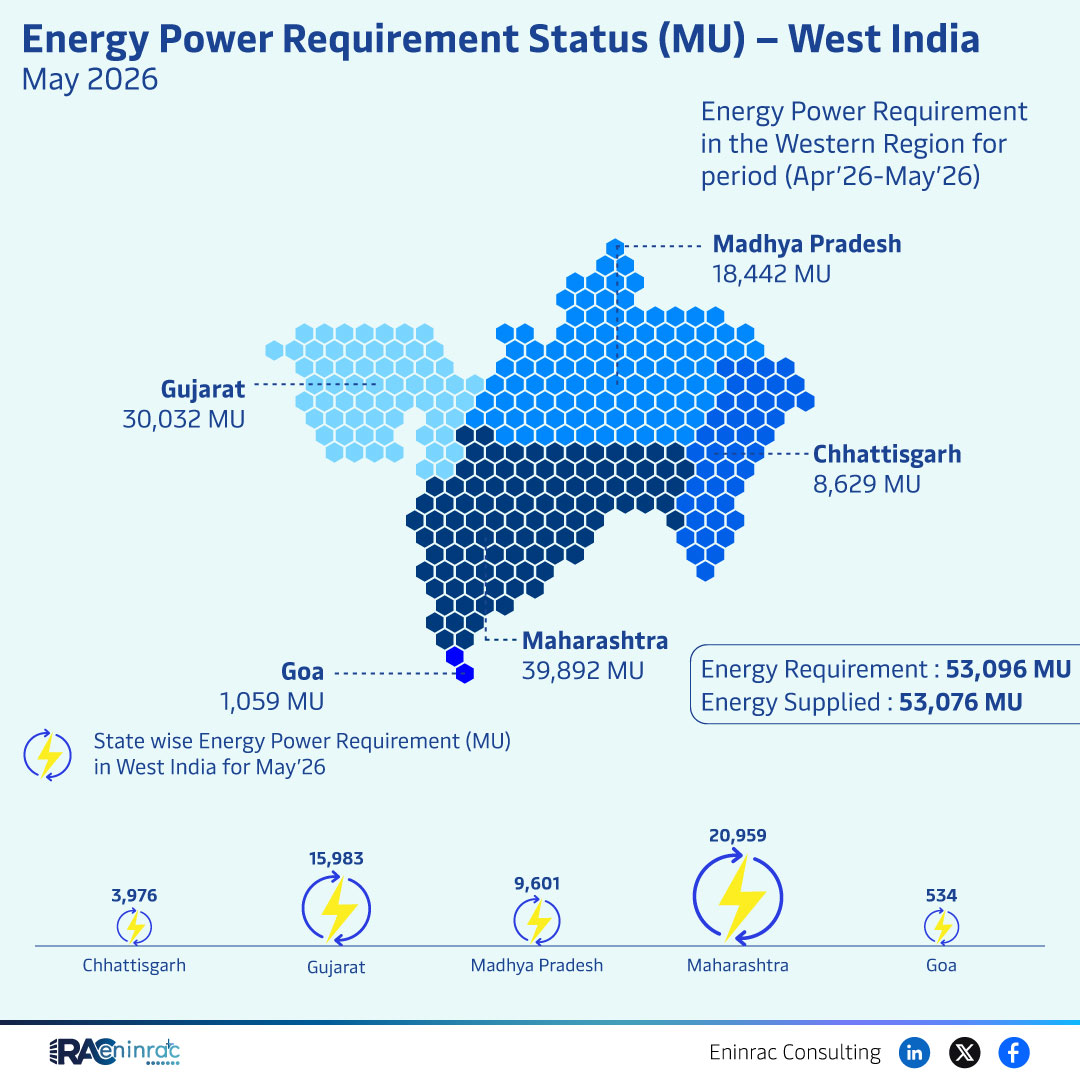
The data shows a total energy requirement of 53,096 MU for the period April‑May 2026, with 53,076 MU actually supplied. This near‑balance indicates that the region is largely meeting its demand, though a small shortfall of 20 MU remains.
State‑wise Energy Demand Highlights
Gujarat leads with 30,032 MU, followed by Maharashtra at 39,892 MU (including Goa’s contribution). Madhya Pradesh reports 18,442 MU, while Chhattisgarh accounts for 8,629 MU. These figures illustrate the concentration of demand in industrial and commercial hubs, especially Gujarat and Maharashtra.
Impact on Sectors and Industries
High demand in Gujarat and Maharashtra drives investment in conventional power plants, renewable projects, and grid upgrades. Manufacturing, textiles, and IT services benefit from reliable supply, while the slight deficit urges utilities to accelerate capacity expansion and consider energy storage solutions.
Key Takeaways
- Western India’s total power requirement for May 2026 is 53,096 MU.
- Supply reached 53,076 MU, leaving a marginal shortfall of 20 MU.
- Gujarat accounts for the largest single‑state demand at 30,032 MU.
- Maharashtra (including Goa) shows the highest combined demand at 39,892 MU.
- Madhya Pradesh contributes 18,442 MU, highlighting growing industrial needs.
- Chhattisgarh’s 8,629 MU reflects moderate demand, suggesting potential for future growth.
FAQs
What is the total energy requirement for Western India in May 2026?
The region required 53,096 MU during the April‑May 2026 period.
Which state has the highest power demand?
Gujarat leads with 30,032 MU, followed closely by Maharashtra’s combined demand.
Was the energy supply sufficient to meet the demand?
Supply was 53,076 MU, covering almost all demand with a minor shortfall of 20 MU.
How does this data affect investors?
Investors see opportunities in expanding generation capacity, especially in Gujarat and Maharashtra, and in supporting grid resilience.
What sectors are most impacted by these figures?
Manufacturing, IT, and textile sectors are most sensitive to power availability, influencing their operational planning.