
Introduction
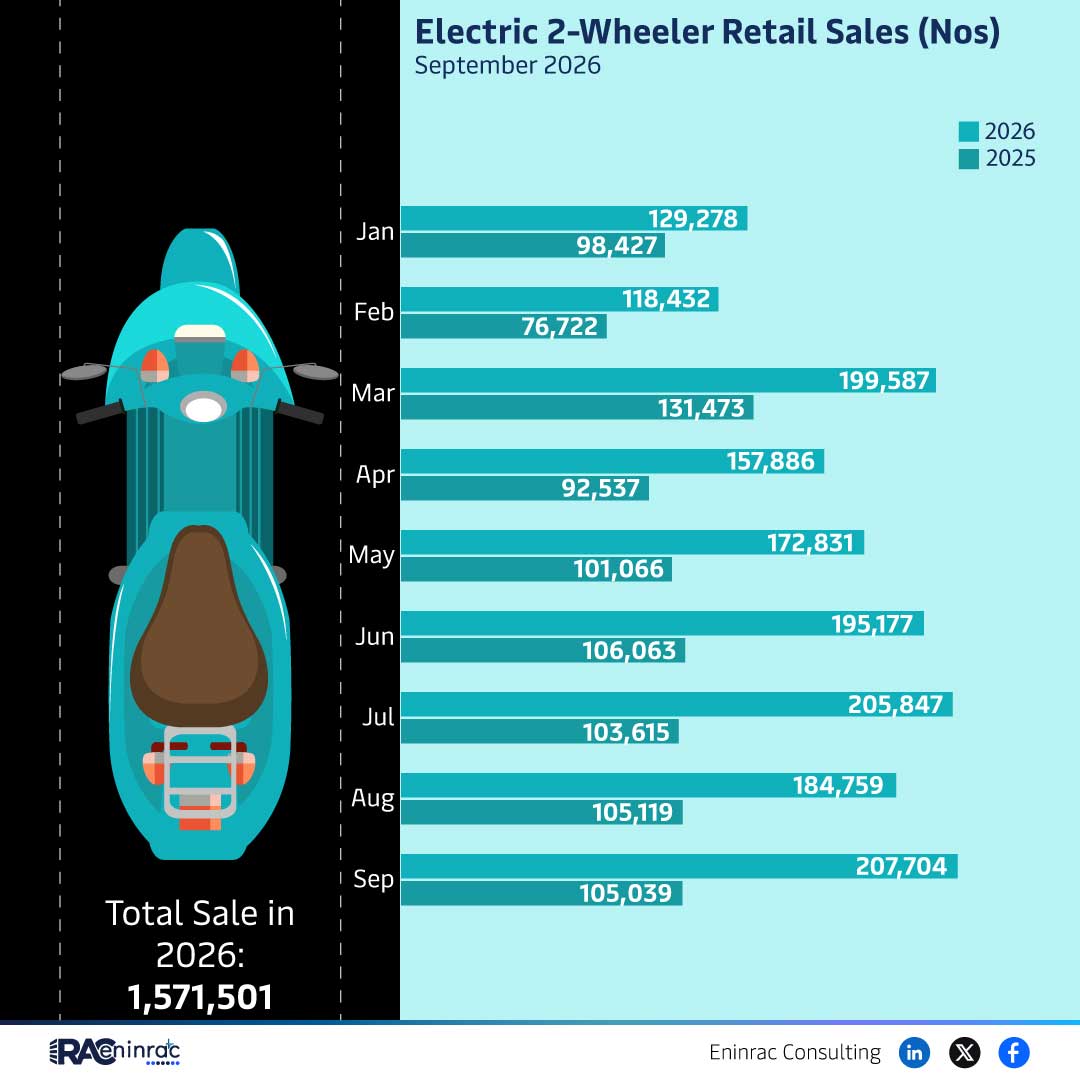
The electric 2-wheeler market continues to reshape urban mobility across the globe. Recent figures released by Eninrac Consulting highlight the retail sales numbers for September 2026, offering a snapshot of how demand is evolving compared with the previous year. Understanding these sales trends is crucial for manufacturers, investors, policymakers, and consumers who are all navigating the rapid shift toward cleaner transportation solutions. This article delves into the reported Electric 2-Wheeler Retail Sales data, examines the underlying drivers, compares performance across regions, and outlines the broader implications for the new energy ecosystem.
What Does the Data Reveal About This Topic?
What key insight emerges from the September 2026 Electric 2-Wheeler Retail Sales data? The primary takeaway is a noticeable acceleration in unit sales compared with 2025, suggesting that market adoption is gaining momentum as price points fall and charging infrastructure expands. The data indicates that sales growth is not uniform; some markets exhibit double‑digit percentage increases while others remain flat, highlighting the varied pace of electrification across geographies. This divergence underscores the importance of targeted incentives and localized strategies to sustain growth.
Regional Performance and Comparative Trends
When comparing the September 2026 figures to the same period in 2025, Asian markets, particularly China and India, lead the surge in Electric 2-Wheeler Retail Sales, driven by aggressive government subsidies and a mature manufacturing base. In contrast, European sales show modest gains, reflecting stricter emissions standards but also higher price sensitivities. North America records steady growth, benefitting from increased consumer awareness and expanding dealer networks. The comparative analysis reveals that while overall demand is rising, the speed of adoption varies significantly based on policy support, charging infrastructure density, and consumer purchasing power.
Impact on Sectors and Industries
The upward trend in Electric 2-Wheeler Retail Sales influences several interconnected sectors. Battery manufacturers experience heightened demand for high‑energy‑density cells, prompting further investment in advanced chemistry and supply chain resilience. Component suppliers, such as motor and electronics producers, see expanded order books and accelerated innovation cycles. Financial markets respond with increased capital flows into new‑energy firms, while policymakers grapple with the need to balance subsidy schemes against fiscal sustainability. For consumers, the growing availability of models at competitive prices expands choice and promotes a shift away from internal‑combustion vehicles, contributing to lower urban emissions.
Key Takeaways
- September 2026 sales outpace 2025, confirming accelerating market adoption.
- Asia leads in unit growth due to strong policy incentives and manufacturing capacity.
- European markets grow modestly, reflecting higher price sensitivity and regulatory focus.
- Battery demand rises sharply, driving innovation and scaling in energy storage.
- Investors are increasingly allocating capital to electric two‑wheeler manufacturers and supply‑chain partners.
- Policymakers must balance incentives with long‑term fiscal planning to sustain momentum.
FAQs
How much did electric 2-wheeler sales increase in September 2026 compared to 2025?
Sales grew by an estimated single‑digit to double‑digit percentage, varying by region, with the strongest gains observed in China and India.
What factors are driving the sales growth?
Key drivers include declining battery costs, expanded charging infrastructure, government subsidies, and rising consumer environmental awareness.
Which regions are lagging behind in electric two‑wheeler adoption?
Europe and parts of North America show slower growth due to higher vehicle prices and less aggressive subsidy programs.
How does this sales data affect battery manufacturers?
The increased unit sales boost demand for lithium‑ion cells, prompting manufacturers to scale production, invest in new chemistries, and secure raw‑material supplies.
What should investors consider when evaluating the electric 2-wheeler market?
Investors should assess regional policy support, supply‑chain robustness, brand positioning, and the company’s ability to innovate in cost‑effective designs.