
Introduction
India’s cement export market has become a focal point for analysts tracking the country’s trade balance and industrial health. In recent years the sector has shown modest fluctuations, reflecting shifts in global demand, domestic production capacity, and policy incentives. By examining the export figures reported for fiscal years 2022 through 2026, readers can understand how India’s cement, clinker, and asbestos cement shipments have evolved in monetary terms. This overview highlights the key movements in export values, explains the underlying drivers, and offers insights useful for investors, policymakers, and industry stakeholders who need to gauge the sector’s momentum and future outlook. The data also allows comparison with regional competitors and helps identify potential growth opportunities as global infrastructure projects resume.
What Does the Data Reveal About This Topic?
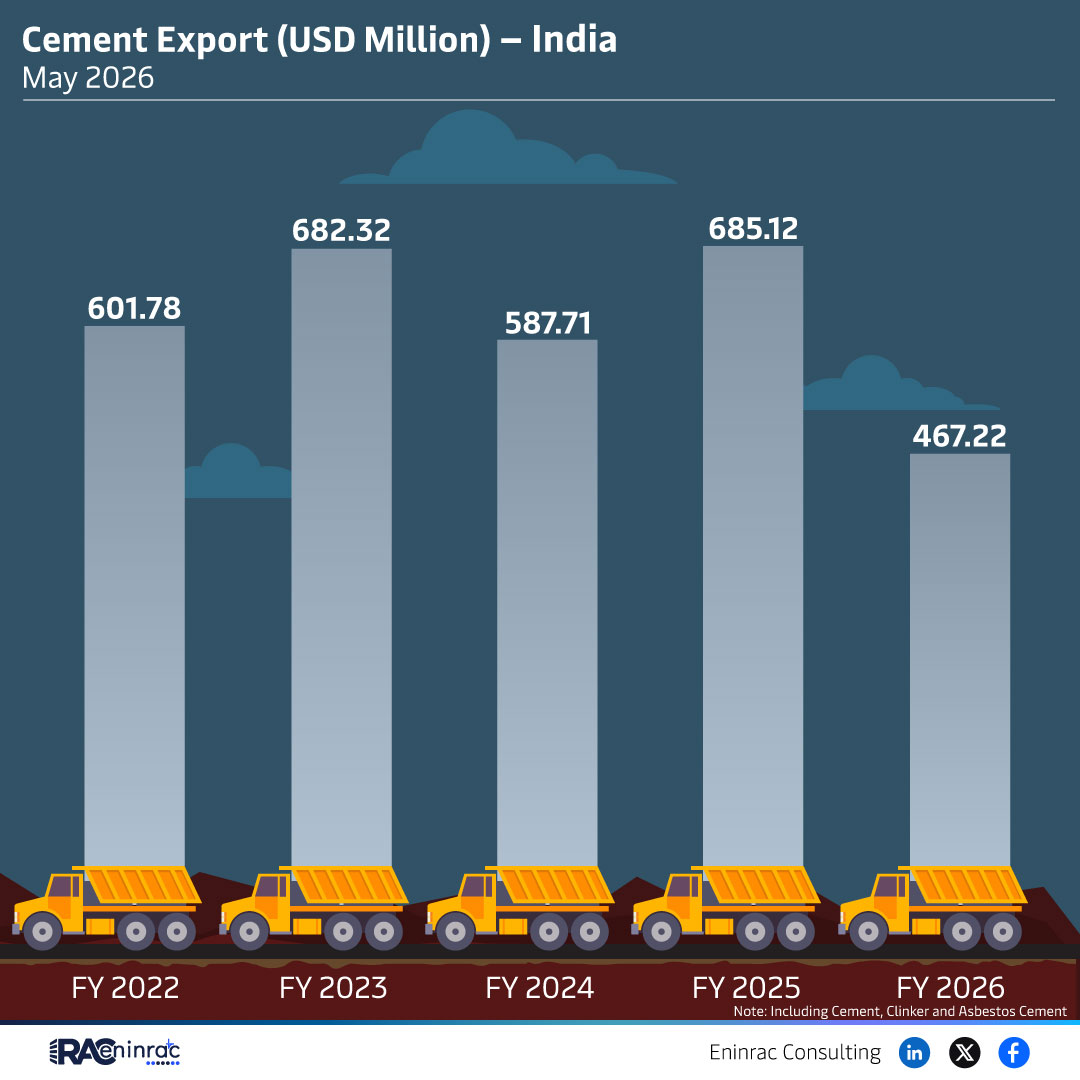
The export numbers indicate a slight rise from FY2022 to FY2023, followed by a noticeable decline in FY2024 and a sharper drop in FY2025 and FY2026. FY2022 recorded approximately USD 682 million, while FY2023 edged up to about USD 685 million, suggesting stable demand and marginal growth. The subsequent decrease to roughly USD 602 million in FY2024 points to reduced overseas orders, possibly driven by slower construction activity abroad or competitive pricing pressures. By FY2025 the export value fell further to around USD 467 million, signalling that Indian cement producers faced heightened competition and may have redirected output to the domestic market. The overall downward trend underscores the sector’s sensitivity to global economic cycles and trade policies.
Year‑by‑Year Export Value Comparison
When the yearly figures are placed side by side, the modest increase of less than one percent between FY2022 and FY2023 stands out against the subsequent 12 percent contraction in FY2024 and the steeper 22 percent fall in FY2025. This pattern reveals that the early‑2020s growth was limited to a narrow window of favorable exchange rates and short‑term overseas contracts. The sharp decline in FY2025 aligns with a broader slowdown in global construction spending, while FY2026 continues the downward path, indicating that producers have not yet recovered market share lost to regional rivals such as Vietnam and Turkey. The data therefore suggests that India’s cement export performance is closely linked to external demand cycles and pricing competitiveness.
Impact on Sectors and Industries
Fluctuations in India cement export figures influence several downstream and upstream sectors. For manufacturers, lower export revenues can tighten cash flow, prompting a shift toward domestic projects and affecting employment in cement plants. Logistics providers, freight forwarders, and port authorities experience reduced cargo volumes, which can depress shipping rates. On the buyer side, importing countries may seek alternative suppliers, altering competitive dynamics in the global cement market. Policymakers monitor export performance to adjust trade incentives, tariff structures, and infrastructure investment plans. Investors watch the trends as a barometer for broader manufacturing health, using the data to calibrate portfolio exposure to construction materials and related commodities.
Key Takeaways
- FY2023 showed a slight increase over FY2022, indicating stable demand.
- FY2024 experienced a 12% drop, reflecting reduced overseas orders.
- FY2025 and FY2026 continued the decline, signaling heightened competition.
- Export volatility impacts logistics, port activity, and shipping rates.
- Policymakers may adjust trade incentives in response to export trends.
- Investors use cement export data to gauge manufacturing sector health.
FAQs
What was the highest India cement export value between FY2022 and FY2026?
The peak was in FY2023 at approximately USD 685 million.
Why did India’s cement exports decline after FY2023?
Reduced global construction demand and increased competition lowered overseas orders.
How do lower cement exports affect domestic manufacturers?
They may shift focus to domestic projects, impacting cash flow and employment.
Which regions are competing with India in cement exports?
Countries such as Vietnam and Turkey are gaining market share.
Can policy changes improve India’s cement export outlook?
Adjusting trade incentives and tariffs could boost competitiveness abroad.