
Introduction
The latest bio power generation data for India, released in July 2026, highlights rapid expansion across several key states. Bio power, which converts organic waste into electricity, is a crucial component of the country’s renewable energy mix. Understanding which regions are adding the most capacity helps investors, policymakers and industry analysts predict future trends and allocate resources effectively. This article summarises the top‑performing states, month‑wise capacity additions, and the broader implications for the energy sector.
What Does the Data Reveal About This Topic?
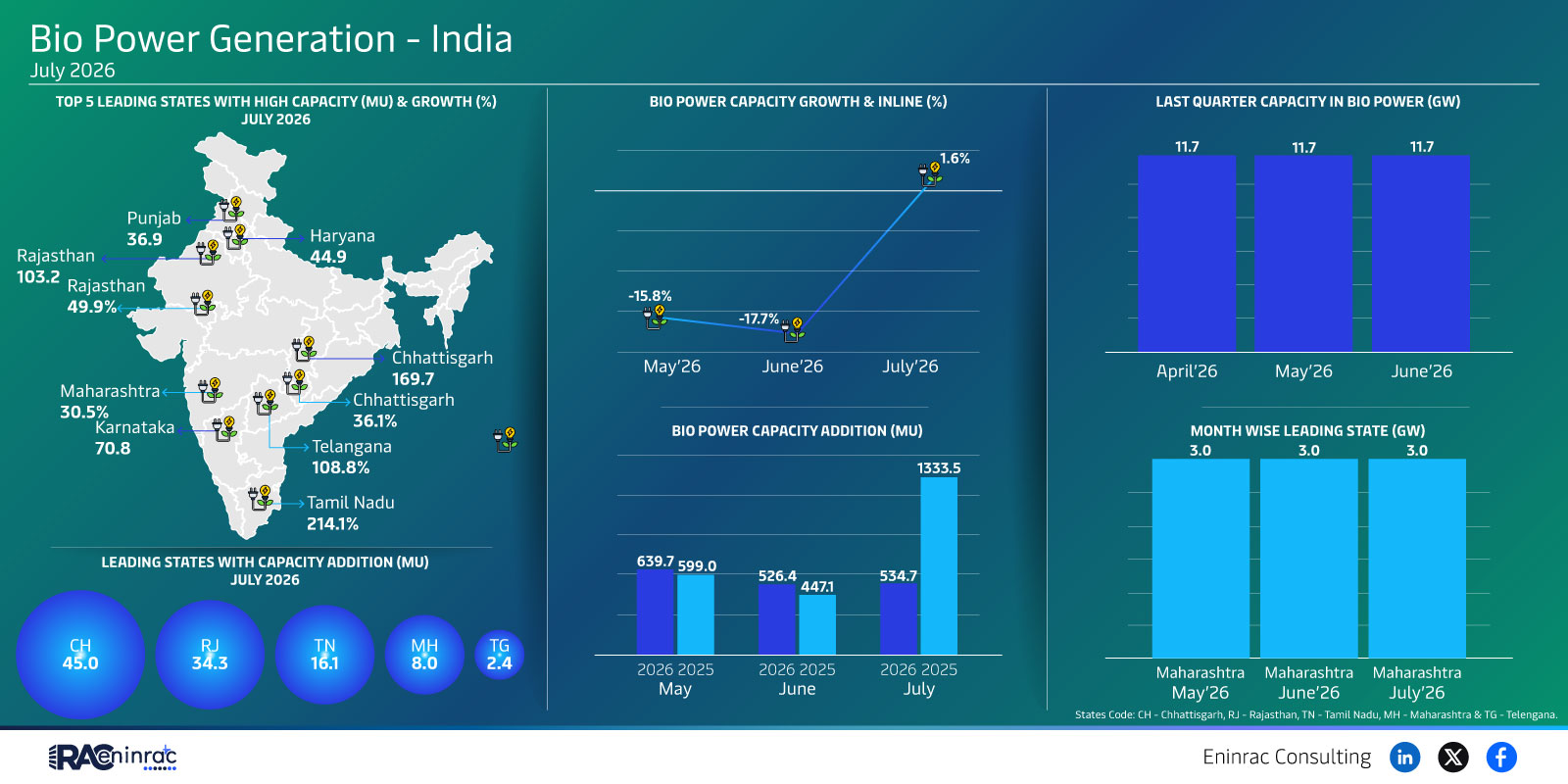
The data shows that Maharashtra remains the dominant player with a reported 108.8 GW of bio power capacity in July, followed by Tamil Nadu at 70.8 GW. Punjab, Haryana and Rajasthan also feature prominently, each contributing between 15 MU and 36 MU of new capacity in the last quarter. Month‑wise, Maharashtra recorded consistent 3.0 GW additions in May, June and July, indicating strong pipeline projects. These figures suggest a concentrated growth pattern in western and southern regions, while northern states are catching up.
State‑wise Bio Power Capacity and Growth in July 2026
When ranking by total capacity, Maharashtra leads with 108.8 GW, a clear margin over the next highest state, Tamil Nadu, which holds 70.8 GW. Punjab follows with 36.9 MU, and Haryana and Rajasthan contribute 15.8 MU and 14.9 MU respectively. The quarterly growth numbers show that the western corridor—Maharashtra, Gujarat and Rajasthan—has the highest addition rates, while the central and eastern regions display modest but steady increases. The month‑wise snapshot for May, June and July confirms that Maharashtra’s 3.0 GW monthly addition is the most consistent, reinforcing its role as the engine of bio power expansion in India.
Impact on Sectors and Industries
The surge in bio power capacity influences multiple sectors. Renewable energy investors see enhanced project pipelines and higher returns in states with strong policy support. Policymakers can benchmark successful state programmes to design incentives for lagging regions. Farmers and waste‑management companies benefit from new feedstock markets, while electricity utilities gain access to cleaner baseload power, reducing reliance on coal. The broader Indian economy gains from job creation in plant construction, operation and ancillary services, and the environmental footprint improves through reduced landfill emissions.
Key Takeaways
- Maharashtra tops the list with 108.8 GW, maintaining its lead in bio power capacity.
- Tamil Nadu holds the second‑largest capacity at 70.8 GW.
- Punjab, Haryana and Rajasthan together add more than 60 MU of new capacity in the last quarter.
- Monthly additions of 3.0 GW in Maharashtra show a stable growth trajectory.
- Western and southern states dominate capacity growth, while northern states are accelerating.
- Increasing bio power capacity supports renewable targets, creates jobs and lowers carbon emissions.
FAQs
Which Indian state has the highest bio power capacity in July 2026?
Maharashtra leads with 108.8 GW of bio power capacity.
How much new capacity did Punjab add in the last quarter?
Punjab contributed approximately 36.9 MU of new bio power capacity.
What is the monthly addition trend for Maharashtra?
Maharashtra consistently added about 3.0 GW of bio power capacity each month in May, June and July.
Why is bio power important for India’s energy mix?
Bio power converts organic waste into electricity, providing a renewable, baseload source that reduces reliance on fossil fuels and supports waste management.
Which sectors benefit most from bio power growth?
Investors, policymakers, waste‑management firms, agricultural producers and electricity utilities all gain from expanding bio power capacity.