
Introduction
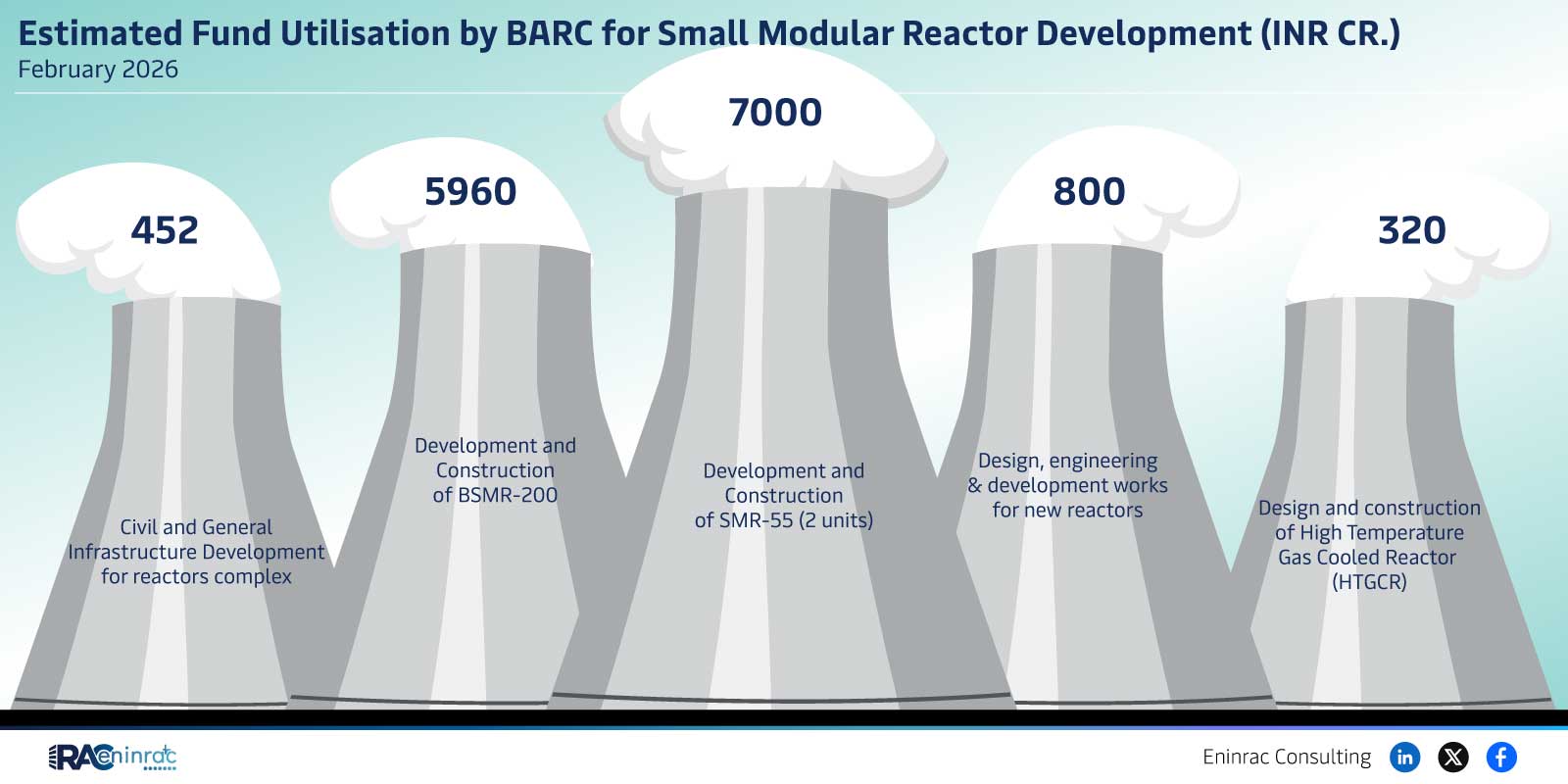
The Board of Atomic Energy (BARC) released its February 2026 fund utilisation report for Small Modular Reactor (SMR) development. This data shows how billions of rupees are allocated across design, construction, and infrastructure for advanced reactor projects such as BSMR-200, SMR-55, and high‑temperature gas‑cooled reactors. Understanding this allocation helps investors, policymakers, and industry stakeholders gauge the pace of India’s nuclear innovation and its impact on the broader energy transition.
What Does the Data Reveal About This Topic?
The report highlights that BARC is prioritising construction development for the BSMR-200 and SMR-55 units, while also investing in high‑temperature gas‑cooled reactor (HTGCR) infrastructure. The split between design, construction, and ancillary services indicates a shift from conceptual research to tangible build‑out, signalling a maturing SMR ecosystem in India.
Allocation Trends Across SMR Projects
Comparatively, the BSMR-200 receives the largest share of funds for construction development, reflecting its status as a flagship 200 MW modular unit. The SMR-55, planned as two 55 MW units, shows balanced spending between design and construction, suggesting a pilot‑scale approach. Meanwhile, the HTGCR infrastructure receives dedicated capital for gas‑cooled technology, underscoring BARC’s diversification into high‑temperature reactors that can support process heat applications beyond electricity generation.
Impact on Sectors and Industries
These investments influence several sectors. The nuclear supply chain—steel, concrete, and specialised components—will see increased demand. Energy utilities gain a roadmap for integrating modular reactors into grids, enhancing reliability and reducing carbon intensity. Investors in clean‑energy infrastructure can assess risk and opportunity based on BARC’s funding commitments. Policymakers receive concrete data to shape regulatory frameworks that accommodate modular designs and fast‑track licensing.
Key Takeaways
- BARC allocates the majority of February 2026 funds to construction of the BSMR-200, indicating a move toward commercial readiness.
- SMR-55 receives balanced design and construction funding, positioning it as a pilot for scalable modular deployment.
- High‑temperature gas‑cooled reactor infrastructure funding reflects diversification into process‑heat applications.
- Funding patterns suggest a shift from pure research to market‑oriented development across SMR projects.
- Increased capital flow will stimulate the nuclear supply chain and create new opportunities for domestic manufacturers.
- Stakeholders can use this data to align investment strategies with India’s emerging modular nuclear roadmap.
FAQs
What is the BSMR-200?
The BSMR-200 is a 200‑megawatt small modular reactor designed for rapid deployment and enhanced safety, currently in the construction development phase.
How many SMR‑55 units are planned?
Two SMR‑55 units are planned, each delivering 55 MW, with funding split between design and construction to pilot modular technology.
Why is BARC investing in high‑temperature gas‑cooled reactors?
HTGCRs provide high‑temperature process heat for industrial applications, expanding nuclear’s role beyond electricity generation and supporting decarbonisation of heavy industry.
What does this funding mean for investors?
The allocation signals BARC’s commitment to commercialising SMRs, offering investors clearer timelines and reduced technology risk for nuclear clean‑energy projects.
How will this affect India’s energy mix?
Increased SMR capacity will diversify India’s energy mix, complementing renewables and reducing reliance on fossil fuels while meeting growing electricity demand.