
Introduction
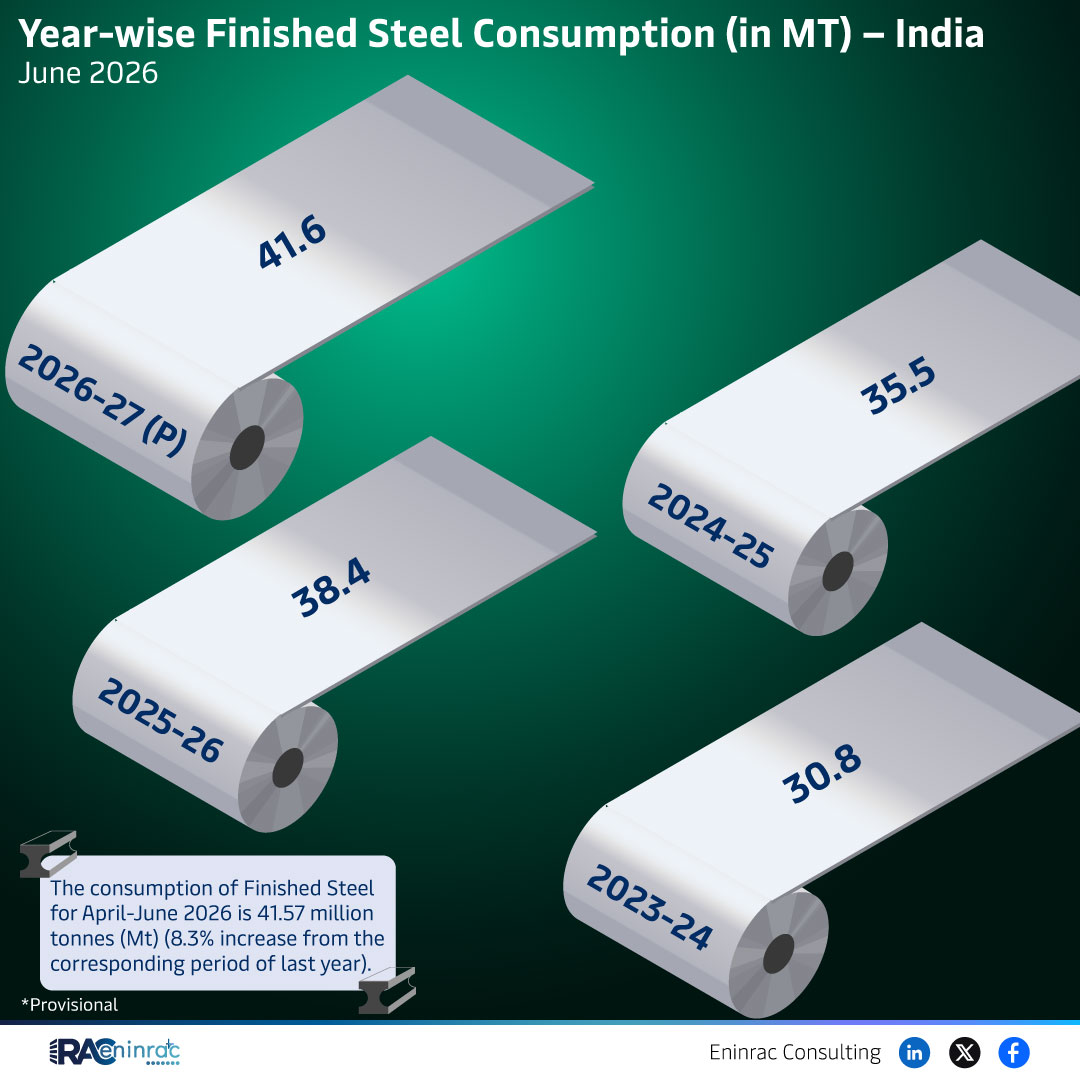
The provisional data released for the April‑June 2026 quarter shows that India finished steel consumption reached 41.57 million tonnes. This represents an 8.3 per cent increase over the same three‑month period in 2025. Understanding India finished steel consumption is crucial because steel is a backbone material for construction, infrastructure development, automotive manufacturing, and countless other sectors. The rise signals stronger demand across these industries and offers insight into the health of the Indian economy. In this article we break down what the numbers mean, compare them with historical trends, explore the implications for related sectors, and provide key takeaways that investors, policymakers, and business leaders can use to inform their decisions.
What Does the Data Reveal About This Topic?
Does an 8.3 % rise in April‑June 2026 finished steel consumption indicate a broader economic upturn? The answer is yes; the increase reflects higher activity in construction projects, renewed automotive output, and expanded manufacturing capacity. It also suggests that policy measures encouraging domestic steel use are beginning to bear fruit. By tracking this metric, analysts can gauge the momentum of capital‑intensive activities and anticipate future demand patterns.
India’s Steel Consumption in Q2 2026 Compared with Past Periods
When placed side by side with the April‑June 2025 figures, the 41.57 MT consumption marks a clear uplift from roughly 38.4 MT a year earlier. The 8.3 % growth outpaces the average annual growth rate of 5‑6 % observed over the previous five years. Internationally, India’s quarterly increase ranks among the highest in major steel‑producing economies, underscoring the country’s expanding role in the global steel market. This comparative view highlights both the strength of domestic demand and the effectiveness of recent market‑friendly reforms.
Impact on Sectors and Industries
The surge in India finished steel consumption has cascading effects across multiple sectors. Construction firms benefit from the ready availability of steel for bridges, highways, and residential projects, potentially lowering costs and shortening timelines. The automotive sector sees improved supply chain stability, which can translate into higher production volumes and competitive pricing. Heavy‑industry players, such as machinery manufacturers and shipbuilders, also experience reduced material bottlenecks. For investors, the data signals a favorable environment for companies linked to steel downstream, while policymakers may view the trend as validation of infrastructure‑focused initiatives.
Key Takeaways
- India finished steel consumption reached 41.57 MT in Q2 2026.
- The quarter recorded an 8.3 % year‑on‑year increase.
- Growth outpaced the five‑year average of 5‑6 %.
- Stronger demand is evident in construction, automotive, and heavy‑industry sectors.
- India’s performance compares favorably with other major steel‑producing nations.
- The data supports a positive outlook for investors and policymakers focused on infrastructure.
FAQs
What was the exact finished steel consumption in India for April‑June 2026?
It was 41.57 million tonnes, according to provisional statistics.
How much did consumption grow compared with the same period last year?
The consumption grew by 8.3 % year‑on‑year.
Which sectors are driving the increase in steel consumption?
Construction, automotive manufacturing, and heavy‑industry production are the primary drivers.
Is the growth rate higher than the long‑term average?
Yes, the 8.3 % increase exceeds the five‑year average growth of 5‑6 %.
What does this data suggest for future steel demand in India?
It suggests a continued upward trend as infrastructure projects and industrial output expand.