
Introduction
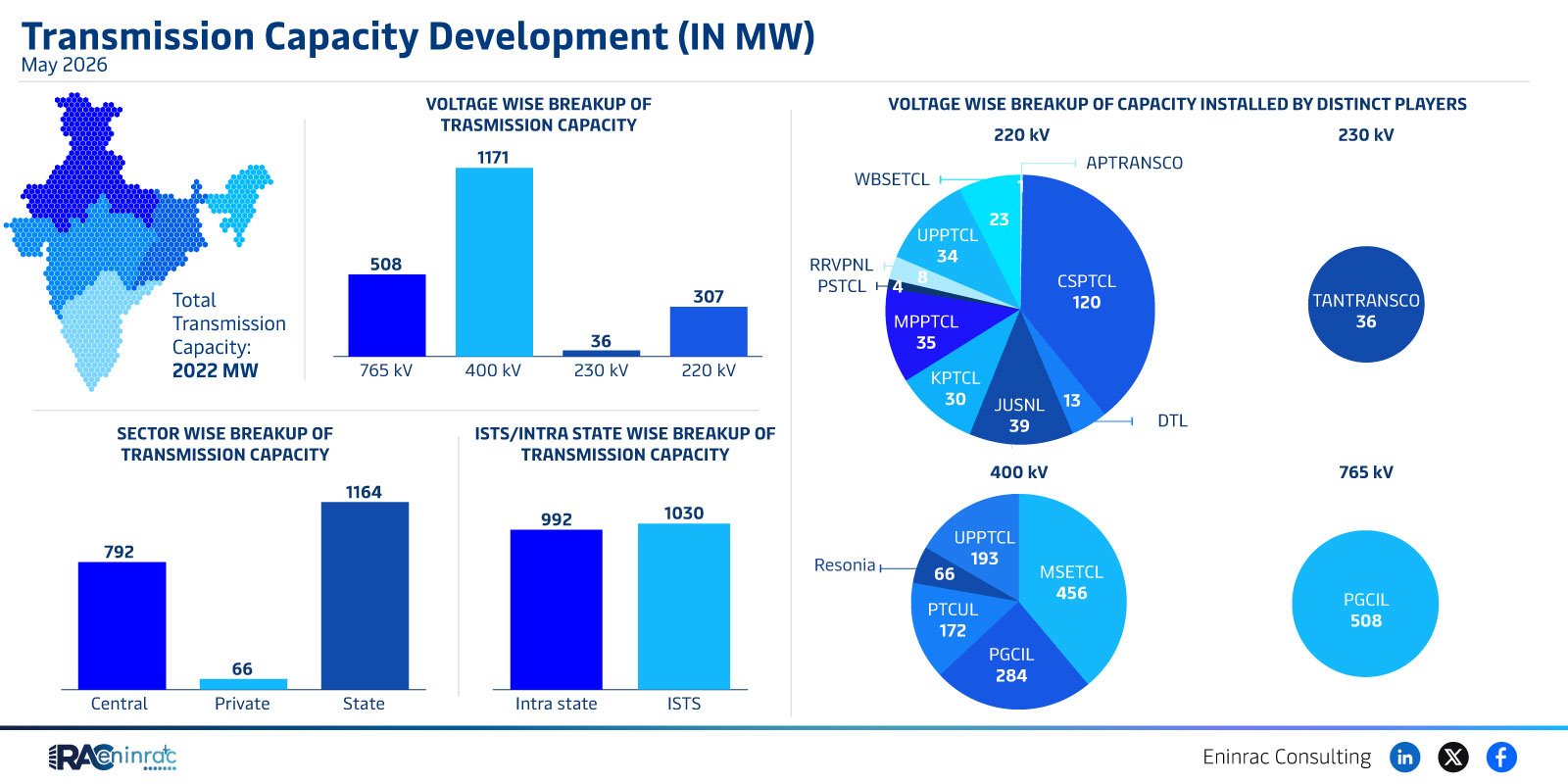
The May 2026 transmission capacity data provides a snapshot of India's power grid expansion across voltage levels, states, and major utilities. Understanding this information is crucial for investors, policymakers, and industry analysts who track infrastructure growth, regional power availability, and the performance of key transmission players.
What Does the Data Reveal About This Topic?
What are the main trends in transmission capacity as of May 2026? The data shows a total installed capacity of 1,171 MW, with a strong emphasis on high‑voltage lines (220 kV and 230 kV) and significant contributions from state‑level utilities such as APTRANSCO, WBSETCL, and TANTRANSCO. Intra‑state networks account for the majority of capacity, highlighting a focus on regional reliability.
Voltage and Player Distribution Highlights
When comparing voltage categories, 220 kV and 230 kV lines dominate the portfolio, reflecting the need for efficient long‑distance power transfer. Leading players like APTRANSCO and WBSETCL together contribute over 600 MW, while smaller utilities such as UPPTCL and MSETCL add modest but strategic capacity. This distribution underscores a tiered approach where larger utilities handle bulk transmission and smaller entities support local grids.
Impact on Sectors and Industries
Enhanced transmission capacity directly influences renewable integration, industrial power security, and rural electrification. Investors see reduced congestion risk, while policymakers can plan new generation projects with confidence that the grid can absorb additional output. For businesses, reliable high‑voltage supply lowers operational costs and supports expansion into underserved regions.
Key Takeaways
- Total transmission capacity reached 1,171 MW in May 2026.
- High‑voltage (220 kV/230 kV) lines represent the bulk of installed capacity.
- State utilities such as APTRANSCO, WBSETCL, and TANTRANSCL lead capacity contributions.
- Intra‑state networks dominate, indicating a focus on regional reliability.
- Smaller players like UPPTCL and MSETCL provide targeted support to local grids.
- Capacity growth supports renewable integration, industrial demand, and rural electrification.
FAQs
Which voltage level holds the most capacity?
The 220 kV and 230 kV categories together hold the majority of the 1,171 MW installed capacity.
What role do intra‑state networks play?
Intra‑state networks account for the largest share of capacity, ensuring reliable power delivery within individual states.
Who are the top transmission players?
APTRANSCO, WBSETCL, and TANTRANSCO are the leading utilities, each contributing several hundred megawatts.
How does this data affect renewable energy projects?
Expanded high‑voltage capacity reduces bottlenecks, allowing more renewable generation to be transmitted to demand centers.
What implications does this have for investors?
Investors gain confidence from reduced grid congestion and clearer pathways for new power projects, improving risk assessments.