
Introduction
The April 2026 data on coal imports by Indian ports provides a snapshot of how the country sources its thermal coal for power generation and industry. Understanding which ports handle the most volume helps analysts gauge supply chain dynamics, regional demand, and the strategic importance of maritime infrastructure. This article breaks down the top ten ports, highlights key trends, and explains why the figures matter for investors, policymakers, and energy stakeholders.
What Does the Data Reveal About This Topic?
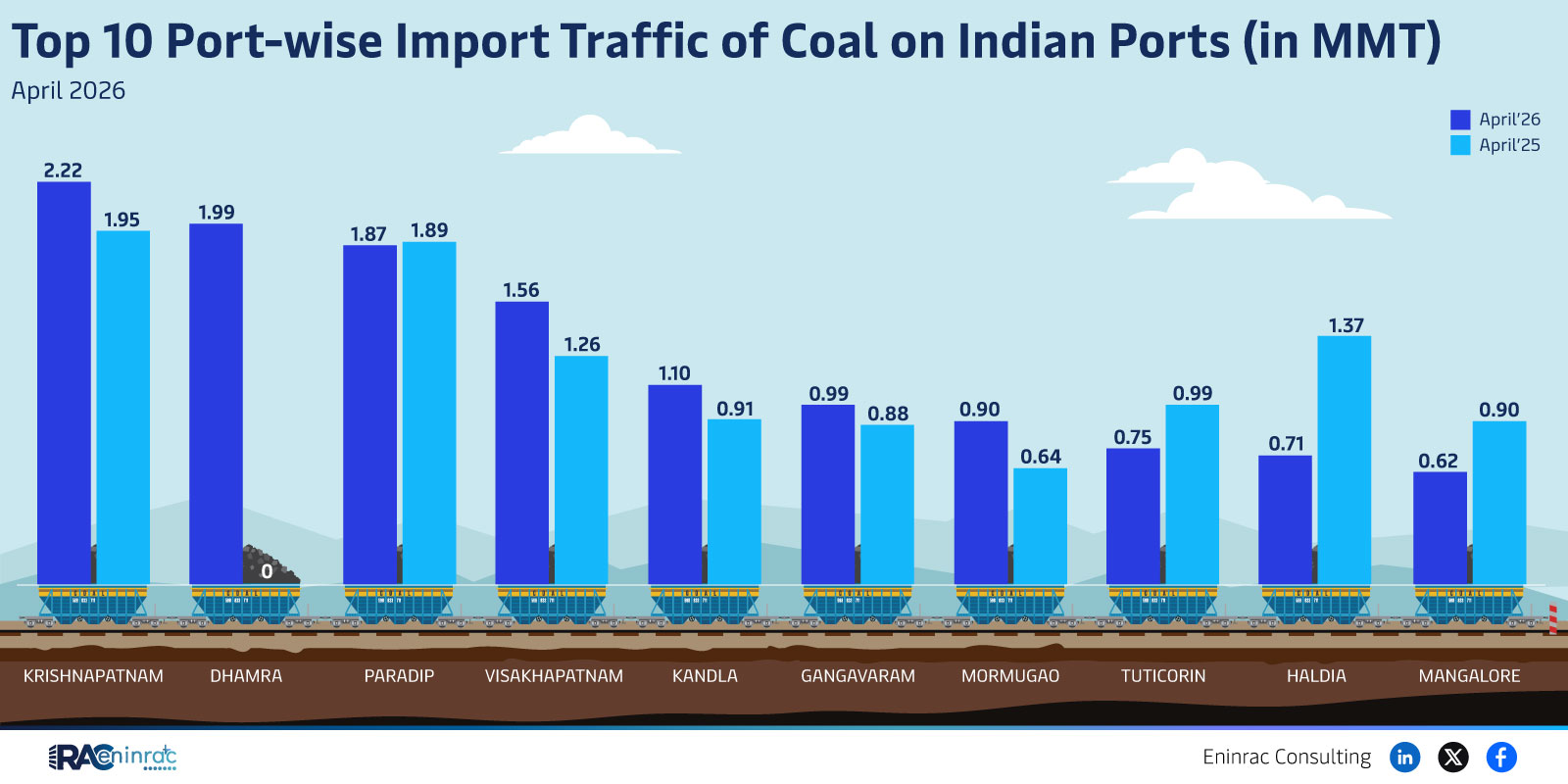
Which Indian ports recorded the highest coal import volumes in April 2026 and what does that indicate about regional demand? The list shows that ports such as Paradip, Haldia, and Vizag dominate the rankings, reflecting their proximity to major coal‑fired power plants and industrial clusters. Smaller ports like Mormugao and Kandla contribute modestly, suggesting niche roles or limited hinterland connectivity.
Port‑wise Comparative Analysis
When comparing the top ten ports, Paradip leads with approximately 2.22 million metric tonnes (MMT) of coal, followed closely by Haldia at 1.95 MMT and Vizag at 1.89 MMT. The gap narrows after the top three, with ports such as Kandla, Mormugao, and Chennai handling between 0.64 and 1.10 MMT. The distribution illustrates a concentration of import activity in eastern and western coastal hubs, driven by existing rail links to power‑dense states like Odisha, West Bengal, and Gujarat. Ports with lower volumes often face constraints such as limited berth capacity or longer inland transport distances.
Impact on Sectors and Industries
Coal import volumes directly affect the power generation sector, which still relies on thermal coal for base‑load electricity. Higher import traffic at ports like Paradip supports the operational needs of large thermal plants in the east, while western ports sustain industrial users in petrochemicals and steel. Investors monitor these flows to assess demand stability, and policymakers use the data to plan infrastructure upgrades, such as expanding berths or improving rail corridors, to reduce logistics bottlenecks.
Key Takeaways
- Paradip remains the leading coal import gateway, handling over 2.2 MMT in April 2026.
- Eastern ports collectively capture the majority of imports, reflecting the concentration of thermal power plants in that region.
- Mid‑size ports like Kandla and Mormugao show steady growth, indicating potential for future capacity expansion.
- Port performance is closely tied to rail connectivity and hinterland infrastructure.
- Import trends influence power pricing, fuel security, and investment decisions in the energy sector.
- Policymakers can use the data to prioritize upgrades at high‑traffic ports to improve efficiency and reduce turnaround times.
FAQs
Which port imported the most coal in April 2026?
Paradip imported the highest volume, about 2.22 million metric tonnes.
Why do eastern ports dominate coal imports?
They are closer to large thermal power plants and have better rail links to coal‑dependent states.
How does coal import volume affect power prices?
Higher import volumes can stabilize supply, potentially lowering wholesale power costs, while disruptions may raise prices.
What infrastructure improvements can boost port efficiency?
Expanding berths, deepening drafts, and upgrading rail corridors are key measures.
Are smaller ports likely to increase their share of coal imports?
Yes, if they receive targeted investments and improve connectivity, they can handle larger volumes.