
Introduction
The Bharatmala programme is India’s flagship highway development initiative, aiming to improve connectivity across the nation. In the Northeast region, where terrain challenges and fragmented networks have historically hindered growth, the programme’s state‑wise progress data offers valuable insight. This article examines the latest construction figures, awarded project lengths, and overall targets for the key Northeastern states, helping readers understand how road infrastructure is evolving and why these developments matter for economic development, trade, and social inclusion.
What Does the Data Reveal About This Topic?
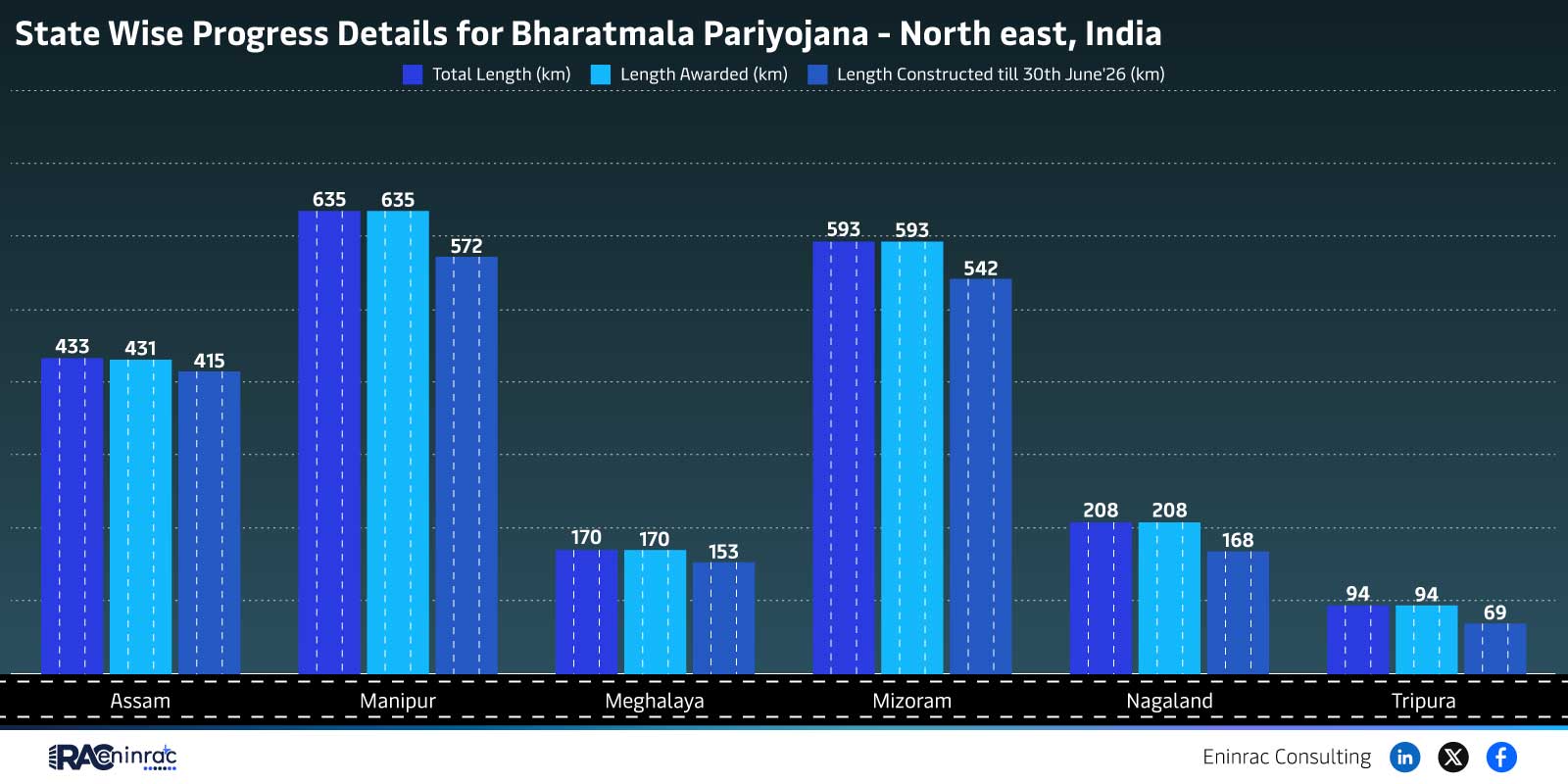
The recent data set lists the kilometres of roads constructed up to 30 June 2026, the lengths awarded for future work, and the total planned lengths for each state. It shows a mixed picture: while some states have already built a substantial portion of their allotted kilometres, others remain in the early stages of award allocations. The figures highlight the disparity in execution speed, reflecting varying geographic challenges, funding flows, and administrative readiness across Meghalaya, Mizoram, Nagaland, Tripura, Manipur and Assam.
State‑wise Construction Status in the Northeast
Meghalaya leads with a notable portion of its total planned network already constructed, signalling effective project mobilisation despite its hilly terrain. Mizoram follows, showing steady progress but still awaiting several key awards to meet its total length goals. Nagaland’s construction numbers are modest, indicating either logistical bottlenecks or pending clearances. Tripura and Manipur exhibit similar patterns, with early construction milestones achieved but considerable awarded lengths still pending. Assam, the largest state in the region, reports the highest absolute kilometres constructed, reflecting its strategic position as a gateway to the rest of India, yet still has a sizable gap between awarded and total target lengths. This comparative snapshot underscores how each state is at a different stage of the Bharatmala rollout, shaped by local conditions and policy focus.
Impact on Sectors and Industries
Improved road connectivity under Bharatmala directly influences multiple sectors. For the logistics industry, reduced travel times between ports, railheads and interior markets lower freight costs and boost supply‑chain efficiency. Agricultural producers benefit from better access to regional and national markets, increasing farmgate prices and encouraging agribusiness investment. Tourism in the scenic Northeast stands to grow as travelers enjoy safer, faster routes to cultural and natural attractions. Moreover, construction activity fuels demand for building materials, equipment rentals, and skilled labour, stimulating local economies. Policymakers can leverage the progress data to allocate resources, prioritize unfinished corridors, and align state development plans with national infrastructure goals, while investors monitor the evolving landscape for opportunities in transport, urban development and ancillary services.
Key Takeaways
- Meghalaya and Assam lead in kilometres constructed under Bharatmala in the Northeast.
- Mizoram shows steady progress but still has a large awarded length pending.
- Nagaland, Tripura and Manipur face slower execution, highlighting regional challenges.
- Total awarded lengths often exceed currently built kilometres, indicating future growth potential.
- Enhanced road networks are set to boost logistics, agriculture, tourism and local employment.
- Policymakers can use state‑wise data to fine‑tune funding and expedite pending projects.
FAQs
What is the total length of Bharatmala roads planned for the Northeast?
The combined total length across all six states, encompassing constructed, awarded and yet‑to‑be‑built sections, runs into several thousand kilometres, with each state having its own specific target.
Which Northeast state has the highest percentage of its road target completed?
Meghalaya currently has the highest completion percentage, having built a large share of its allotted network relative to its total target.
Why do some states show lower construction figures?
Factors include difficult terrain, land acquisition delays, funding lags and varying administrative capacities that affect project rollout speed.
How does Bharatmala influence economic growth in the region?
Better roads reduce transportation costs, improve market access for producers, attract investment, and stimulate sectors such as tourism and manufacturing.
When can we expect the awarded lengths to be converted into actual construction?
The timeline depends on state‑level clearances, financial disbursements and contractual agreements, but most awarded projects are slated for commencement within the next two fiscal years.