
Introduction
The Bharatmala project is one of the flagship road development initiatives of the Indian government, aiming to improve connectivity across the nation. In 2026 the programme released state‑wise data that details the length of roads awarded, the total planned length and the amount actually constructed up to 30 June 2026. This information matters to investors, policymakers and citizens because it reveals how quickly critical infrastructure is being delivered, highlights regional performance gaps and helps forecast future economic impact. Readers will learn which states are leading, how construction progress compares to original targets and what implications this holds for related sectors.
What Does the Data Reveal About This Topic?
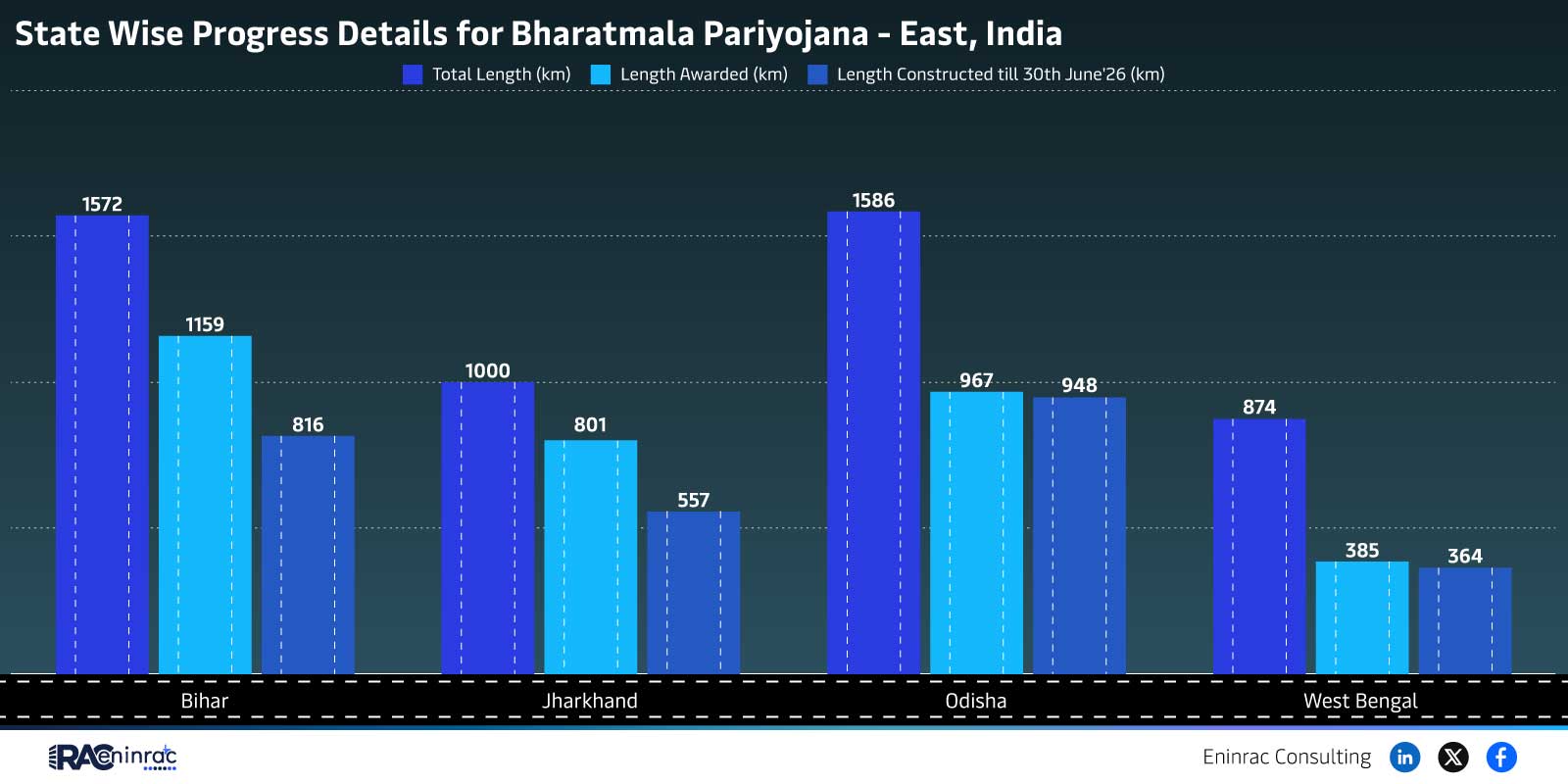
Does the 2026 state‑wise data show that the Bharatmala project is on schedule? The numbers indicate a mixed picture. While the total awarded length across the listed states reaches 1,586 kilometres, the constructed length by the end of June totals roughly 1,000 kilometres, leaving a gap of more than 500 kilometres. West Bengal, Odisha, Jharkhand and Bihar each exhibit varying degrees of progress, with some states approaching their targets faster than others. The data therefore answers the core question by confirming significant advances while also exposing substantial work remaining.
State-wise Construction Comparison
When comparing West Bengal, Odisha, Jharkhand and Bihar, distinct trends emerge. West Bengal shows the highest proportion of constructed kilometres relative to its awarded length, suggesting effective project execution and strong local coordination. Odisha follows with a solid but slightly lower completion rate, reflecting challenges such as terrain and land acquisition. Jharkhand’s progress is moderate, indicating steady but cautious advancement, while Bihar lags behind, possibly due to funding constraints and administrative hurdles. These differences illustrate how regional policies, geographic conditions and administrative efficiency influence the overall pace of the Bharatmala project.
Impact on Sectors and Industries
The progress of the Bharatmala project directly influences multiple sectors. The construction industry benefits from increased demand for materials, equipment and labour, stimulating growth and job creation. Logistics and freight companies gain from improved road connectivity, which reduces transit time and cost, enhancing supply chain efficiency. Real estate developers see higher land values near new highways, encouraging investment in commercial and residential projects. Additionally, the energy sector experiences indirect gains as better transport networks facilitate the movement of fuel and renewable energy components. Policymakers can use the data to allocate resources, prioritize bottleneck regions and align future infrastructure spending with economic objectives.
Key Takeaways
- Overall, 1,586 km of roads were awarded across the four states in 2026.
- Approximately 1,000 km have been constructed, leaving a sizable gap to target.
- West Bengal leads in construction proportion, indicating strong implementation.
- Odisha shows consistent progress but faces occasional terrain challenges.
- Jharkhand’s moderate pace reflects steady resource allocation.
- Bihar requires focused attention to accelerate its construction timeline.
FAQs
What is the total awarded length for the Bharatmala project in the listed states?
The total awarded length for West Bengal, Odisha, Jharkhand and Bihar combined is 1,586 kilometres as of 2026.
How much of the awarded road length was constructed by 30 June 2026?
By the end of June 2026, about 1,000 kilometres had been constructed, representing roughly 63 percent of the awarded length.
Which state has the highest construction completion rate?
West Bengal has the highest completion rate, achieving the greatest proportion of its awarded kilometres.
Why does Bihar lag behind other states?
Bihar’s slower progress is attributed to funding constraints, land acquisition delays and administrative challenges.
How does Bharatmala progress affect the logistics sector?
Improved highways reduce travel time and costs for logistics providers, enhancing supply chain efficiency and competitiveness.