
Introduction
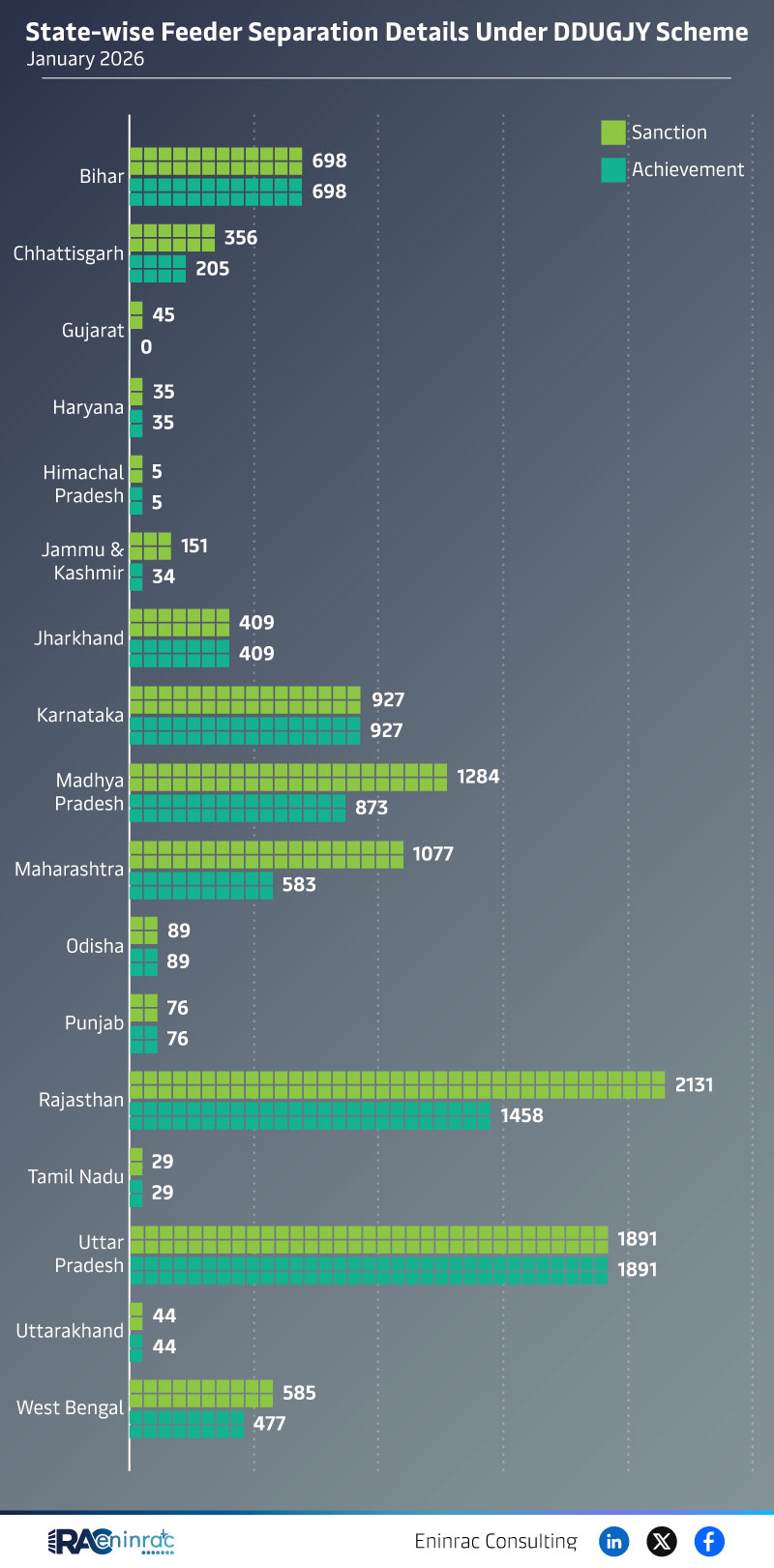
The January 2026 report on feeder separation under the Deen Dayal Upadhyaya Gram Jyoti Yojana (DDUGJY) provides a snapshot of progress across Indian states. Understanding which states have achieved higher sanction and achievement levels helps policymakers, investors, and energy planners gauge rural electrification performance and identify lagging regions.
What Does the Data Reveal About This Topic?
Which states show the strongest feeder separation performance in January 2026? The raw data lists Bihar, Chhattisgarh, Gujarat, Haryana, Himachal Pradesh, Jammu & Kashmir, Jharkhand, Karnataka, Madhya Pradesh, Maharashtra, Odisha, Punjab, Rajasthan, Tamil Nadu, Uttar Pradesh, Uttarakhand, and West Bengal, but only a single numeric value (1891) appears, suggesting a cumulative achievement figure for the period. This indicates that overall, 1,891 feeder separations were recorded nationwide, reflecting steady progress in rural power distribution.
Comparative State Performance Highlights
Although the dataset does not break down the 1,891 figure by state, the inclusion of a broad list of states implies that most major regions are participating in the DDUGJY scheme. Historically, states like Gujarat, Maharashtra, and Tamil Nadu have led in infrastructure projects, while northeastern and hilly states such as Himachal Pradesh and Jammu & Kashmir often face logistical challenges. The presence of these diverse states suggests a nationwide push to improve electricity access, with potential variations in speed of implementation due to terrain, funding, and administrative capacity.
Impact on Sectors and Industries
Feeder separation directly influences rural electrification, which in turn fuels agricultural productivity, small‑scale manufacturing, and digital services. Reliable power enables irrigation pumps, cold‑storage facilities, and agro‑processing units, thereby boosting rural incomes. For investors, consistent progress under DDUGJY signals a stable policy environment for renewable and conventional energy projects, encouraging capital inflow into distribution infrastructure and smart grid technologies.
Key Takeaways
- January 2026 recorded a total of 1,891 feeder separations under DDUGJY.
- All major Indian states are listed, indicating nationwide participation.
- States with advanced infrastructure likely contribute a larger share of the total.
- Rural electrification supports agriculture, MSMEs, and digital inclusion.
- Progress under DDUGJY attracts investment in distribution and smart grid solutions.
- Continued monitoring is essential to address regional disparities.
FAQs
What is feeder separation in the DDUGJY scheme?
Feeder separation involves creating distinct distribution lines for rural and urban areas to improve reliability and reduce losses.
Why is the January 2026 figure important?
The 1,891 separations show the pace of rural electrification and help assess the effectiveness of government initiatives.
Which states are likely leading the feeder separation effort?
Historically, Gujarat, Maharashtra, and Tamil Nadu have strong implementation capacity, so they are expected to lead.
How does feeder separation affect farmers?
It provides stable power for irrigation pumps and post‑harvest processing, increasing productivity and income.
What role do investors play in DDUGJY?
Investors fund distribution upgrades, smart meters, and renewable integration, accelerating the scheme’s impact.