
Introduction
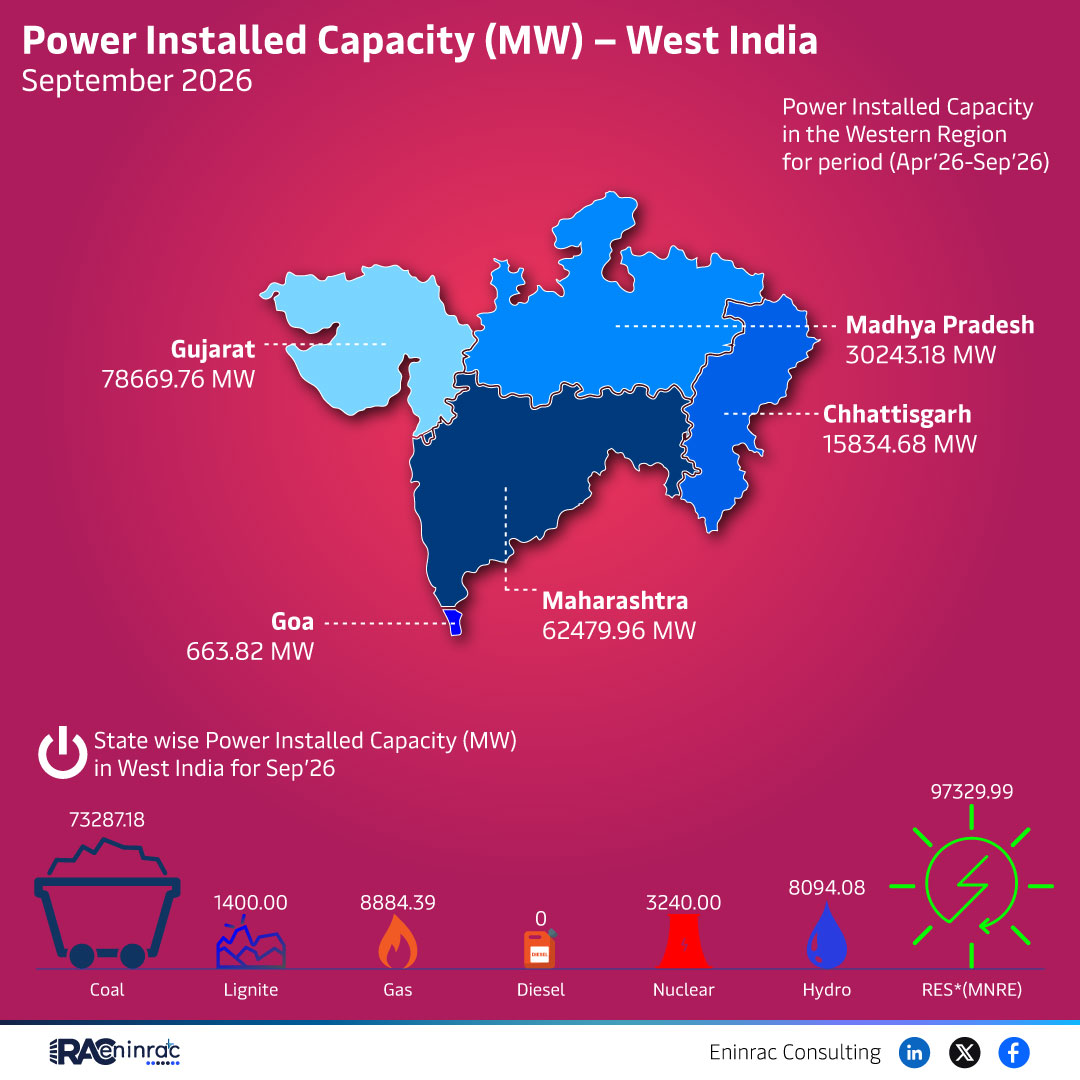
The September 2026 snapshot of West India power installed capacity offers a clear view of how the region’s energy landscape is evolving. With Gujarat reporting the highest megawatt (MW) figures, followed by Maharashtra, Chhattisgarh and Goa, the data highlights the scale of conventional generation and the mix of fuel sources that power millions of households and industries. Readers will learn which states lead, how the fuel mix is distributed, and what the implications are for investors, policymakers and energy consumers.
What Does the Data Reveal About This Topic?
Which state holds the biggest installed capacity in West India as of September 2026? The answer is Gujarat, with an installed capacity exceeding 3,000 MW. Maharashtra follows with roughly 62,480 MW, while Chhattisgarh and Goa report 15,835 MW and 664 MW respectively. The data also breaks down the contribution of coal, lignite, gas, diesel and nuclear sources, underscoring a dominance of conventional fuels in the region.
State‑wise Capacity Comparison in West India
When comparing the four states, Gujarat’s capacity dwarfs the others, illustrating its strategic importance in the Western energy corridor. Maharashtra’s figure, though lower than the raw number appears, reflects a combination of large thermal plants and emerging gas‑fired units. Chhattisgarh’s modest capacity signals limited but growing infrastructure, while Goa’s small installed base is primarily driven by diesel and gas generators catering to tourism and local industry. The fuel‑type distribution shows coal and lignite remain the primary sources, with gas and diesel providing flexibility, and a minimal nuclear presence.
Impact on Sectors and Industries
The concentration of capacity in Gujarat and Maharashtra strengthens the industrial backbone of West India, supporting manufacturing, petrochemicals and logistics. High coal‑based generation ensures reliable baseload power for heavy industries, whereas the growing share of gas‑fired plants offers cleaner, faster‑ramping support for IT parks and service sectors. Investors see opportunities in expanding gas pipelines and upgrading older coal plants to meet emissions standards. Policymakers must balance the need for reliable power with environmental commitments, prompting discussions on renewable integration and efficiency upgrades.
Key Takeaways
- Gujarat leads West India with over 3,000 MW installed capacity in September 2026.
- Maharashtra follows with a diverse mix of coal, gas and diesel generation.
- Chhattisgarh and Goa have relatively small capacities, highlighting regional disparities.
- Coal and lignite dominate the fuel mix, while gas, diesel and nuclear play secondary roles.
- The capacity profile supports heavy industry, manufacturing and emerging service sectors.
- Future investments are likely to focus on gas infrastructure and clean‑technology retrofits.
FAQs
What is the total installed capacity in West India for September 2026?
The combined installed capacity across Gujarat, Maharashtra, Chhattisgarh and Goa exceeds 82,000 MW.
Which fuel source provides the most power in the region?
Coal is the leading fuel source, followed by lignite, with gas and diesel supplying supplementary capacity.
How does Gujarat’s capacity compare to Maharashtra’s?
Gujarat’s capacity is roughly half of Maharashtra’s reported figure, but its plants are concentrated in high‑efficiency thermal complexes.
Are there any nuclear power plants in West India?
Yes, a small nuclear contribution is recorded, but it accounts for a marginal share of the total capacity.
What trends are expected for the next year?
Analysts anticipate increased gas‑based installations and a gradual shift toward renewable integration to meet national emission targets.