
Introduction
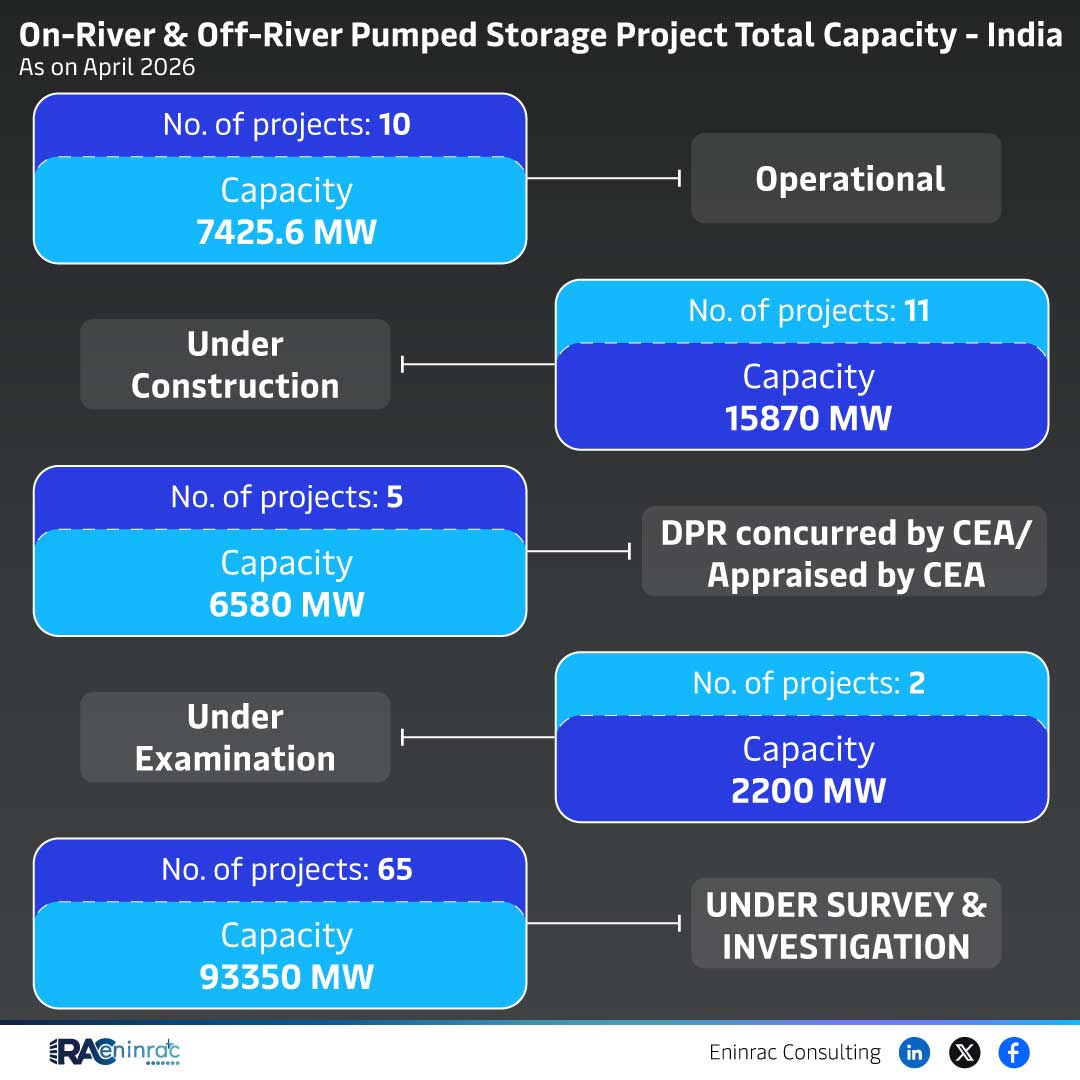
India’s pumped storage landscape is expanding rapidly, with a total of ten on‑river and off‑river projects reported as of April 2026. Understanding the capacity distribution across construction, examination and survey phases helps investors, policymakers and industry analysts gauge the country’s commitment to flexible renewable power generation.
What Does the Data Reveal About This Topic?
The raw figures show that 11 projects are in the construction stage, contributing 15,870 MW, while five projects under examination add 6,580 MW. Two projects are currently under survey with a combined 2,200 MW capacity. This tiered breakdown highlights a pipeline that moves from planning to operational readiness, indicating strong pipeline momentum.
Capacity Distribution Across Project Phases
Comparing the three phases reveals that construction holds the largest share of capacity, reflecting significant capital deployment. Examination projects, though fewer, still represent a substantial 6,580 MW, suggesting that many designs have passed initial feasibility checks. Survey‑stage projects are modest in size but crucial, as they set the groundwork for future expansion. The data underscores a clear trend: India is prioritizing large‑scale pumped storage to balance intermittent renewable sources such as solar and wind.
Impact on Sectors and Industries
Pumped storage enhances grid stability, reduces reliance on fossil‑fuel peaker plants, and creates opportunities for equipment manufacturers, civil engineering firms, and financial institutions. Investors gain exposure to long‑term power purchase agreements, while policymakers can leverage the technology to meet renewable energy targets and improve energy security.
Key Takeaways
- India has ten active pumped storage projects as of April 2026.
- Construction phase accounts for the highest capacity at 15,870 MW.
- Examination projects contribute 6,580 MW, indicating strong pipeline depth.
- Survey‑stage projects total 2,200 MW, laying groundwork for future growth.
- Pumped storage supports grid reliability and renewable integration.
- The sector offers investment, engineering and policy opportunities.
FAQs
How many pumped storage projects are under construction in India?
Eleven projects are under construction, providing a combined capacity of 15,870 MW.
What is the total capacity of projects currently under examination?
Projects in the examination stage total 6,580 MW across five initiatives.
Why is pumped storage important for renewable energy integration?
It stores excess generation and releases it during peak demand, smoothing out variability from solar and wind.
What role do survey‑stage projects play?
They assess site feasibility and environmental impact, forming the foundation for future construction.
Which sectors benefit most from pumped storage development?
Power utilities, engineering firms, equipment suppliers and financial investors all stand to gain.