
Introduction
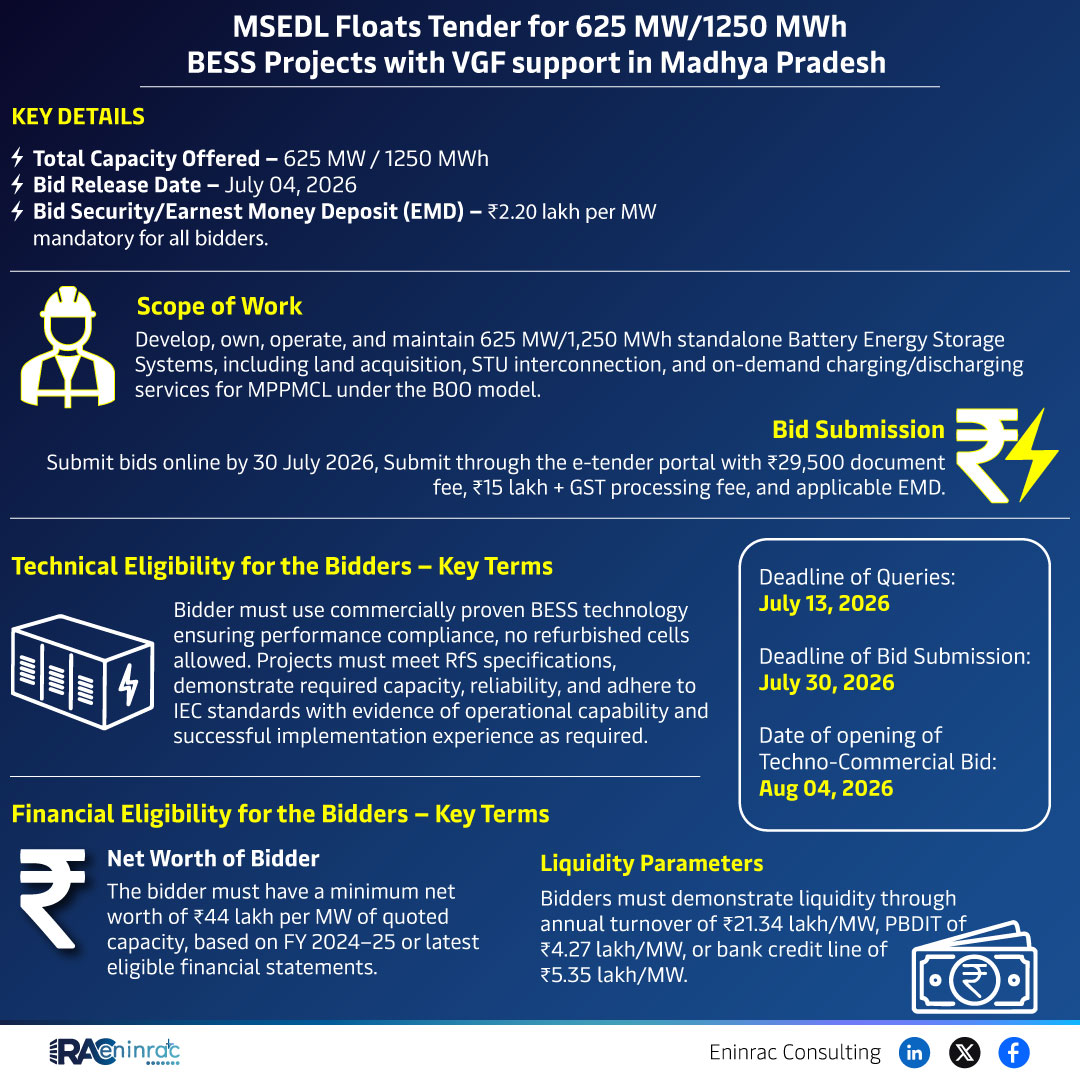
The Madhya Pradesh State Electricity Distribution Company Limited (MSEDL) has issued a tender for a 625 MW / 1,250 MWh standalone Battery Energy Storage System (BESS). The tender outlines technical, financial and submission requirements for bidders interested in developing, owning, operating and maintaining the system under a BOO model. This article breaks down the key data, explains its significance for the Indian energy market and guides potential participants through the process.
What Does the Data Reveal About This Topic?
What are the main requirements and timelines for the MSEDL BESS tender? The tender offers a total capacity of 625 MW with a storage capacity of 1,250 MWh. Bids must be submitted online by 30 July 2026, with a bid security of 2.20 lakh per MW, a document fee of 29,500 INR and a GST processing fee of 715 lakh INR. Technical eligibility demands commercially proven BESS technology, no refurbished cells, and compliance with IEC standards. Financial eligibility requires a minimum net‑worth turnover of 221.34 lakh per MW, PBDIT of 24.27 lakh per MW and a bank credit line of 5.35 lakh per MW.
Key Tender Milestones and Financial Obligations
The tender schedule is tight. The bid release date is 4 July 2026, with a query deadline on 13 July 2026. The techno‑commercial bid opening is set for 4 August 2026. Bidders must demonstrate liquidity through audited financial statements for FY 2024‑25 or the latest available year. The mandatory Earnest Money Deposit (EMD) of 2.20 lakh per MW ensures serious participation, while the document and GST fees cover administrative costs. These financial commitments reflect the high capital intensity of large‑scale BESS projects.
Impact on Sectors and Industries
The award of a 625 MW BESS will have a ripple effect across several sectors. Renewable energy developers will gain a reliable storage partner to smooth intermittency, enhancing grid stability. Investors see a new asset class with long‑term revenue under power purchase agreements with MPPMCL. Policymakers can use the project as a benchmark for future VGF‑supported storage initiatives in other states. Equipment manufacturers, especially those offering proven lithium‑ion technology, stand to benefit from increased demand for high‑performance cells and balance‑of‑system components.
Key Takeaways
- MSEDL offers a 625 MW / 1,250 MWh BESS under a BOO model with clear technical and financial criteria.
- Bid submission deadline is 30 July 2026; early query resolution ends on 13 July 2026.
- Earnest Money Deposit is set at 2.20 lakh per MW, with additional document and GST fees.
- Technical eligibility requires commercially proven, non‑refurbished BESS technology compliant with IEC standards.
- Financial eligibility mandates a net‑worth turnover of 221.34 lakh per MW and a credit line of 5.35 lakh per MW.
- The project will strengthen grid reliability, attract investment and stimulate the Indian BESS supply chain.
FAQs
What is the total storage capacity offered in the tender?
The tender provides 1,250 MWh of storage capacity alongside 625 MW of power capacity.
When must bidders submit their technical and commercial proposals?
All bids must be uploaded to the e‑tender portal by 30 July 2026.
Are refurbished battery cells allowed?
No. The tender explicitly requires commercially proven BESS technology with no refurbished cells.
What financial documents are required for eligibility?
Bidders must submit audited financial statements showing FY 2024‑25 turnover, PBDIT and a bank credit line that meet the specified thresholds.
How does this tender support renewable energy integration?
The large‑scale BESS will enable smoother integration of intermittent renewable sources by providing on‑demand charging and discharging services to the grid.