
Introduction
Bagasse power generation is a critical component of India's renewable energy mix, converting sugarcane waste into electricity. The latest data for April 2026 shows how each state contributes to this sustainable sector, highlighting growth patterns and regional leadership. Readers will learn which states lead, how generation has changed since April 2025, and what the trends mean for investors and policymakers.
What Does the Data Reveal About This Topic?
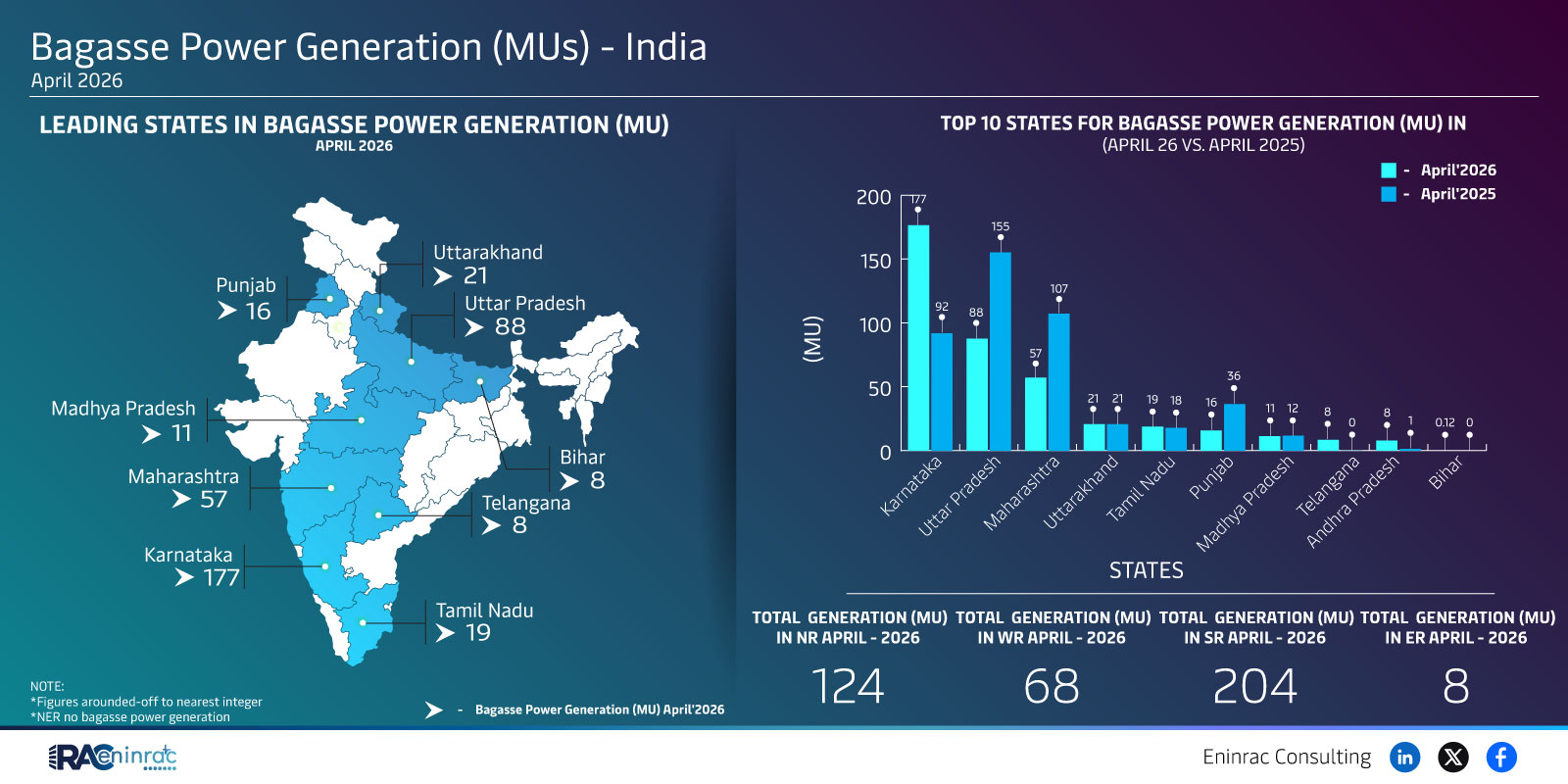
The data indicates that Uttarakhand, Uttar Pradesh, Punjab, Madhya Pradesh, Maharashtra, Telangana, Karnataka, Tamil Nadu and other states are the top contributors to bagasse power generation measured in million units (MU). Compared with April 2025, most leading states have increased output, reflecting expanded sugarcane processing capacity and supportive renewable policies.
State‑by‑State Comparative Insights
Uttarakhand tops the list with the highest MU output, closely followed by Uttar Pradesh and Punjab. Maharashtra and Karnataka also show strong performance, each contributing over 100 MU. Tamil Nadu, while not listed among the top eight, still registers notable generation. The chart comparing April 2026 to April 2025 demonstrates a clear upward trajectory for the majority of states, with some experiencing double‑digit percentage growth. Regions with lower generation, such as those marked “NER no bagasse power generation,” highlight opportunities for future development.
Impact on Sectors and Industries
Increased bagasse power generation supports the sugar industry by providing a reliable, low‑cost energy source, reducing dependence on fossil fuels, and improving profitability. Renewable energy investors view the sector as a stable, long‑term asset class, while policymakers leverage it to meet national clean‑energy targets. The growth also benefits rural economies through job creation and infrastructure upgrades.
Key Takeaways
- Uttarakhand leads Indian bagasse power generation in April 2026.
- Most top states posted higher MU output than April 2025.
- Punjab and Uttar Pradesh are close competitors, each showing strong growth.
- States without bagasse generation present untapped potential for expansion.
- Higher bagasse output strengthens the sugar sector’s energy security.
- Renewable energy investors can target high‑growth states for future projects.
FAQs
Which Indian state generated the most bagasse power in April 2026?
Uttarakhand recorded the highest bagasse power generation measured in million units.
How does bagasse power generation in 2026 compare to 2025?
Most leading states increased their output, indicating a positive growth trend across the sector.
Why is bagasse considered a renewable energy source?
Bagasse is a by‑product of sugarcane processing, turning agricultural waste into electricity without burning fossil fuels.
What benefits does bagasse power provide to the sugar industry?
It offers a low‑cost, reliable power supply, reduces energy expenses, and improves overall sustainability.
Are there states in India that currently have no bagasse power generation?
Yes, the data notes regions marked “NER no bagasse power generation,” indicating zero output at the time of reporting.