
Introduction
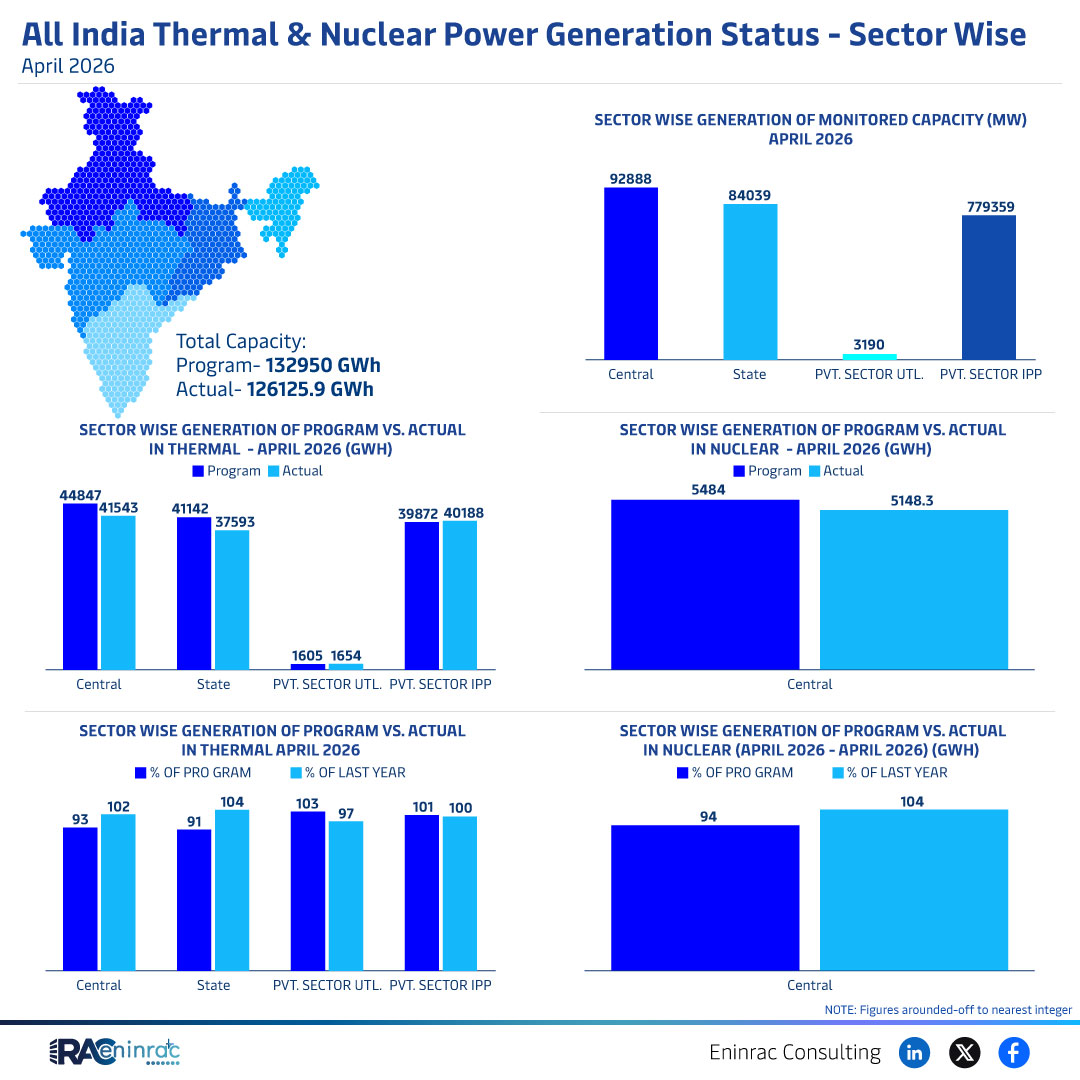
India's power generation landscape in April 2026 is captured in a detailed sector‑wise report that compares programmed targets with actual output for thermal and nuclear plants. Understanding these figures is essential for policymakers, investors, and industry analysts who track energy reliability, capacity planning, and the shift between conventional sources. This article breaks down the numbers, highlights key trends, and explains what they mean for the broader energy market.
What Does the Data Reveal About This Topic?
The data shows that total programmed generation for all sources was 132,950 GWh, while actual generation reached 126,125.9 GWh, indicating a shortfall of roughly 6,800 GWh. In the thermal segment, programmed generation was 92,888 MW of capacity with 84,039 MW actually available, and nuclear plants delivered 5,148 GWh against a program of 5,148 GWh, reflecting near‑perfect achievement. The shortfall is primarily driven by thermal capacity gaps.
Thermal Capacity Gaps and Regional Performance
When comparing regions, central thermal plants contributed the largest share of programmed capacity, but actual output lagged behind due to maintenance and fuel supply constraints. State‑run utilities, private sector (PVT.) and independent power producers (IPP) together accounted for the remaining capacity, with private sector performance slightly better than state‑run plants. Nuclear generation remained stable across central and state entities, showing consistent delivery against targets.
Impact on Sectors and Industries
These generation gaps affect multiple stakeholders. Utilities must manage load‑shedding risks, while investors evaluate the reliability of thermal assets versus the predictability of nuclear output. Policymakers may prioritize fuel logistics, plant upgrades, or accelerated renewable integration to offset thermal shortfalls. Consumers could experience higher tariffs if thermal deficits persist, prompting demand‑side management initiatives.
Key Takeaways
- Overall generation fell short of the programmed target by about 5 percent.
- Thermal capacity underperformed, delivering 84,039 MW against a programmed 92,888 MW.
- Nuclear generation met its programmed target, highlighting strong operational reliability.
- Central region dominates thermal capacity but also shows the biggest absolute shortfall.
- Private sector plants performed marginally better than state‑run utilities in meeting capacity.
- Shortfalls may pressure tariffs and encourage faster renewable deployment.
FAQs
Why did thermal generation fall short of the programmed target?
Factors include scheduled maintenance, fuel supply disruptions, and unexpected outages that reduced available megawatts.
Did nuclear power meet its generation goals?
Yes, nuclear plants delivered 5,148 GWh, matching the programmed figure and demonstrating high reliability.
Which region contributed the most to the thermal shortfall?
The central region, with the largest programmed capacity, also recorded the biggest gap between programmed and actual output.
How might these figures influence future energy policy?
Policymakers may focus on improving thermal plant efficiency, securing fuel supplies, and accelerating renewable integration to close the generation gap.
What does this mean for investors in Indian power assets?
Investors may view nuclear assets as lower risk while scrutinizing thermal projects for operational challenges and potential returns.